Centripetal Force (Edexcel A Level Physics): Revision Note
Exam code: 9PH0

Centripetal Force
Centripetal force can be calculated using any of the following equations:
Where:
F = centripetal force (N)
v = linear velocity (m s-1)
⍵ = angular speed (rad s-1)
r = radius of the orbit (m)
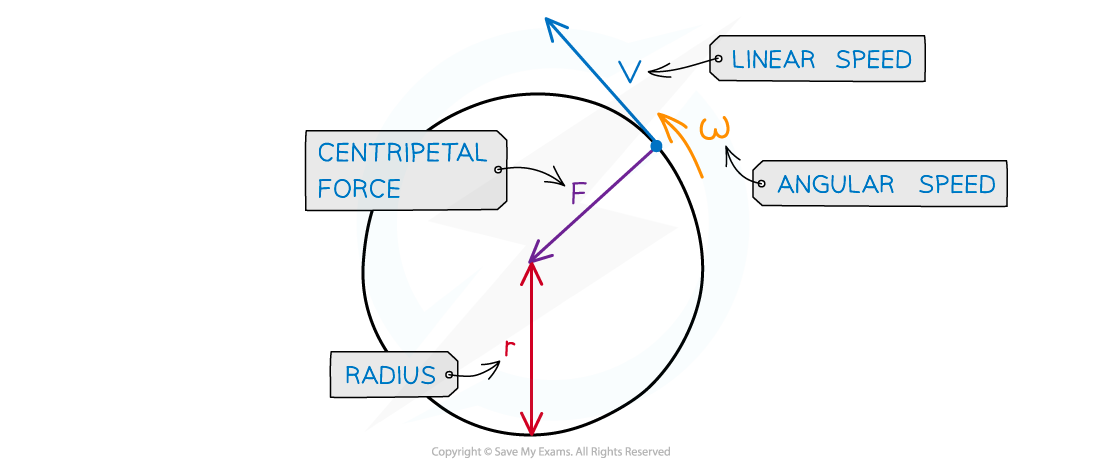
Centripetal force is always perpendicular to the direction of travel
The centripetal force is the resultant force on the object moving in a circle
This is particularly important if there are multiple forces on the object, such as weight
Vertical Circular Motion
An example of vertical circular motion is swinging a ball on a string in a vertical circle
The forces acting on the ball are:
The tension in the string
The weight of the ball, acting downwards
As the ball moves around the circle, the direction of the tension changes continuously, while the weight always acts downwards
By conservation of mechanical energy, the ball is:
fastest at the bottom (where its gravitational potential energy is lowest)
slowest at the top (where its potential energy is highest)
The magnitude of the tension therefore varies, reaching a maximum at the bottom and a minimum at the top – partly because of the change in speed and partly because the weight acts in a different direction relative to the centre (see below)
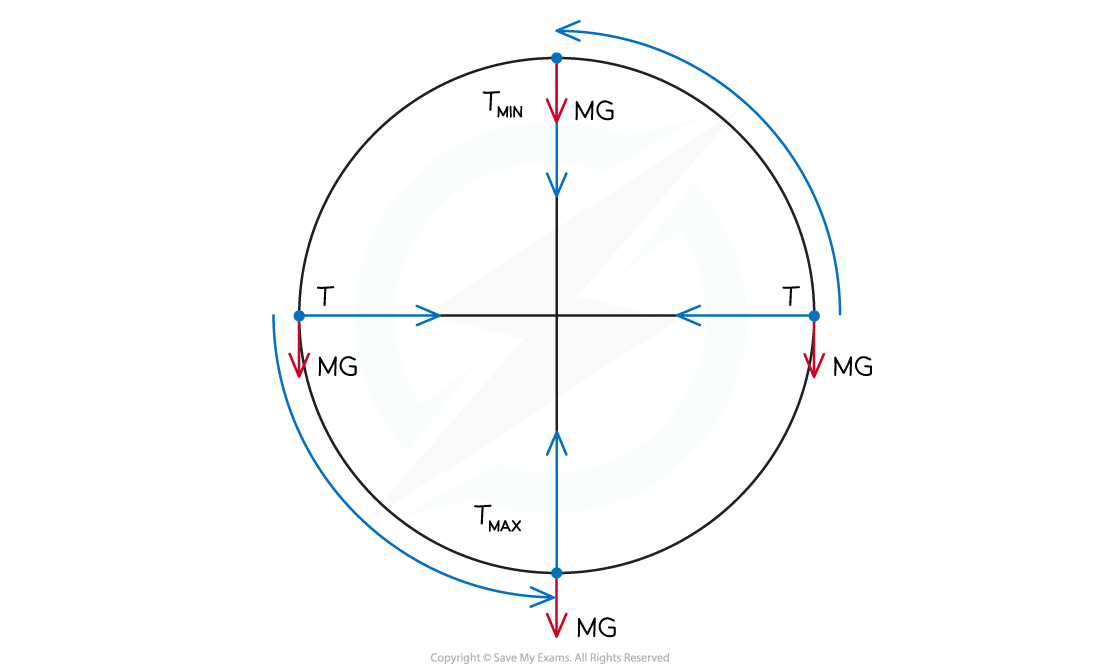
At the bottom of the circle:
The centripetal force is directed upwards (towards the centre of the circle)
The tension acts upwards, and the weight acts downwards
So, the tension must support the weight and provide the centripetal force:
At the top of the circle:
The centripetal force is directed downwards (towards the centre of the circle)
The tension and the weight both act downwards
So, together the tension and the weight provide the centripetal force:
The tension is therefore greatest at the bottom for two reasons:
is largest at the bottom (from conservation of energy)
At the bottom, weight is subtracted from the centripetal force requirement to give the tension; at the top, weight is added — so for the same speed, T at the bottom would already exceed T at the top
Worked Example
A bucket of mass 8.0 kg is filled with water and is attached to a string of length 0.5 m.

What is the minimum speed the bucket must have at the top of the circle so no water spills out?
Answer:
Step 1: Draw the forces on the bucket at the top
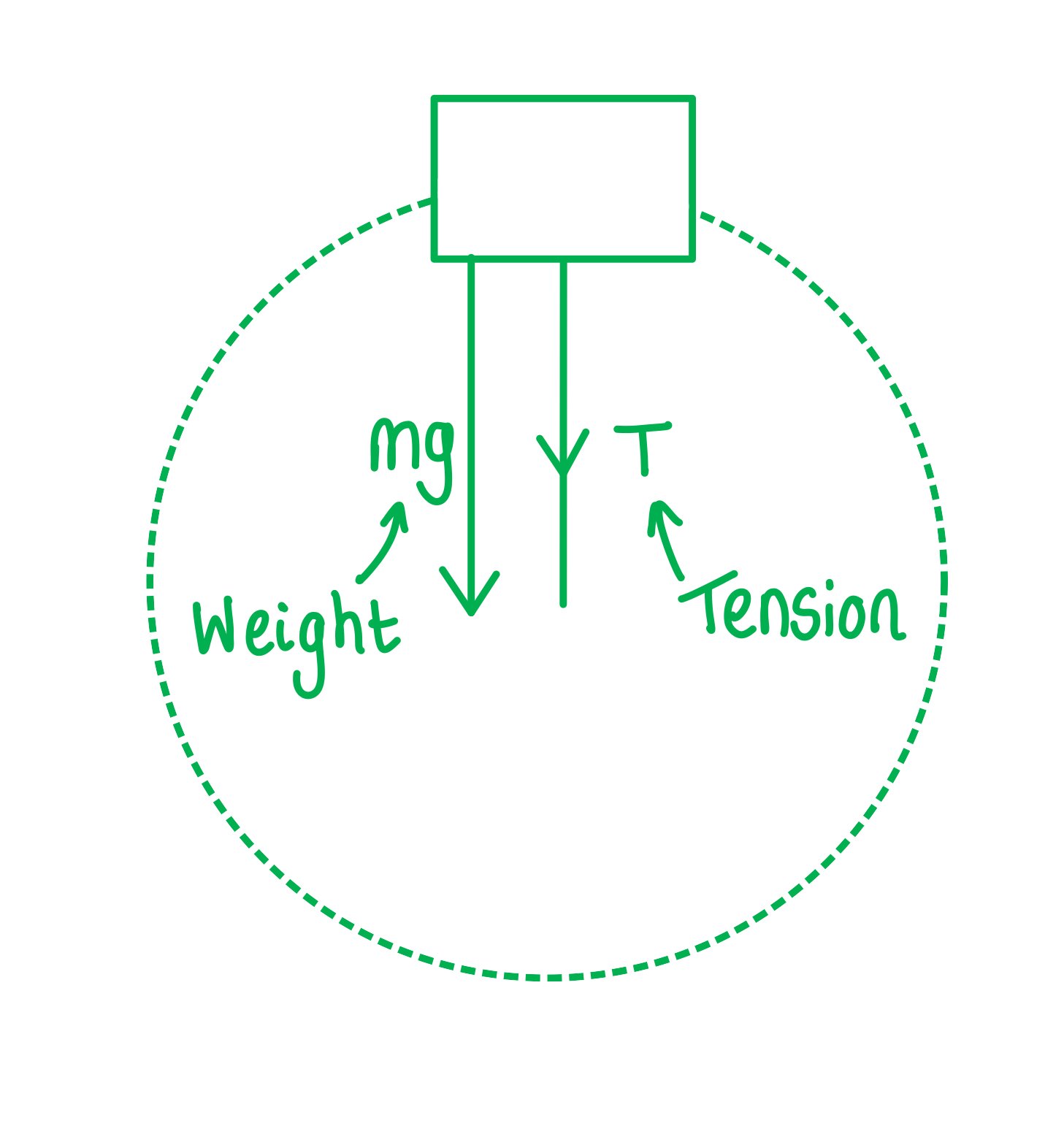
Step 2: Write an expression for the centripetal force
The weight of the bucket = mg
At the top of the circular path, the weight and tension act in the same direction, so the centripetal force is
The minimum speed v is when the string is taut but not stretched, so the tension here is zero (T = 0)
Step 3: Rearrange for velocity v and calculate
m cancels from both sides

Unlock more, it's free!
Join the 100,000+ Students that ❤️ Save My Exams
the (exam) results speak for themselves:

Was this revision note helpful?
Build on this topic
