Uncertainties (Edexcel International A Level (IAL) Physics): Revision Note
Exam code: YPH11

Uncertainties
Uncertainties can be represented in a number of ways:
Absolute Uncertainty: where uncertainty is given as a fixed quantity
Fractional Uncertainty: where uncertainty is given as a fraction of the measurement
Percentage Uncertainty: where uncertainty is given as a percentage of the measurement
Percentage uncertainty is defined by the equation:
Percentage uncertainty =
To find uncertainties in different situations:
The uncertainty in a reading: ± half the smallest division
The uncertainty in a measurement: at least ±1 smallest division
The uncertainty in repeated data: half the range i.e. ± ½ (largest - smallest value)
The uncertainty in digital readings: ± the last significant digit unless otherwise quoted
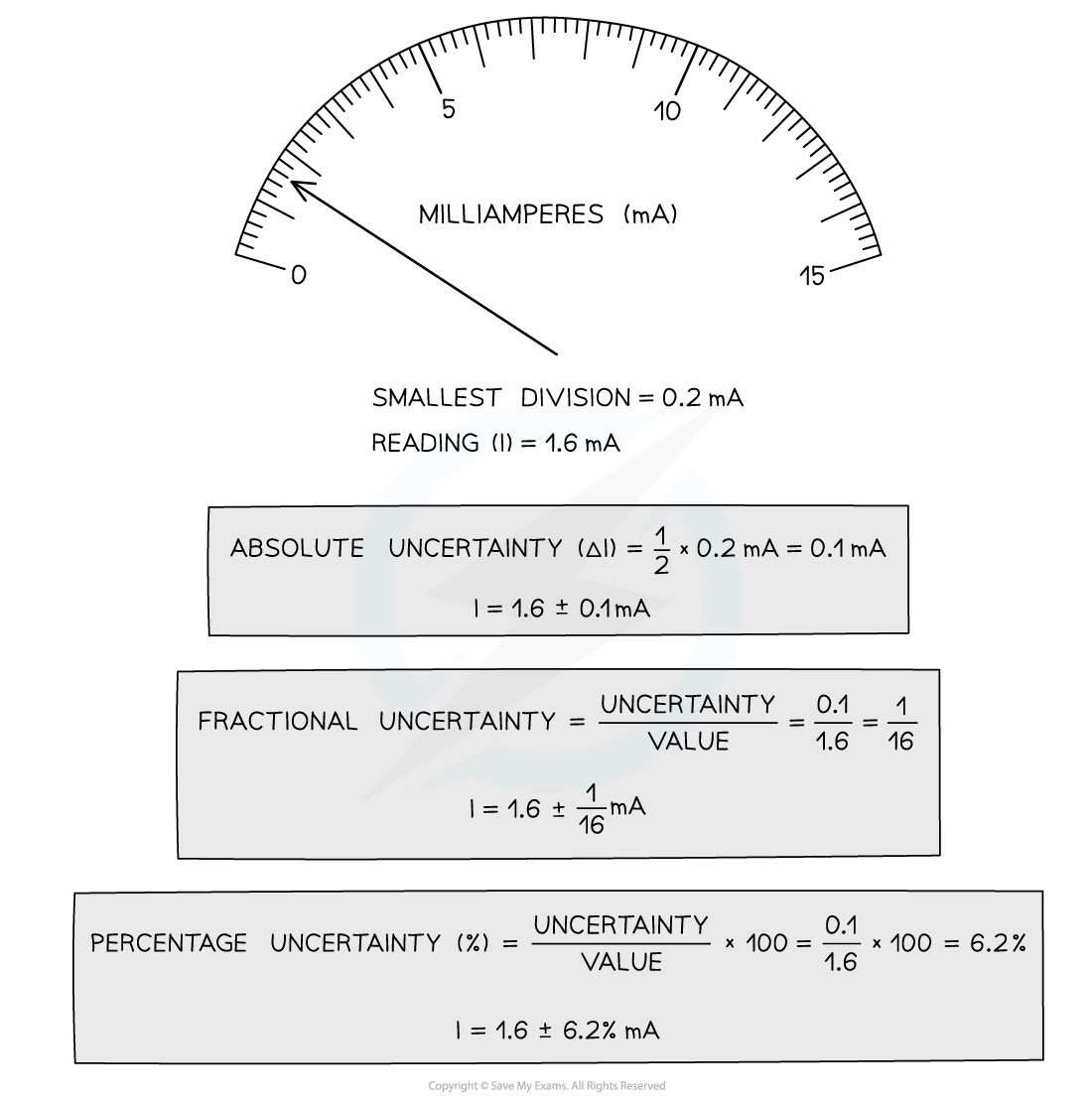
How to calculate absolute, fractional and percentage uncertainty
Always make sure your absolute or percentage uncertainty is, at a maximum, to the same number of significant figures as the reading
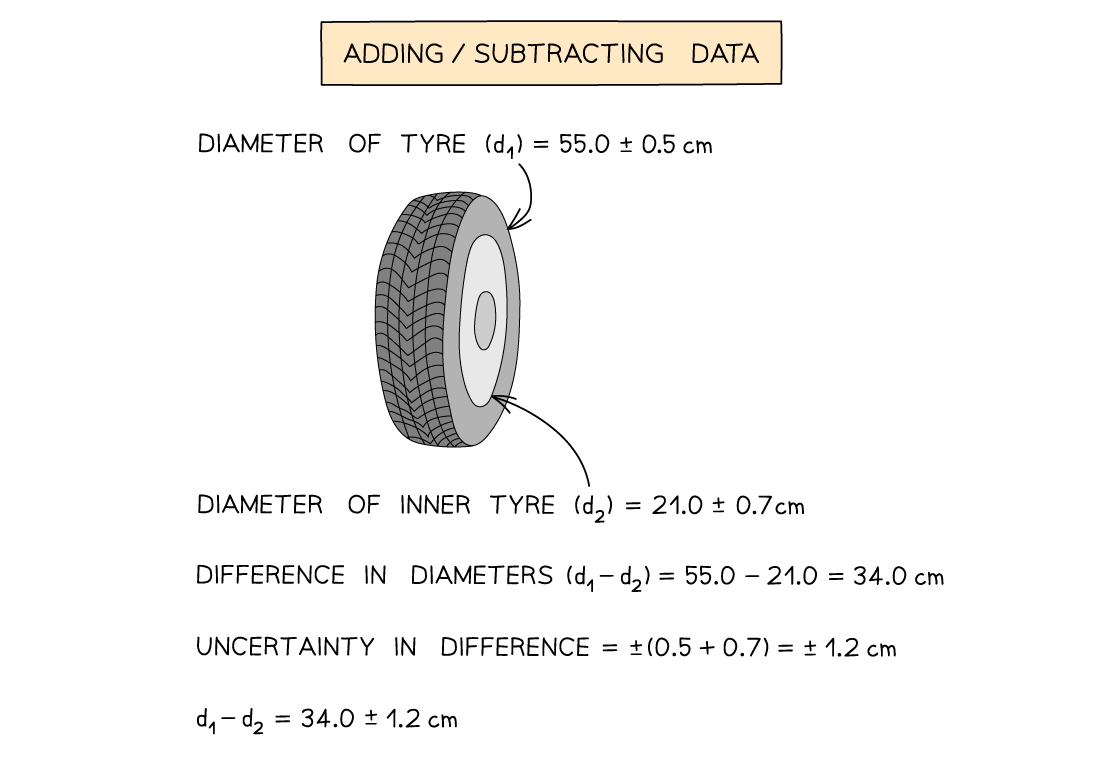
Absolute uncertainties are compounded when adding or subtracting data
Adding / Subtracting Data
Add together the absolute uncertainties
Examiner Tips and Tricks
Remember:
Absolute uncertainties have the same units as the quantity
The uncertainty in numbers and constants, such as π, is taken to be zero
In Edexcel International A level, the uncertainty should be stated to at least one fewer significant figure than the data, and to no more significant figures than the data.
For example, the uncertainty of a value of 12.0 which is calculated to be 1.204 can be stated as 12.0 ± 1.2 or 12.0 ± 1.20.

Unlock more, it's free!
Join the 100,000+ Students that ❤️ Save My Exams
the (exam) results speak for themselves:

Was this revision note helpful?
Build on this topic