How to Answer 7 Mark Decision-Making Questions (Cambridge (CIE) IGCSE Geography): Revision Note
Syllabus Edition
First teaching 2025
First exams 2027
Exam code: 0460 & 0976

What is a decision-making question?
The 7-mark decision making question in Paper 2 Section A doesn't ask you to evaluate a general statement
The question gives you evidence about two named options and asks you to choose between them
This tests a specific AO3 skill: "make and justify a decision based upon information provided."
Like the "assess the extent to which" question, this is marked using levels of response but the task itself is different
You're reading resources (a map extract, photographs, graphs) rather than recalling your own knowledge, and you must commit to one option, not just weigh up pros and cons in the abstract
Command phrases and assessment objectives
This question uses the command phrase "justify your decision"
The question tests:
AO1 (Knowledge and understanding)
AO3 (Evaluation and decision-making)
How the question is marked
Unlike the 5-mark "Evaluate" questions elsewhere on the paper, this question is not point-marked
The examiner reads your whole answer and decides which level it best fits, then places it within that level's mark range
Within a level examiners award:
The top mark if your answer convincingly meets the level statement
The middle mark if it adequately meets it
The bottom mark if it just meets it
Level 3 (6-7 marks)
A balanced/comprehensive answer which shows a clear understanding with developed statements which are relevant to the question
Answer is supported by relevant evidence and/or examples throughout
Answer contains a supported evaluation/judgement/decision on the question
Level 2 (3-5 marks)
An answer which shows a good understanding with developed statements which are relevant to the question
Answer is supported by some relevant evidence and/or examples
Answer contains a limited evaluation/judgement/decision on the question
Level 1 (1-2 marks)
An answer which shows limited understanding using simple statements which are relevant to the question
Level 0 (0 marks)
No creditable response
How to structure your answer
State your chosen option clearly and immediately
Don't leave the examiner to infer your decision from the body of your answer
Use evidence from every resource you're given, not just one
If you're told to refer to a map extract and two photographs
A Level 3 answer draws on all of them, not just the easiest one
Compare, don't just describe
For each point, say what it means for both locations, not just why your chosen one is good
Reach a final justified decision
This is your judgement, so make sure your closing point directly answers "which is most suitable," not just "here are some facts about each"
How to answer a 7 mark decision-making question?
Step 1
Read the question carefully and underline the command words
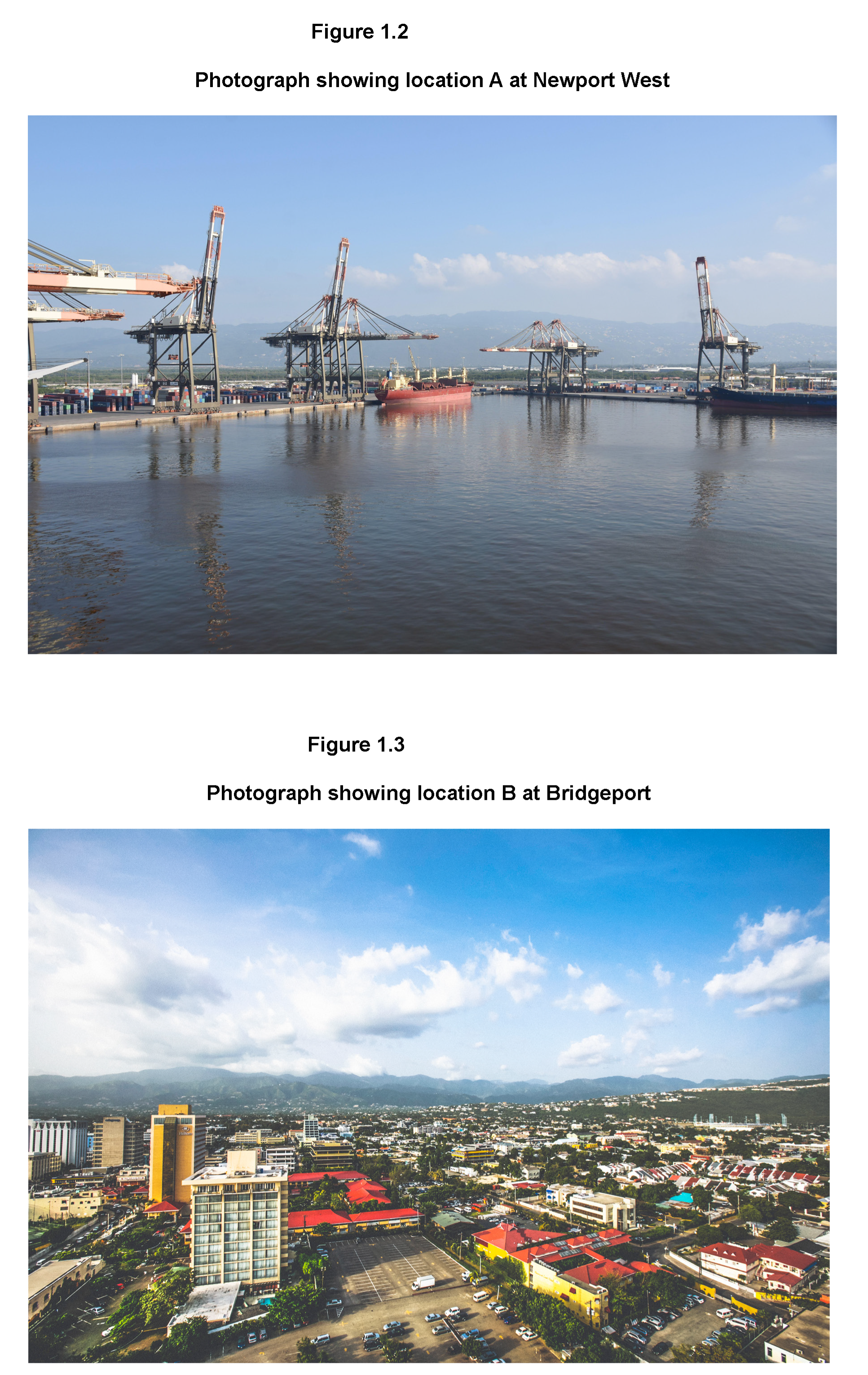
"Use evidence from the map extract and Figures 1.2 and 1.3 to identify which location you consider to be the most suitable for the TNC to locate the factory.
Refer to Location A and B when justifying your decision."
The command word "justify" means that you need to support a case with evidence/argument
Step 2
Underline the key words.
"Use evidence from the map extract and Figures 1.2 and 1.3 to identify which location you consider to be the most suitable for the TNC to locate the factory.
Refer to Location A and B when justifying your decision."
In this example, you need to make a decision about which is the most suitable location for the factory and why.
Step 3
Plan the information you are going to include. This can be a short list of bullet points. For example:
Flat land
Transport links and accessibility
Proximity to workers
Infrastructure
Step 4
Write your answer
To achieve 7 marks, you need to write at least 3 detailed statements
Do not make general statements
Be specific, for example:
Worked Example
A TNC is considering the following locations for its factory.
Location A: At Newport West, in and around grid square 6748. Figure 1.2 is a photograph of this area.
Location B: At Bridgeport, in and around grid square 6244. Figure 1.3 is a photograph of this area.
Map extract (opens in a new tab)
Use evidence from the map extract and Figures 1.2 and 1.3 to identify which location you consider to be the most suitable for the TNC to locate the factory.
Refer to Location A and B when justifying your decision.
Answer
Location chosen: B, Bridgeport.
Location B is more suitable for a TNC to build its factory. [E] It has flat land, [KU] which will make construction easier and cheaper. [E] The land also appears cleared, [KU] reducing the cost of preparation. [E] There is a main road running through grid square 6244 [KU], allowing the easy transport of goods and workers. [E] A railway line also passes nearby, [KU] which is important for importing raw materials or exporting products. [E]
Location A is less ideal because it's on hilly land [KU], making construction harder and more expensive. [E] The area also has more vegetation, [KU] which means that clearing land would take more time and money. [E] Although there is some road access [KU], it is not as direct or developed as in Location B. [E]
Furthermore, Location B is closer to Bridgeport [KU], a town that would provide more work, housing, and services for employees. [E] The map shows nearby built-up areas [KU], which could help access skilled labour and essential infrastructure, such as power and water supplies. [E] Location A is further from towns and more isolated. [KU]
In conclusion, Location B has flatter land, better transport links and is nearer to urban services, making it the most suitable option for a TNC factory. [E]
Mark allocation
This is a level of response answer. Each point made in the answer does not equal a mark. Marks are allocated against two assessment objectives:
AO1 Knowledge and Understanding [KU]
AO3 Evaluation and decision making [E]
A top-level 3 [7 mark] answer will have a balanced, developed and evidenced answer that demonstrates knowledge and understanding [KU] to evaluate (judge or decide) [E] where a TNC may locate its factory.
Examiner Tips and Tricks
Always name your chosen location in your very first sentence, and use "Location A"/"Location B" (or the place names) throughout — don't switch to vague terms like "the first one."
Marks are for using the evidence you're given, so if you're referred to a map extract as well as photographs, make sure your answer draws on both. An answer that only discusses the photos and ignores the map, when the map was named in the question, will not reach Level 3 even if the writing is otherwise strong.

Unlock more, it's free!
Join the 100,000+ Students that ❤️ Save My Exams
the (exam) results speak for themselves:

Was this revision note helpful?