The Student & Anti-Vietnam War Movements (Edexcel IGCSE History: Paper 1: Depth Studies): Revision Note
Exam code: 4HI1

Summary
The civil rights movement was not the only protest movement of the 1960s
Students, women and other groups also set up movements to try to change society
Protest movements grew because of:
the example of the civil rights movement
disappointment with the lack of change
the political rise of the teenager
television
the increasing role of government
specific causes for each group
The number of Americans going to college rose rapidly
Students became increasingly concerned with the injustices in American society
Most student activists were left-wing
Many rejected the society created by their parents
There were also conservative students whose voices were less influential
Opposition to the Vietnam War was the one issue that united the student movement
It grew because of:
the cost of the war
the deaths
US tactics
the draft
television coverage
The anti-Vietnam War movement split American society
It is difficult to tell how far it shortened the war
Reasons for the growth of protest movements
The influence of the civil rights movement
Many young people, both Black and White, had taken part in the civil rights protests
The sit-ins of 1960–61 were effectively the first student protest of the 1960s
Young people used their experience of civil rights protests to organise more protests
They used similar methods to highlight other parts of society they were unhappy with
The civil rights movement inspired other groups facing prejudice and discrimination, such as women
Disappointment and disillusionment
American society changed during the Second World War
For example, more women went out to work
When the war ended, many people hoped that society would continue to change and become more equal
Instead, the 1950s largely saw a return to pre-war society
White men seemed to be the only group experiencing wealth
Many people were angered by the lack of change and the unfairness of society
The election of the young, dynamic President Kennedy in 1960 seemed to offer the promise of change
His assassination in 1963, before he was able to fulfil his policies, shocked and depressed many Americans
Kennedy's death may help to explain why there was so much protest in American society from 1963
The political rise of the teenager
During the 1950s, more teenagers rebelled against their parents
They began to question their parents' beliefs and values
A separate culture for young people emerged
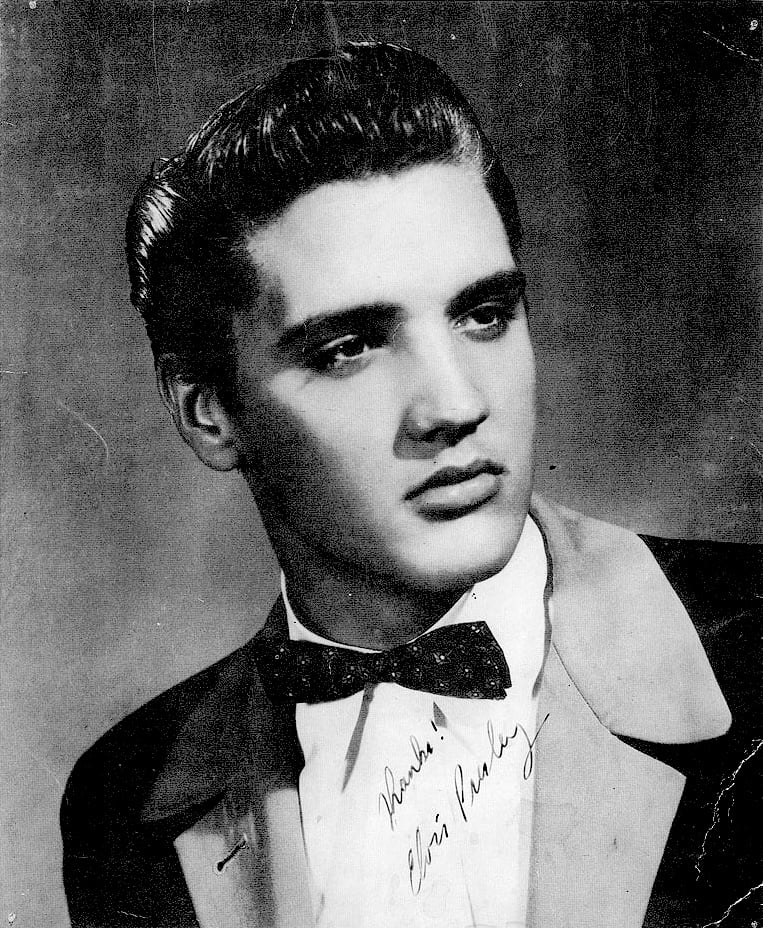
Rock musicians such as Elvis Presley became very popular
Films such as Rebel Without a Cause, starring James Dean, appealed to young people
As these 'teenagers' entered the 1960s and went to college, they continued to question the actions and beliefs of their parents' society
They started to form and join protest groups
The media
The 1960s saw a huge rise in television viewers
By 1960, 87% of US homes owned a television
For the first time, most Americans could see what was happening thousands of kilometres away
The Vietnam War received huge coverage from all types of media from 1965
This led to a growth in opposition to the war
Media coverage of the protests themselves also attracted more supporters to their causes
It also led to a growth of opposition to some of those movements
The increasing role of government
In the 1930s, President Roosevelt's Democratic government had made many changes to try to help those suffering in the Great Depression
By the 1960s, many Americans expected their federal government to help those in need and to take measures to make people's lives better
Protestors asked the government to take action to tackle recognised injustices
Other factors
After the Second World War there was an increase in the birth rate
By the 1960s, the 'baby boomers' made up a large percentage of the population
Society had to start listening to the views of the young because there were so many of them
By the 1960s, there was an uneven distribution of wealth
There was great prosperity in the USA
It was overwhelmingly for White Anglo-Saxon Protestant men (WASPs)
The greater wealth of these people highlighted those who were not so fortunate
There were protests in Paris in May 1968
There were huge demonstrations and workers went on strike
These inspired people to protest in other countries, including the USA
Examiner Tips and Tricks
In a question about why protest movements grew, always include at least one reason that was specific to the group in the question, as well as more general reasons for protest.
The general reasons, such as the civil rights example, television and the lack of change, applied to many groups. They explain why protest grew in US society overall but not why a particular group protested, such as the horrors of the Vietnam War for young people.
Aim to explain at least one general and one specific reason, and say how the specific reason made that group protest.
The student movement and the war in Vietnam
Why were there more students?
After the Second World War there was a rapid rise in the number of Americans going to college
By 1970, nearly 40% of all young people went on to higher education
Student enrolment in American universities rose from about 2 million in 1947 to over 8 million in 1970
The majority of these students were from White, middle-class backgrounds
Their parents expected them to think and behave just as they had done
These behaviours included conforming with society and supporting the government
During the 1960s, students became increasingly concerned with major social issues and the injustices that existed in American society
What did students campaign for?
Throughout the 1960s and 1970s, students actively campaigned on a huge variety of issues, including:
civil rights for Black Americans and other ethnic groups
gay rights
women's rights
poverty
US foreign policy, such as nuclear disarmament
the environment
They joined existing organisations, such as the Congress of Racial Equality (CORE) and the Student Nonviolent Coordinating Committee (SNCC)
They also set up their own organisations to protest against government policies or those of the colleges they attended
Rejecting the society of their parents
Many students rejected the views and opinions of older people, including their parents
They felt that these people had helped to create a corrupt society that treated people unfairly
A popular slogan during student protests was "Don't trust anyone over 30"
Most student activists were left-wing
They believed that the government should actively be involved in improving the lives of its citizens
Many students referred to society as 'the machine' or 'the system'
They believed that society itself was the problem
Students who did not protest
There were many students who supported the right-wing, conservative attitude to education and government
Their voices were much less influential at this time
Critics of the movement claimed that students just wanted to rebel
They argued that these students did not fully understand the issues
The war in Vietnam
Vietnam was divided into a Communist North and an anti-Communist South in 1954
Tensions between them increased during the Cold War
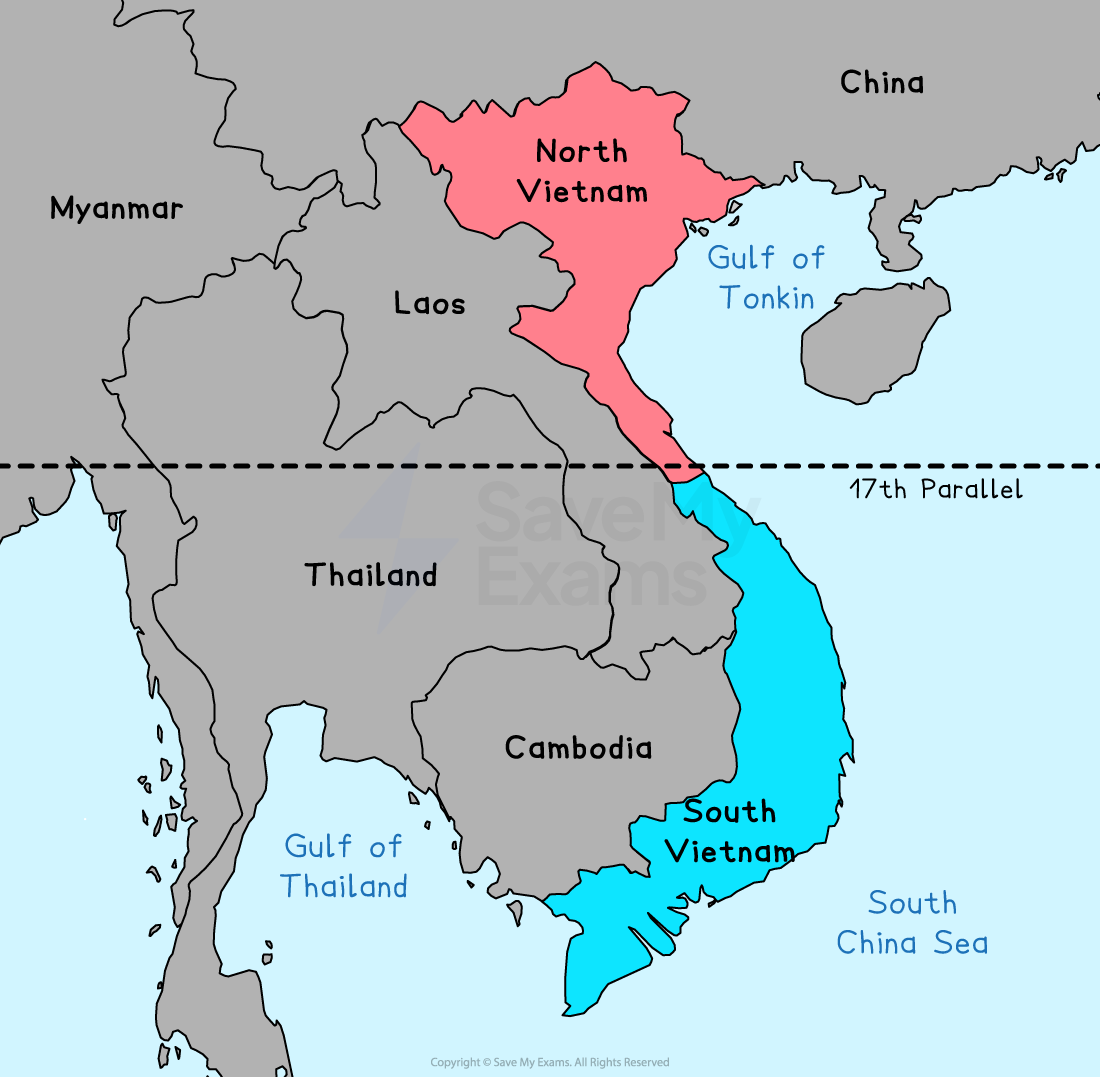
US presidents were desperate to prevent South Vietnam becoming Communist
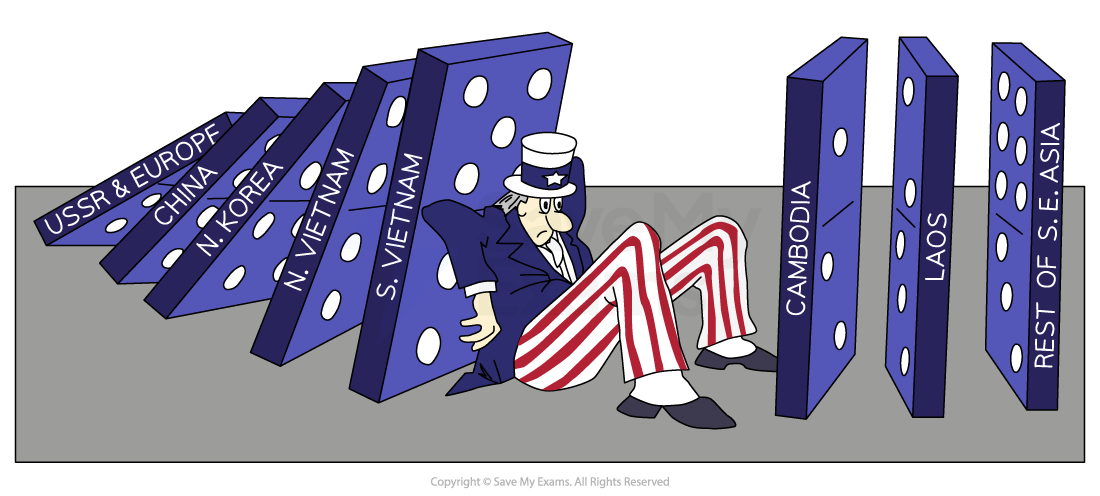
They believed this would encourage other countries in Southeast Asia to adopt communism and support the Soviet Union
This is known as the domino theory
The USA sent advisers, supplies and money to support South Vietnam's government
In 1959, the situation turned into war
US support for South Vietnam increased under President Kennedy and then Johnson
In August 1964, North Vietnamese boats attacked American boats off the coast of Vietnam
This led to Congress passing the Gulf of Tonkin Resolution
The Resolution gave Johnson the power to do anything necessary to prevent attacks on US forces, without having to seek approval from Congress
The war proved to be extremely difficult for the USA
Troops were pulled out by President Nixon in 1973
By 1975, the whole of South Vietnam had fallen to the Communist North
Examiner Tips and Tricks
You do not need detailed knowledge of the Vietnam War itself. The specification only asks you to know about the student movement and its links to the war, including the anti-Vietnam War movement. Therefore, you need to know why people protested and what the protests led to, and not the military history of the war.
Why did the anti-Vietnam War movement grow on US campuses?
Reasons to oppose the war
As US military action increased, so did opposition to it
Protestors objected to many aspects of the war
The huge cost of US intervention, which was paid for by American taxpayers, brought little apparent success
The rising number of deaths and injuries to US troops
US support of the corrupt government of South Vietnam
The USA seemed to be acting like an imperial power
US tactics in Vietnam, including mass bombings and the use of chemical weapons such as Agent Orange to destroy crops and forests
This killed and injured many Vietnamese civilians
The draft system was seen as very unfair
The average age of US soldiers in Vietnam was much lower than the average age of 26 for US soldiers in the Second World War
Full-time students could defer the draft
A high percentage of Black Americans and poor White Americans were drafted because they were less likely to go to college
The role of the media
The media played a part in creating opposition to the war
News reporters and cameras had access to the conflict and were allowed to broadcast what they wanted
For the first time, Americans could see the horrors of war for themselves on television
Footage of burning villages and terrified and injured children increased support for the anti-war movement
It also damaged the USA's reputation abroad
Who joined the protests
In April 1965, the Students for a Democratic Society (SDS), a student organisation, publicly declared its objection to the war
Almost immediately, its membership began to rise dramatically
As the war continued, the protestors came from more diverse backgrounds
Increasing numbers of older people and some returning soldiers joined the campaign
They formed groups such as Veterans and Reservists to End the War and Vets for Peace
The protests
Mass rallies
Protestors shouted slogans such as "Hell no, we won't go!"
They also mocked army leaders, for example by dressing up as the commander of US forces in Vietnam to make fun of him
Sit-ins and teach-ins
At teach-ins, lecturers and students held talks and debates about the war, starting at the University of Michigan in March 1965 and spreading to dozens of campuses
At sit-ins, protestors occupied public buildings and army recruitment centres, and some sat on railway tracks to block trains carrying troops
Dodging the draft
People avoided being drafted to the army by:
burning draft cards
helping those who had been drafted to go into hiding or leave the USA
giving advice on how to avoid the draft in the first place
Scale of the protests
The protests peaked between 1968 and 1970
In the first six months of 1968, there were 100 anti-war demonstrations across the country
The largest individual protest was a march on Washington DC in November 1969
This attracted over 500,000 supporters
Some anti-war demonstrations turned violent and there were frequent fights with the police
The Kent State shootings, 1970
At Kent State University in Ohio, National Guard troops were called to break up a protest on 4 May 1970
The students refused to move despite tear gas being used
Shortly afterwards, the troops fired into the crowd
Four students were killed
Several others were injured
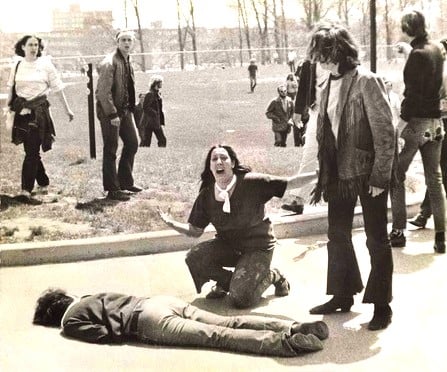
Two weeks later, two Black students were shot and killed by police trying to break up a protest at Jackson State University
Many Americans were extremely shocked
The impact of the anti-Vietnam War movement
Political impacts
The protests put pressure on the government and raised awareness of anti-war beliefs
The war took money away from Johnson's Great Society reforms
Protestors criticised the government for failing to deliver them
Many historians believe that the protests were a major reason why President Johnson chose not to stand for re-election in 1968
The Democratic candidate, Hubert Humphrey, lost the 1968 election to the Republican Richard Nixon
The protests may also have been a reason for Nixon's policy of Vietnamization
This was his policy from mid-1969 to help South Vietnam's government take more responsibility for the war and use more Vietnamese troops rather than Americans
However, it is not clear whether the protests had much impact on ending US involvement in Vietnam
It is likely that the government would have withdrawn from the war even without the protests
Social impacts
The anti-war movement undoubtedly helped to split society into those who supported the war and those who did not
Many Americans did not trust the protestors and saw them as unpatriotic
Some protestors burned the US flag and openly declared their support for North Vietnam and communism
Some Americans, including some students, strongly supported the war and held pro-war rallies and demonstrations
President Nixon expressed his belief that the 'silent majority' of Americans supported his policies
These were people who did not openly protest either for or against the war
Some opinion polls seemed to prove him right
More people approved than disapproved of his handling of the war
Conclusions
The cost, the deaths, the tactics and the draft during the Vietnam War gave people a reason to oppose the war
These reasons hit young people directly
The media and the SDS were the reasons that spread opposition
Television brought the war into every home
The SDS's public declaration made its membership rise dramatically
Therefore, the war itself created the anger, but the media and student organisations turned it into a mass movement on campuses
Worked Example
Study Extract G.
Extract G: From a history of the Vietnam War, published in 1998.
"By [1967] a national movement against the war had developed. Opposition came from a variety of political points of view. Some were socialists or radicals who sympathised with the struggle of the people of Vietnam to create an independent and unified Vietnam. Others were pacifists who were against the war on moral and religious grounds. They believed that all war is wrong and that this one in particular was against Christian teaching. There were also those who simply felt that Vietnam wasn’t worth the lives of young American men."
What impression does the author give about the opposition to the Vietnam War?
You must use Extract G to explain your answer.
(6)
Partial answer:
However, the author selects only the political, moral and practical views. The extract leaves out that most of the early protestors were students and other young people, and that the draft, which was seen as very unfair because it fell most heavily on Black Americans and poor White Americans, gave many people a personal reason to oppose the war. It also leaves out the television coverage that showed Americans the horrors of the war for the first time. This makes the opposition seem to be about beliefs, when many people were reacting to what they could see happening.
Examiner Tips and Tricks
To reach the top level for this question, you must analyse the author's choices: comment on the effect of one or two emotive words, and explain what the author has chosen to stress. You can also point out what the author has left out, but only if you explain how the omission strengthens the impression.

Unlock more, it's free!
Join the 100,000+ Students that ❤️ Save My Exams
the (exam) results speak for themselves:

Was this revision note helpful?