Freedom Riders & Sit-Ins (Edexcel IGCSE History: Paper 1: Depth Studies): Revision Note
Exam code: 4HI1

Summary
The first major protests of the 1960s were student sit-ins, which began in Greensboro on 1 February 1960
Sit-ins spread across the South
The sit-ins:
desegregated some lunch counters
won huge publicity
led to the founding of the Student Nonviolent Coordinating Committee (SNCC)
In 1961, the freedom riders tested whether buses and bus stations had been desegregated
They were attacked at Anniston
The violence and publicity embarrassed President Kennedy
Kennedy’s government sent in federal marshals to protect the riders
The Interstate Commerce Commission began to integrate bus facilities
In 1962, the Meredith case showed that the president would use federal force to make sure a court ruling was obeyed
Overall, these protests were effective at challenging specific targets and at winning publicity
However, they did not end segregation as a whole
Sit-ins and voting rights
Why did sit-ins begin?
A sit-in is a type of protest in which people refuse to leave a place until their demands are considered or agreed to
The first major civil rights protests of the 1960s were not organised by well-known organisations such as the NAACP
Instead, the actions of college students began a new phase of non-violent direct action protest
The first sit-in occurred in Greensboro, North Carolina, on 1 February 1960
The Greensboro sit-in
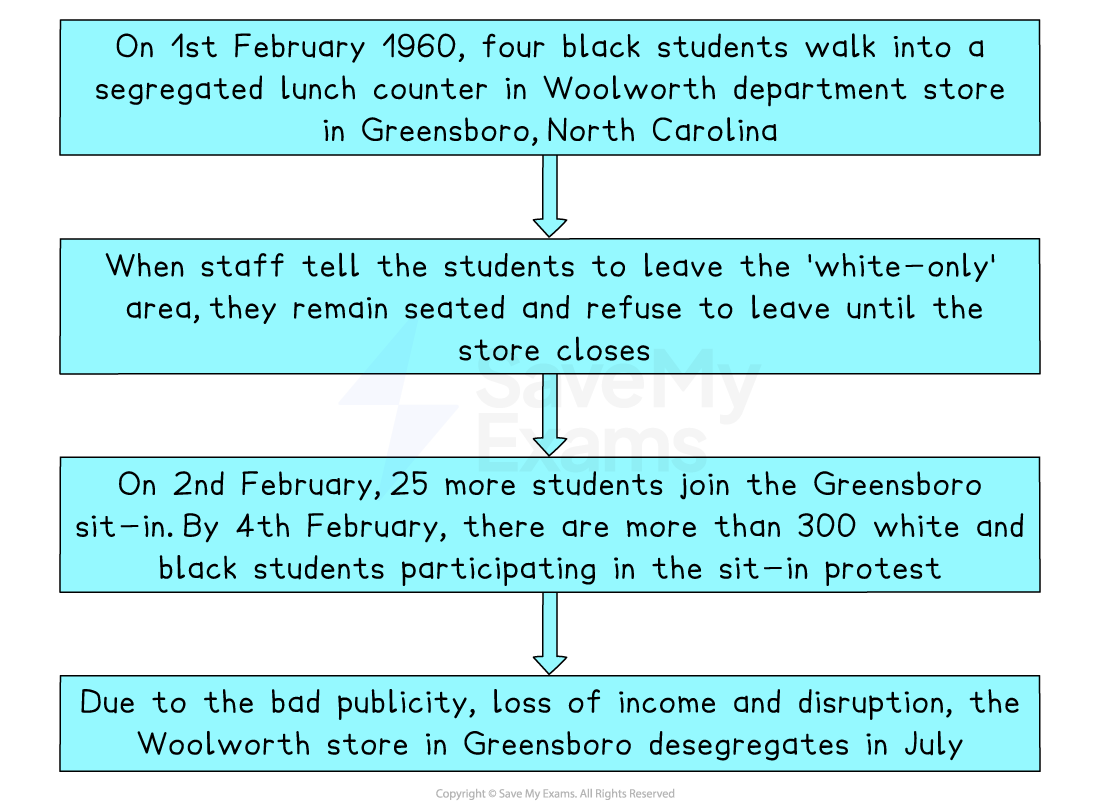
The response to the sit-ins
The protestors faced much abuse, such as:
being insulted and spat at
having food and drink thrown at them
being physically attacked
Despite this, they did not respond with violence
Thousands were arrested, which led to a new tactic of jail not bail
This meant that protestors refused to pay to be released from jail
As a result, some jails became very overcrowded
These tactics attracted widespread media attention
This helped the sit-ins to spread, as more people were inspired to take part
Support grew for their causes
Examiner Tips and Tricks
Identify the chain of impacts here. Peaceful protestors were abused, the media reported it, sympathy grew, and more people joined. This will be useful on a 8- or 16-mark question on the sit-ins.
The civil rights groups and the founding of the SNCC
The sit-ins seem to have taken the existing civil rights organisations by surprise
Once they saw the impact sit-ins had, they began to support them
Activists from the NAACP, CORE and the Southern Christian Leadership Conference (SCLC) organised a boycott of shops with segregated lunch counters at the same time as the sit-ins
CORE and the SCLC helped to train students to become more effective protestors
This support helped the sit-in protestors because:
it ensured that the students were always visible for their safety
it brought more media attention to their cause
it helped them to cope with aggressive harassment without responding with violence
Ella Baker, who had worked for both the NAACP and the SCLC, arranged for Martin Luther King to visit Greensboro and speak to the protestors to help maintain confidence
She also set up a meeting of students at Shaw University in Raleigh, North Carolina, on 15 April 1960
King wanted the students to join the SCLC, but Baker wanted them to set up their own civil rights group
At the meeting, the Student Nonviolent Coordinating Committee (the SNCC, known as snick) was set up
It was given a grant from the SCLC to help establish itself
Voting rights campaigns
The Civil Rights Acts of 1957 and 1960 had improved the number of Black Americans registering to vote by only 3%
From 1961, civil rights groups had campaigned to increase the number of Black Americans registered to vote throughout the South
They were supported by the president's brother, Robert Kennedy, who was the Attorney General
In 1961, SNCC began voter registration drives in Mississippi, led by Bob Moses
This campaign led to a much larger effort in Mississippi in 1964
Freedom riders and the Anniston fire bombing
Why did freedom rides begin?
In 1946, the Supreme Court ruled that interstate transport should be desegregated
In December 1960, it confirmed this ruling
It ordered that transport facilities, such as waiting rooms, must also be desegregated
Many Southern states ignored these rulings
In 1961, activists from CORE planned freedom rides to show that the rulings were not being followed
CORE was mostly a northern organisation with a significant number of White American members
The riders were Black and White people who travelled together on buses and tried to use the Whites-only facilities in bus stations
CORE aimed to provoke a violent reaction that would generate huge publicity and force the federal government to act
The first freedom ride and the Anniston fire bombing
The first freedom riders left Washington DC on 4 May 1961 on two buses heading for the South
On 14 May, the first bus reached Anniston, Alabama
The station was closed
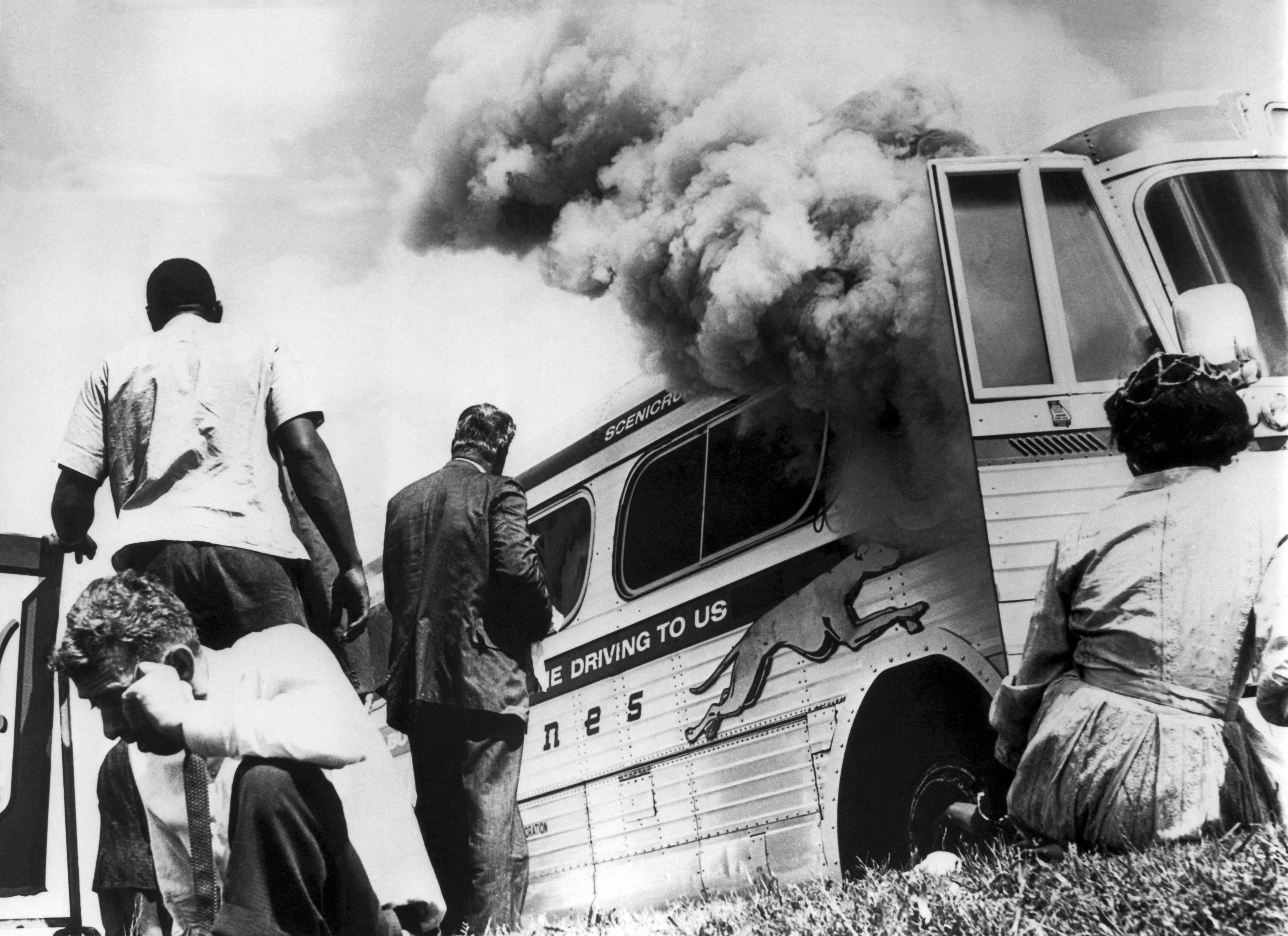
An angry crowd, led by local Ku Klux Klan members, attacked the bus, smashing its windows and slashing its tyres
A police escort led the bus to the edge of the city before leaving it
The damaged tyres burst and forced the driver to pull over
The mob that had followed tried to enter the bus and roll it over
Someone threw a firebomb through a broken window
The mob held the door shut while the bus filled with smoke and the fire spread
The mob left only when they feared that the petrol tank would explode
This allowed the passengers to escape
The mob attacked some of the passengers as they left the bus
Highway patrolmen prevented more attacks
The riders were taken by car to Birmingham airport
No one was arrested for the damage to the bus
The second bus was attacked in Anniston and its passengers were beaten again when it reached Birmingham
Birmingham's police commissioner, 'Bull' Connor, ordered the police to stay away
Examiner Tips and Tricks
Remember the name ‘Bull’ Connor, because he appears again in the Birmingham Campaign in 1963.
Use him as a link between the two events, and explain that, each time, his actions gave the civil rights groups the publicity they wanted.
The freedom rides continue
CORE arranged more freedom rides
The students of the SNCC, a new student civil rights group, became involved as well
On 20 May, members of the press as well as freedom riders were attacked by a white mob of hundreds in Montgomery
This developed into attacks on the wider Black community
More and more people offered to be freedom riders, even though the violence and arrests continued
By the end of summer 1961, there had been over 60 freedom rides
More than 300 riders were sent to jail in Jackson, Mississippi, alone
Many more were beaten up
The response of the federal government
The freedom riders achieved their aim, because the continuing violence against them attracted huge media attention
The federal government, under President Kennedy, was embarrassed by what the world was seeing
The USA was in the Cold War with the Soviet Union
They wanted to be seen as a defender of freedom
Kennedy's government sent in US marshals to protect the riders and enforce desegregation of interstate buses and bus station facilities
The Interstate Commerce Commission began to integrate bus facilities
This brought an end to the freedom rides by the end of 1961
Examiner Tips and Tricks
Kennedy's response was similar to Eisenhower's response to the Little Rock Nine in 1957. He did not act because he supported the riders, but because media pressure and damage to the USA's reputation left him little choice.
The Meredith case
Background: desegregating universities
Despite the Supreme Court ruling in the Brown v. Topeka case in 1954 that segregation in education was unconstitutional, many universities in the South had no Black students
Although the universities were not officially segregated, Black students were always unsuccessful when they applied
The case of James Meredith
James Meredith, a Black student, applied for a place at the University of Mississippi in January 1961
He was rejected
He went to the NAACP, which helped him to take his case to court
In 1962, the courts ordered the university to admit him
The University of Mississippi still refused
Governor Barnett blocked Meredith's arrival to the university in September 1962
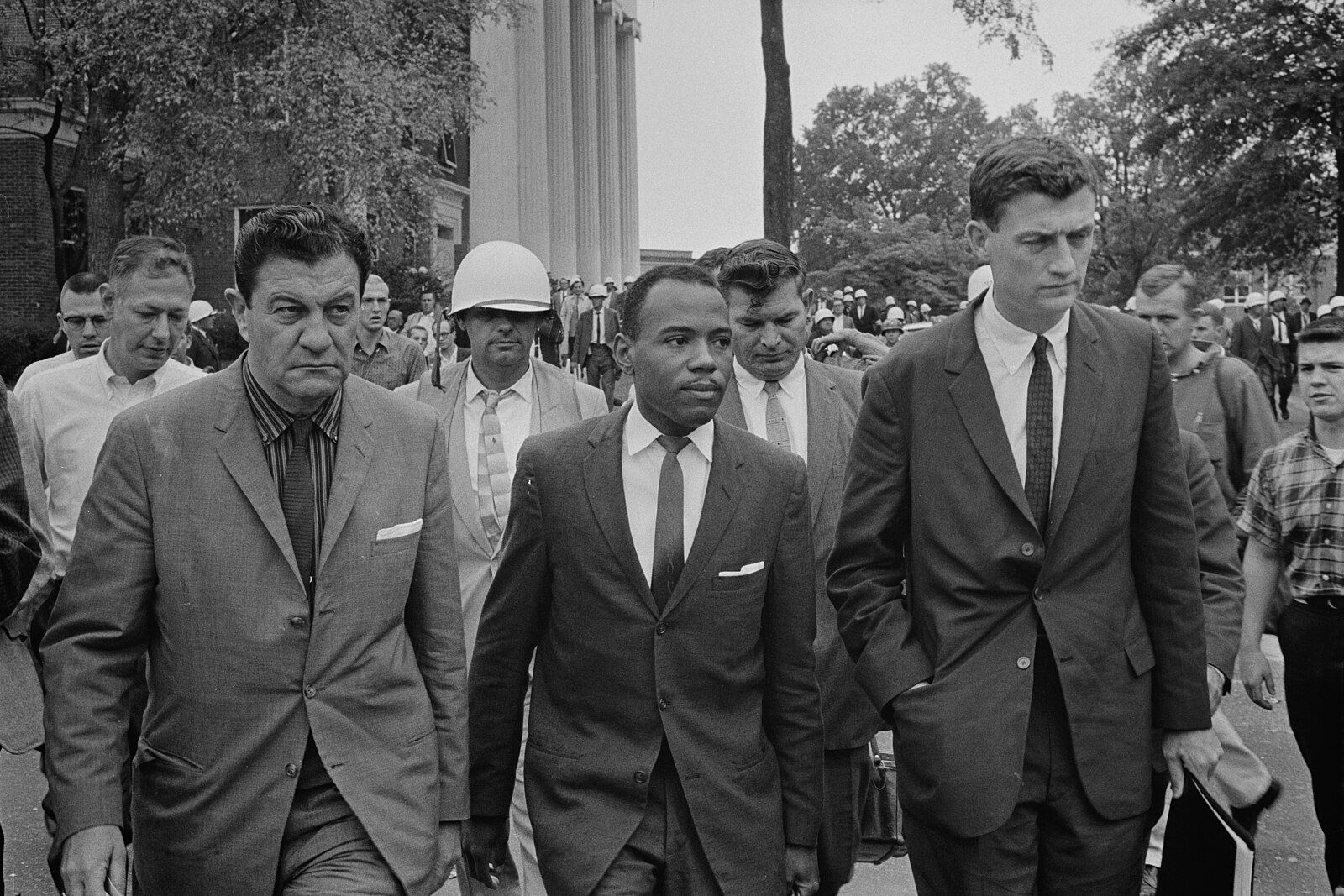
When he arrived under marshal protection on 30 September, a riot broke out
Meredith enrolled the next day
The response of the federal government
President Kennedy felt he had to act after being criticised for not doing more to help the freedom riders
Kennedy sent 320 federal marshals to protect Meredith, ensure he enrolled and escort him around campus
The federal marshals were outnumbered by over 2,000 pro-segregation protestors who threw firebombs and rioted
Two people were killed
166 marshals and 210 protestors were wounded
Kennedy sent 20,000 troops to regain control
300 soldiers remained on campus until Meredith had completed his studies
The significance of the Meredith case
The Meredith case forced President Kennedy to act
It showed that the president would take direct action to enforce Supreme Court rulings if he had to
After this, Black students were rarely prevented from attending integrated universities by state or university authorities
They often had a difficult time attending the university
How effective were the freedom riders and sit-ins in challenging segregation?
Evidence of effectiveness
The sit-ins hurt the businesses they targeted twice over
The shops sold far fewer lunches as there were fewer seats available for white customers
They sold fewer goods in the stores because of the boycott
By the end of 1960, over 120 towns and cities in the South had some desegregated lunch counters, although estimates vary
Sit-ins were more visible than boycotts
Everything could be seen by the public and the media
The sight of young Americans being attacked without retaliating attracted sympathy for their cause
The sit-ins were also the first protest that saw a significant number of white people protesting along with Black Americans
The sit-ins were the start of many student protests of the 1960s
They led to the creation of the SNCC
The freedom riders forced the federal government to act because the violence attracted media attention
Evidence of limits
Neither protest challenged segregation as a whole
Many other types of facilities stayed segregated
The protestors suffered abuse, being arrested and beaten
Over 300 freedom riders were jailed in Jackson alone
The federal government acted only because of media pressure and embarrassment
It did not show a commitment to civil rights in itself
Neither protest tackled the lack of voting rights, which was the main barrier to political power for Black Americans in the South
Conclusions
The protests' effectiveness can be judged on whether they:
achieved their own aims
changed segregation more widely
On their own aims, both were effective
The sit-ins desegregated many lunch counters
The freedom rides forced federal action on interstate transport
On challenging segregation more widely, they were less effective
Segregation remained in many other areas of society
Worked Example
Explain two effects of the sit-ins of 1960 on the civil rights movement.
(8)
Partial answer:
One effect of the sit-ins was that protest spread across the South. The students stayed peaceful despite abuse, and the jail not bail tactic filled the jails. These actions attracted widespread media attention. As a result, this inspired more people to take part, so sit-ins spread from Greensboro to towns across the South. The pressure they placed on businesses meant that, by the end of 1960, over 120 towns and cities had desegregated some lunch counters.
Examiner Tips and Tricks
Ensure that you carefully select your own knowledge. The example above selects the jail not bail tactic and the number of desegregated lunch counters by 1960 to explain the impact of the sit-ins on the civil rights movement.

Unlock more, it's free!
Join the 100,000+ Students that ❤️ Save My Exams
the (exam) results speak for themselves:

Was this revision note helpful?