Coasts as Natural Systems (AQA AS Geography): Exam Questions

Exam code: 7036

14 mins4 questions
1
6 marks

Figure 2 shows information about average annual sea surface temperatures for 1980 to 2014, compared to the average global sea surface temperature between 1993 and 2012.
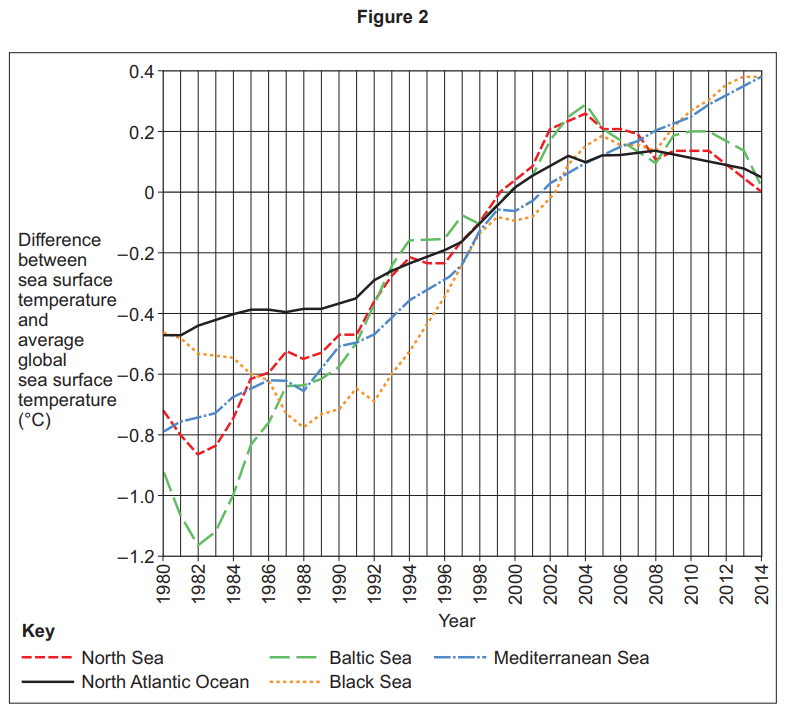
Graph showing sea surface temperature differences from global average (1980-2014) for North Atlantic, North, Baltic, Mediterranean, and Black Seas.

Analyse the information shown in Figure 2.

2
1 mark

Which of the following outlines a positive feedback at the coast?

  • Erosion occurs at the base of a cliff rightwards arrow a wave-cut platform begins to form rightwards arrow erosion extends the platform rightwards arrow waves have further to travel and lose energy rightwards arrow erosion decreases.

  • Vegetation begins to grow in sediments of saltmarshes rightwards arrow vegetation traps more sediment rightwards arrow height of the marsh increases rightwards arrowlength of time inundated by the sea reduces rightwards arrowvegetation growth increases.

  • Storms erode sediment from a beach rightwards arrow sediment deposited as offshore bars rightwards arrow waves break earlier rightwards arrow erosion reduces rightwards arrow after the storm, waves return sediment to the beach.

  • Waves erode the base of a cliff rightwards arrow undercutting leaves the cliff unsupported rightwards arrow cliff collapses leaving debris at the base rightwards arrow cliff is protected from powerful waves rightwards arrow rates of erosion are reduced.

3
1 mark

In systems in physical geography, which of the following correctly defines negative feedback?

  • Changes in a system amplify, or speed up, the impacts of an initial action.

  • Changes in a system decrease, or slow down, the impacts of an initial action.

  • When there is a balance between the inputs and outputs of a system.

  • When there is a transfer of energy beyond the boundary of the system.

4
6 marks

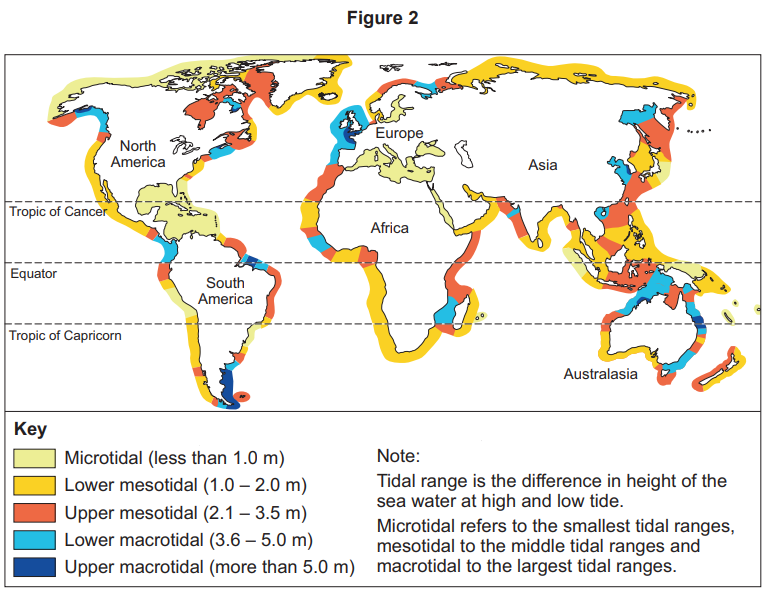
Figure 2 shows information about tidal ranges at coasts around the world.

World map showing tidal ranges by colour: microtidal (yellow), lower mesotidal (orange), upper mesotidal (red), lower macrotidal (blue), upper macrotidal (dark blue).

Analyse the information shown in Figure 2.