Urban Climate (AQA AS Geography): Exam Questions

Exam code: 7036

41 mins7 questions
1
1 mark

What is the urban heat island effect?

  • Higher temperatures are found on large developed islands. The temperatures are higher because of the geographical location of the settlements near to the equator.

  • The physical geography of some cities means that temperatures are higher than the surrounding areas e.g. where they lie on the coast with a warm onshore breeze.

  • Small villages often have higher temperatures than the surrounding areas in the countryside. This is because of the effect of housing and lighting.

  • Large cities have higher temperatures than the surrounding areas because of a variety of human activity. Dark surfaces absorb heat during the day and mass heating causes warming.

2
3 marks

Outline potential impacts of urban areas on thunderstorms.

3
9 marks

Evaluate the importance of the economic characteristics of place in determining the level of atmospheric pollution in an urban area you have studied.

4
1 mark

Which of the following are all characteristics of urban climate compared to the surrounding rural area?

  • Higher temperatures, higher amounts of precipitation and lower average wind speeds

  • Higher temperatures, lower amounts of precipitation and higher average wind speeds

  • Lower temperatures, higher amounts of precipitation and higher average wind speeds

  • Lower temperatures, lower amounts of precipitation and lower average wind speeds

5
9 marks

Assess the extent to which past and present processes of development may have affected levels of atmospheric pollution in an urban area that you have studied.

6
1 mark

Which of the following is a form of air pollution where exhaust fumes interact with sunlight to produce low-level ozone?

  • Methane released from landfill

  • Particulate pollution

  • Photo-chemical pollution

  • Urban heat island effect

7a
4 marks

A student was planning a fieldwork investigation into the urban climate of his local town, Blackburn.

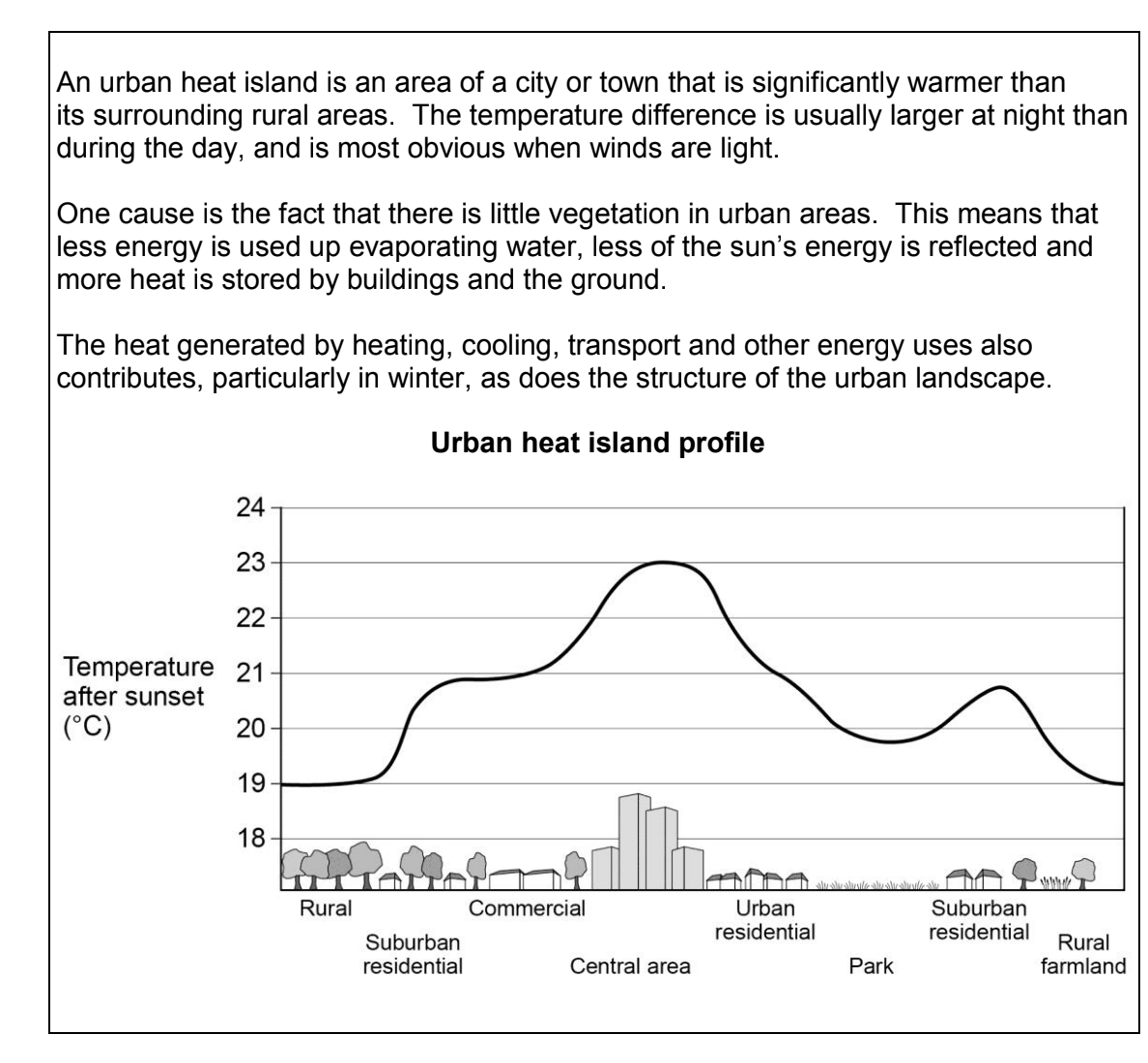
Figure 7 shows some background information used as part of the preparation stage for the fieldwork investigation.

Figure 7

Graph showing the urban heat island effect; temperatures rise from rural to urban commercial and residential areas, peaking in central areas after sunset.

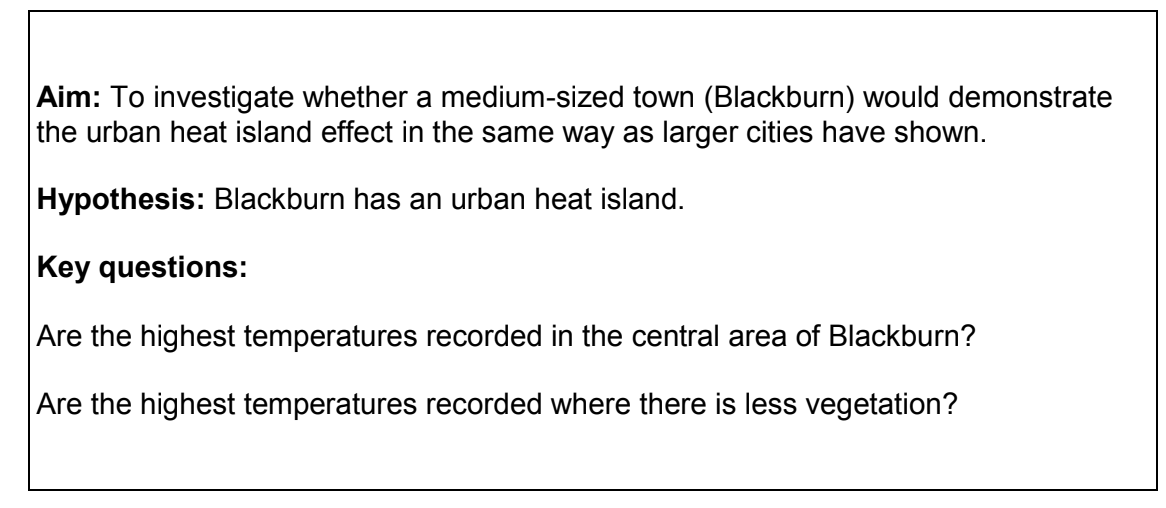
From this information the student developed the aim, a hypothesis and key questions as part of the fieldwork investigation, which are shown in Figure 8.

Figure 8

Text discussing the urban heat island effect in Blackburn, including aim, hypothesis, and key questions about temperature and vegetation areas.

Using Figure 8, suggest what further background reading or research would be useful for the student before planning the investigation in more detail.

7b
2 marks

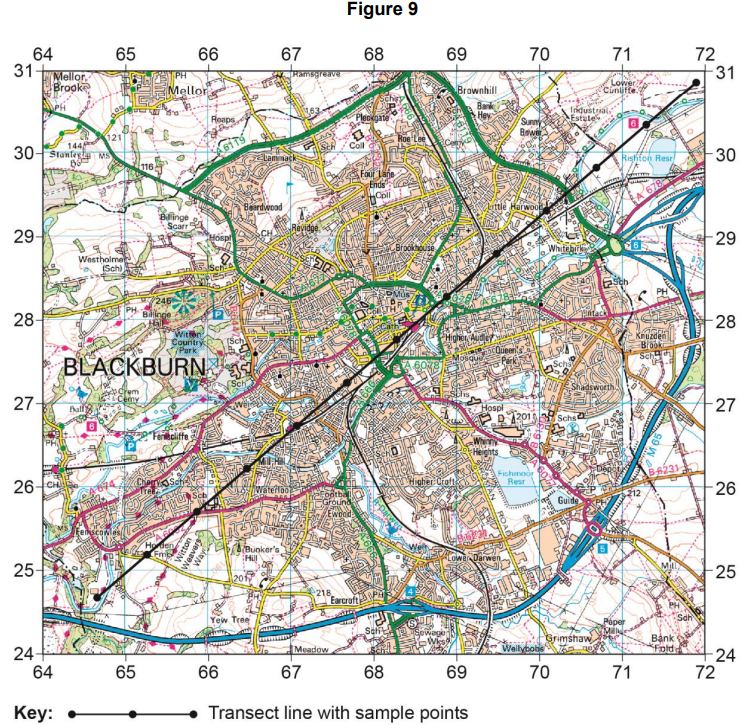
Figure 9 is taken from a 1:50 000 OS map showing the sites for the fieldwork box investigation. The student chose a transect across Figure 9 to sample the data. The transect line and sampling points are shown in Figure 9.

Map of Blackburn showing streets, parks, and landmarks. A black transect line with sample points crosses the map. Grid coordinates range from 64 to 72.

Using Figure 9, outline one advantage of the sampling technique chosen.

7c
2 marks

Using Figure 9, outline one health and safety risk that the student would need to box consider when using this sampling technique to collect data.

7d
9 marks

Figure 10 gives the data collection methods used by the student to carry out the fieldwork investigation.

Figure 10

Primary Data Collection

Date: 1st June 2017
Time: 10am – 4pm

  • Temperature recorded at each location using a smartphone thermometer

  • % built-up land estimated and recorded at each location

  • Photographs taken at each location.

Secondary Data

  • Aerial photographs and OS maps to identify land use

  • Wind speed from eight weather stations in the area.

Using Figures 7, 8, 9 and 10, evaluate the extent to which the planned data collection would enable the student to reach valid conclusions.