Urbanisation (AQA AS Geography): Exam Questions

Exam code: 7036

1 hour14 questions
1
1 mark

Counter-urbanisation is:

  • Caused when the poor are pushed out of an area by gentrification.

  • Movement of people back into a regenerated urban area.

  • Movement of people from urban areas into surrounding rural areas.

  • The flow of commuters into city in the morning then back to the suburbs in the evening.

2
3 marks

Outline reasons for the emergence of megacities.

3
6 marks

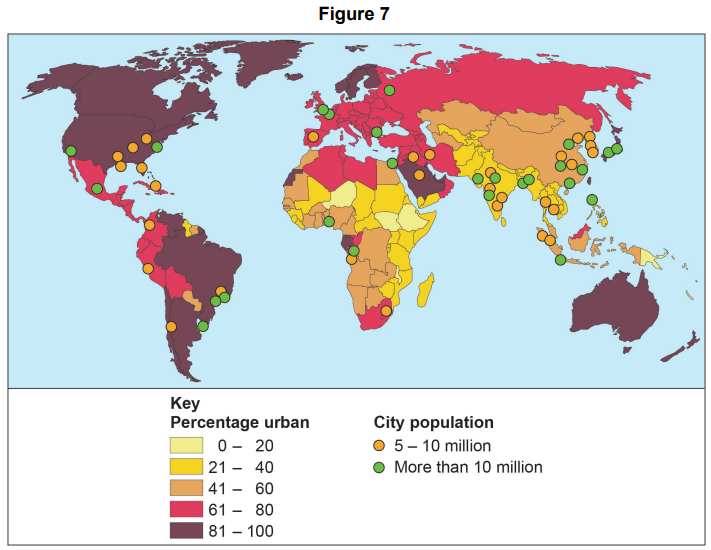
Figure 7 shows the percentage of urban population by country and location of the world’s largest cities in 2014.

World map depicting urbanisation percentage and city population, using colour gradients for urbanisation and dots for city size. Key included for reference.

Using Figure 7, assess the extent to which there is a relationship between city size and percentage urban population.

4
1 mark

What is suburbanisation?

  • An increase in the proportion of a country’s population living in urban areas.

  • The economic and structural regeneration of an urban area following a period of decline.

  • The movement of people from living in central areas of a city to the outer edges.

  • Where wealthy individuals buy and renovate older property in often run-down urban areas.

5
20 marks

‘The future development of mega cities will present increasing social and economic challenges for the people living in them.’

To what extent do you agree with this statement?

6
3 marks

Outline characteristics of cultural and heritage quarters in urban areas.

7
6 marks

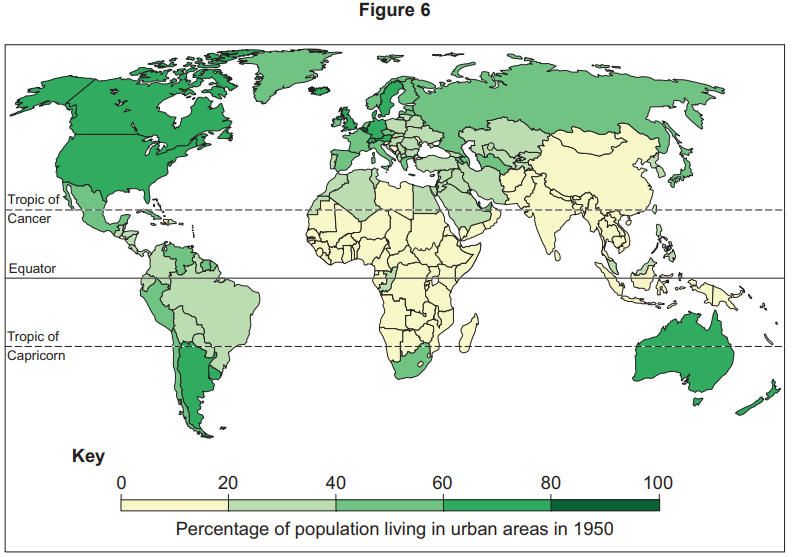
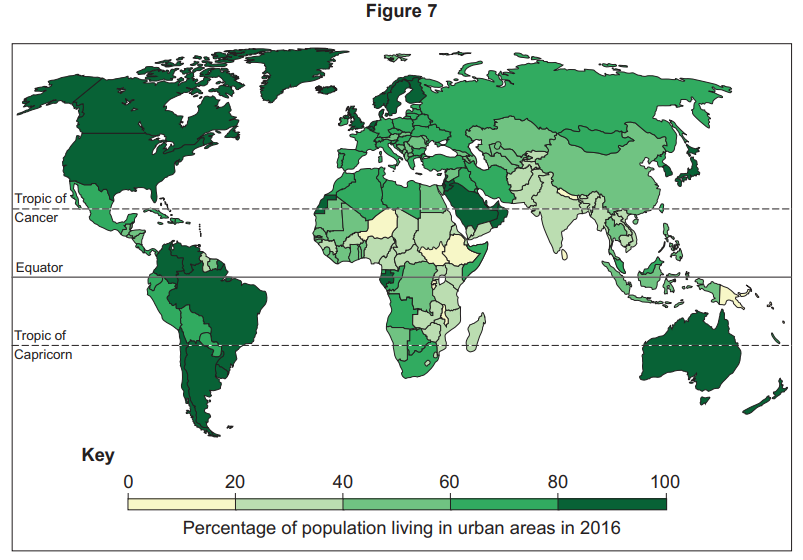
Figure 6 and Figure 7 show information about levels of urbanisation in 1950 and 2016.

World map showing urban population percentages in 1950 with varying shades of green; darker shades denote higher urbanisation. Includes Tropics and Equator lines.
World map showing urban population percentages by country in 2016, using a gradient from light to dark green. Key indicates the range from 0 to 100%.

Analyse the information shown in Figure 6 and Figure 7.

8
1 mark

Which of the following is a cause of the rise of the service economy?

  • Increased energy consumption in urban areas leads to increased demand for fossil fuel extraction.

  • Increasing wealth in urban areas increases demand for leisure and retail facilities.

  • Population growth in urban areas increases demand on agriculture in the surrounding countryside.

  • Rapid urbanisation increases the demand for concrete and steel production.

9
6 marks

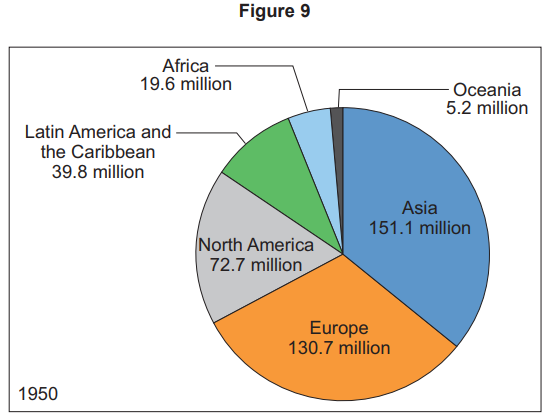
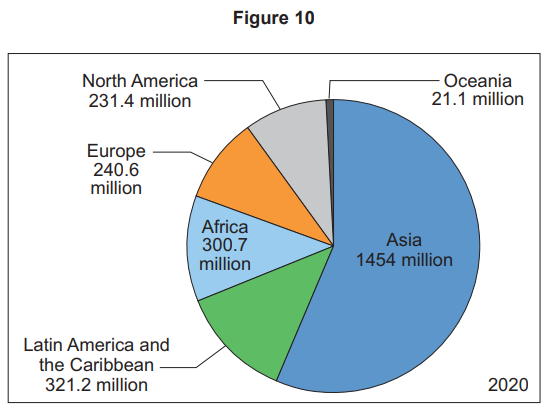
Figure 9 and Figure 10 show populations in those urban areas in different regions of the world that, by the year 2000, had populations over 300 000.

Figure 9 shows total populations living in those urban areas in 1950.

Figure 10 shows total populations living in the same urban areas in 2020.

Pie chart showing 1950 population distribution: Asia 151.1m, Europe 130.7m, North America 72.7m, Latin America 39.8m, Africa 19.6m, Oceania 5.2m.
Pie chart titled "Figure 10" shows 2020 population: Asia 1454m, Africa 300.7m, Europe 240.6m, Latin America 321.2m, North America 231.4m, Oceania 21.1m.

Analyse the data shown in Figure 9 and Figure 10.

10
20 marks

‘Counter-urbanisation affects the human characteristics of place more than the physical characteristics of place.’

With reference to an urban area you have studied, how far do you agree with the statement above?

11
1 mark

What is deindustrialisation?

  • A decline in the manufacturing sector as a proportion of the economy.

  • The process where people and industry move towards the edge of urban areas.

  • When governments attract foreign direct investment from large TNCs.

  • Where affluent young people move into an area increasing property prices.

12
3 marks

Outline the concept of urban resurgence.

13
1 mark

Which of the following best describes a world city?

  • A city that has experienced economic and structural regeneration following a period of decline.

  • A city that has very significant economic or financial and/or political influence on an international scale.

  • A large metropolitan urban area with a population of at least 10 million.

  • A self-contained settlement that has developed beyond the original city boundary and become a city in its own right.

14
3 marks

Outline the process of suburbanisation.