The Carbon Cycle (AQA AS Geography): Exam Questions

Exam code: 7036

2 hours13 questions
1
1 mark

To what does the carbon budget refer?

  • The amount of carbon in the atmosphere at any one time.

  • The balance of exchanges between the four major stores of carbon.

  • The measurement of the quantity of transferred carbon between the land and ocean.

  • The total quantity of the major stores of carbon.

2
20 marks

To what extent do you agree that human activity is responsible for permanent changes to the carbon cycle in tropical rainforests?

3
1 mark

In the carbon cycle, what is respiration?

  • A transfer of carbon from a solid state to a gaseous state, when combined with oxygen during combustion of organic material.

  • Animal and plant cells use oxygen to free energy from stored carbohydrates, releasing carbon dioxide into the atmosphere.

  • As organic material decomposes and is broken down, carbon is returned to the atmosphere as carbon dioxide.

  • Where plants use solar energy to combine carbon dioxide from the atmosphere with water and release oxygen as a by-product.

4
3 marks

Outline impacts of wildfires on major stores of carbon.

5
20 marks

Assess the contribution of natural carbon sequestration in reducing the impacts of human activity on climate change.

6
6 marks

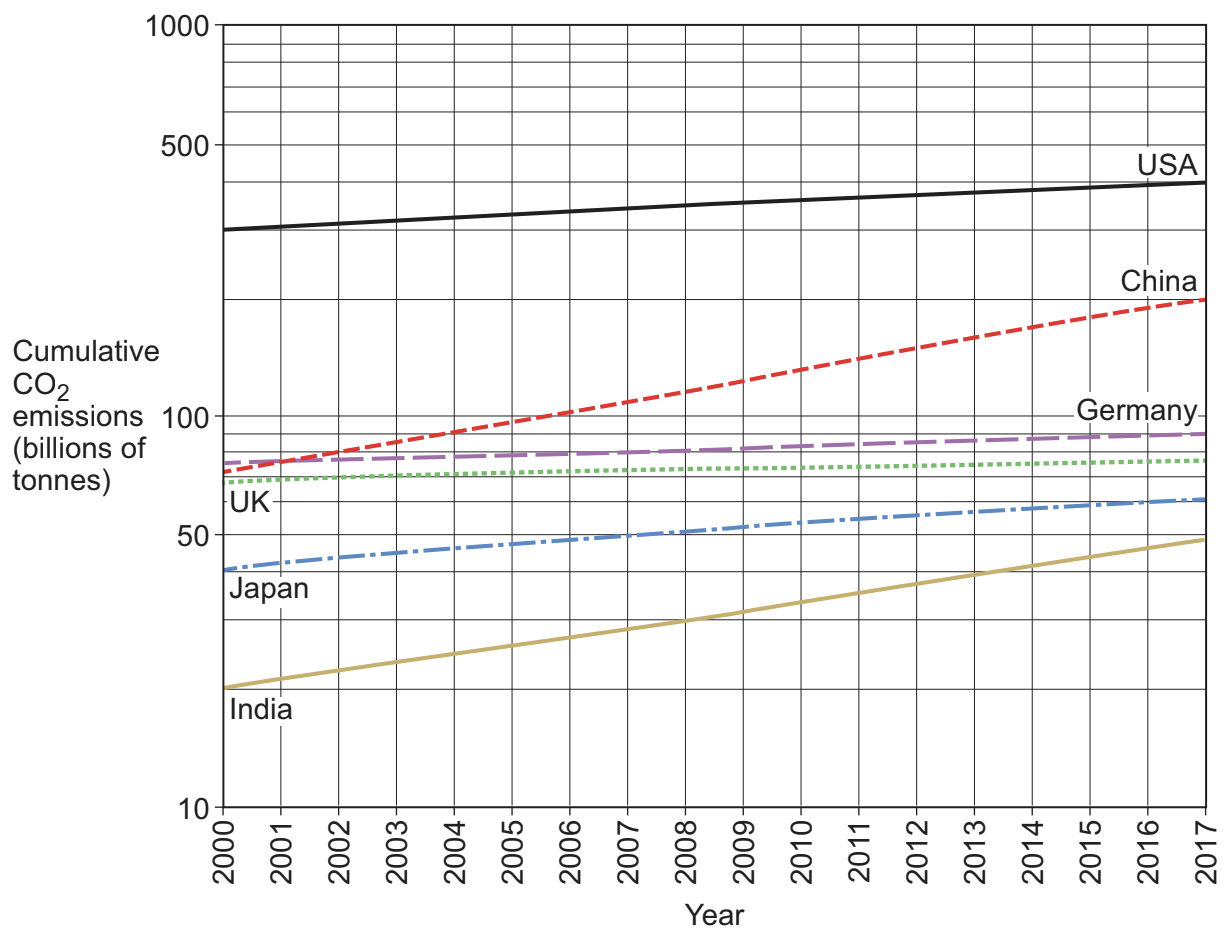
Figure 1 shows information about the cumulative emissions of carbon dioxide (CO2) produced from burning fossil fuels and the manufacture of cement between 2000 and 2017 for selected countries.

Figure 1

k

Analyse the information shown in Figure 1.

7
9 marks

Evaluate how future human intervention in the carbon cycle could affect the size of different major stores of carbon.

8
6 marks

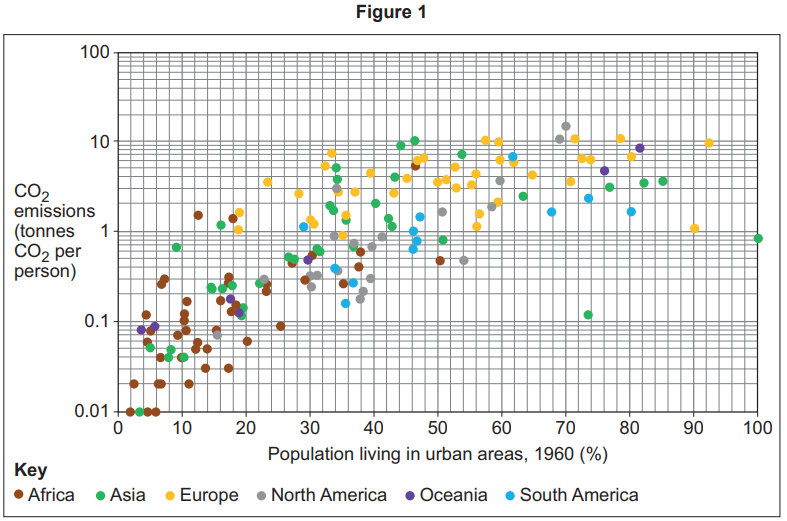
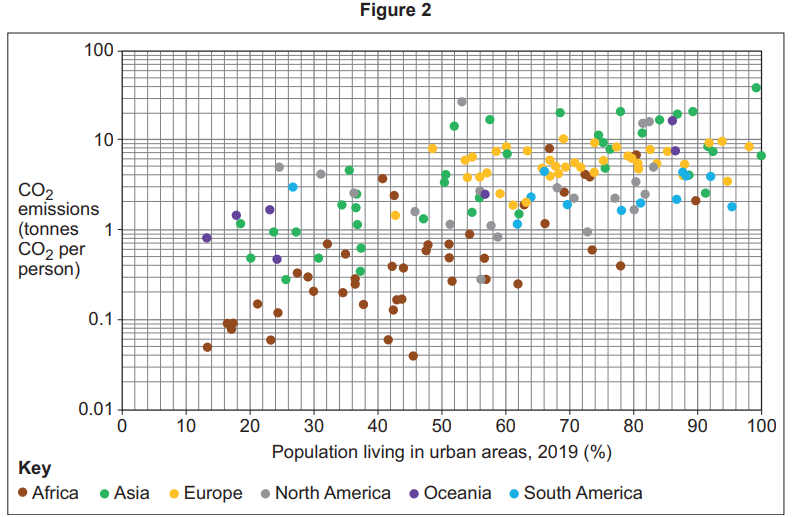
Figure 1 shows levels of urbanisation and CO2 emissions for selected countries, in different continents, in 1960.

Figure 2 shows levels of urbanisation and CO2 emissions for the same selected countries in 2019.

Scatter plot shows CO2 emissions per person against urban population percentage in 1960, with data from continents like Africa, Asia, and Europe in varying colours.
Scatter plot of CO2 emissions per person vs. urban population percentage by continent, with varied dot colours representing different continents.

Analyse the data shown in Figure 1 and Figure 2.

9
9 marks

Assess the scale of changes to stores of carbon in a tropical rainforest you have studied.

10
1 mark

In the carbon cycle, which of these represents the process of respiration?

  • Carbohydrate + oxygen rightwards arrow carbon dioxide + water + energy

  • Carbon dioxide + water + sunlight rightwards arrow carbohydrate + oxygen + energy

  • Carbonic acid + calcium carbonate rightwards arrow calcium bicarbonate

  • Organic compounds rightwards arrow carbon dioxide + methane

11
3 marks

Outline the process of combustion in the carbon cycle.

12
20 marks

‘Human activity has led to irreversible changes to the carbon cycle, causing negative impacts for life on Earth.’

To what extent do you agree with this statement?

13
6 marks

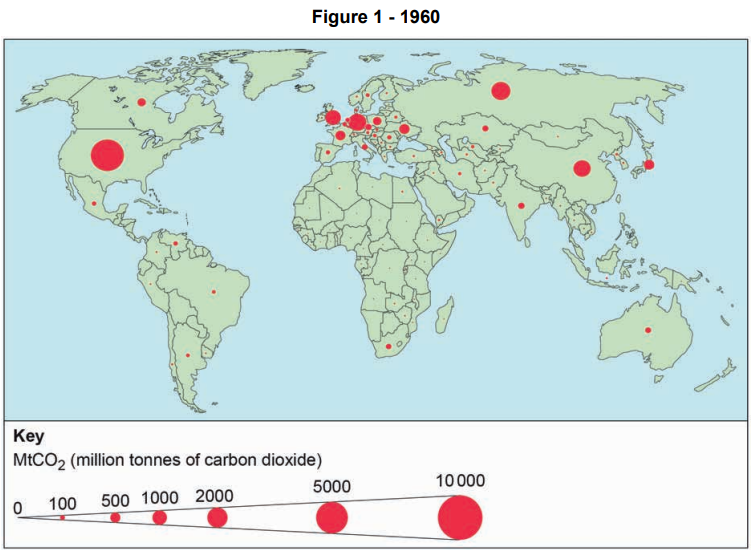
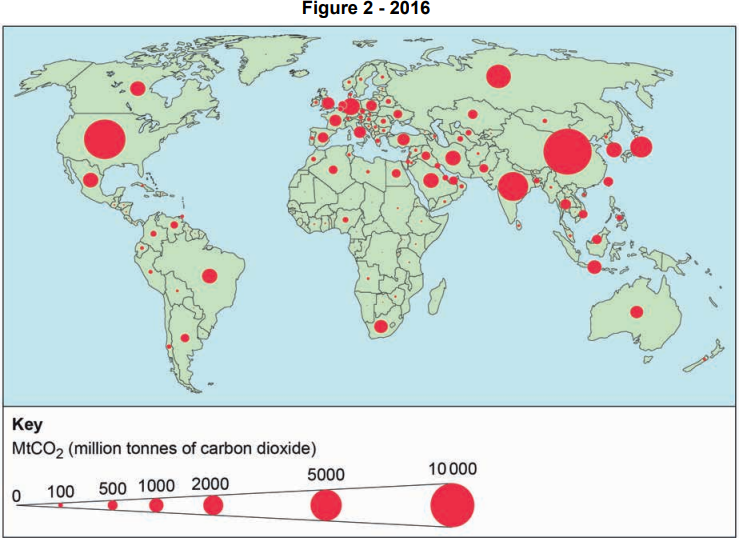
Figure 1 and Figure 2 show information about emissions of carbon dioxide into the atmosphere from fossil fuel use in 1960 and 2016.

World map showing CO2 emissions in 1960 by country. Red circles indicate emission levels, with larger circles for higher emissions. Europe, USA, and USSR prominent.
World map with red circles indicating carbon dioxide emissions by country in 2016. Larger circles represent higher emissions. Key shows scale in million tonnes.

Analyse the data shown in Figure 1 and Figure 2.