Parties & Candidates (Edexcel GCSE Citizenship Studies): Revision Note
Exam code: 1CS0

The UK's major political parties
Political parties are membership-based organisations, made up of citizens who share the same political ideas
Parties can be local, regional, national or UK-wide
The political system in the UK - particularly in England - has been described as a two-party system
The Labour and Conservative parties have, in recent decades, been most likely to win a general election

In recent years we have seen a multi-party system emerge, where a number of parties compete for power
Parties with smaller - but significant - membership and a growing representation in Parliament include:
The Green Party
The Liberal Democrats
Reform
In Scotland, Wales and Northern Ireland there are political parties who only fight elections in their part of the UK
Scotland SNP ( Scottish Nationalist Party)
Wales -Plaid Cymru
Northern Ireland - DUP ( Democratic Unionist Party), Alliance, UUP (Ulster Unionist Party) and Sinn Féin
Differences between UK political parties
Political parties are often described as being right- or left-wing based on their views about the economy, society and the role of the state
Right-wing parties are generally associated with support for free markets, lower taxes, less government intervention in the economy, individual responsibility and traditional values
Examples of right-leaning parties in the UK include the Conservative Party and Reform
Left-wing parties are generally associated with support for greater government involvement in the economy, higher spending on public services, reducing inequality and protecting workers’ rights
Examples of left-leaning parties in the UK include Labour and The Green Party
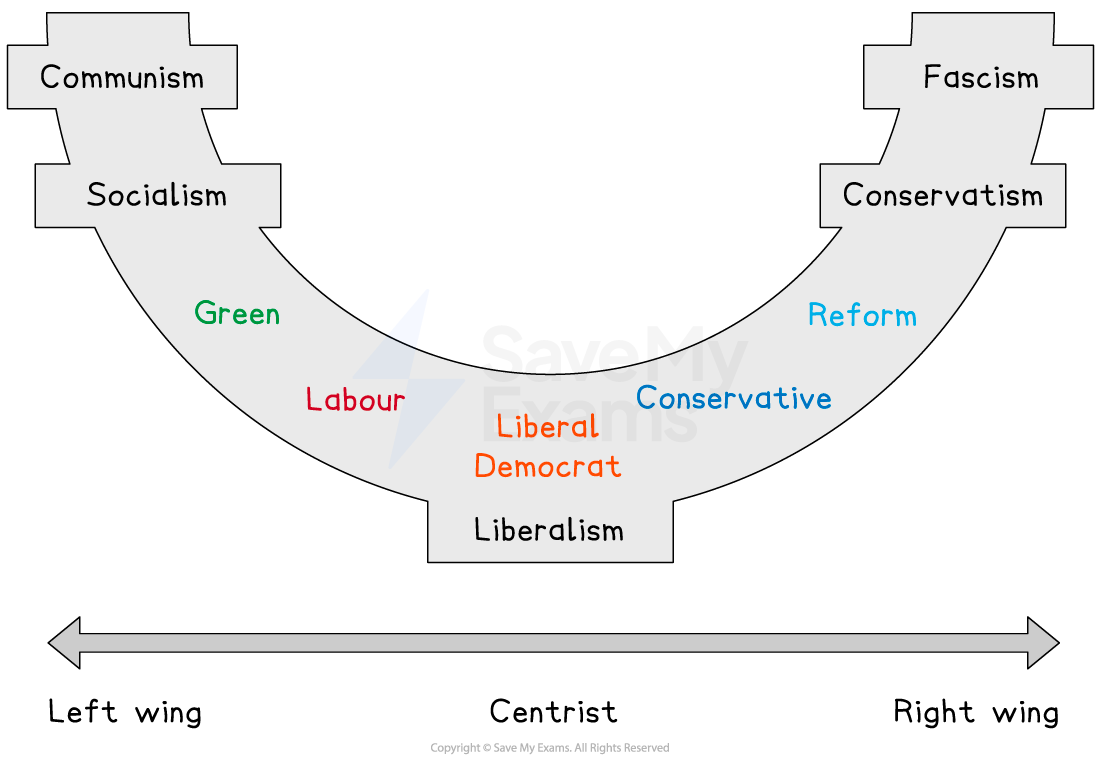
Parties tend to stay close to these positions, but can move to the right or left, especially at elections when they are trying to convince people to support them
Socialism | Liberalism | Conservatism |
|---|---|---|
|
|
|
Reform is a popularist party that is positioned further to the right than the Conservative Party on some issues
On other issues it may appear to have left-wing views, in an attempt to appeal to a broad range of voters
Selection of constituency candidates
Political parties adopt similar processes to select candidates to stand in elections
They use this process to ensure candidates are suitable, trusted and supported, while also allowing local members a role in choosing who represents them
The candidate selection process
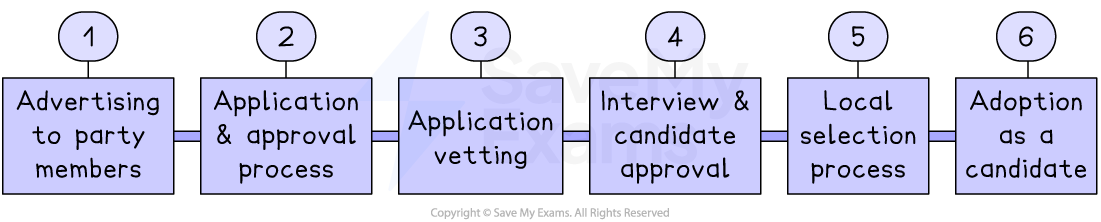
Advertising to party members
Political parties advertise internally for members who are interested in standing as candidates
Parties like Labour and the Conservatives often encourage local activists or campaigners to put themselves forward
Formal application and approval process
Interested individuals must formally apply to the party to become a potential candidate
This usually involves completing an application form explaining their experience, values and reasons for wanting to stand
Vetting of the application
The party will check the application carefully before moving forward
This includes reviewing background information and contacting referees to ensure the applicant is suitable and does not pose a reputational risk
Parties have become stricter after past controversies involving unsuitable candidates
Interview and candidate approval
Applicants attend an interview, often with senior party members or a regional panel
Parties may assess communication skills, knowledge of local issues and commitment to party values
Many parties, such as the Liberal Democrats, provide training and mentoring to help new candidates prepare
Local selection process
Approved candidates who want to stand in a specific ward or constituency meet local party members
Candidates may give speeches and answer questions before local members vote to select who will represent the party
This gives local members a strong say in who represents them
Adoption as a candidate
Once selected, the candidate is publicly announced and becomes the party’s official (adopted) candidate
From this point, they campaign openly using the party’s name, logo and support

Unlock more, it's free!
Join the 100,000+ Students that ❤️ Save My Exams
the (exam) results speak for themselves:

Was this revision note helpful?
