Voting Systems (Edexcel GCSE Citizenship Studies): Revision Note
Exam code: 1CS0

First-past-the-post
First Past the Post (FPTP) is the voting system used in UK general elections and many local elections
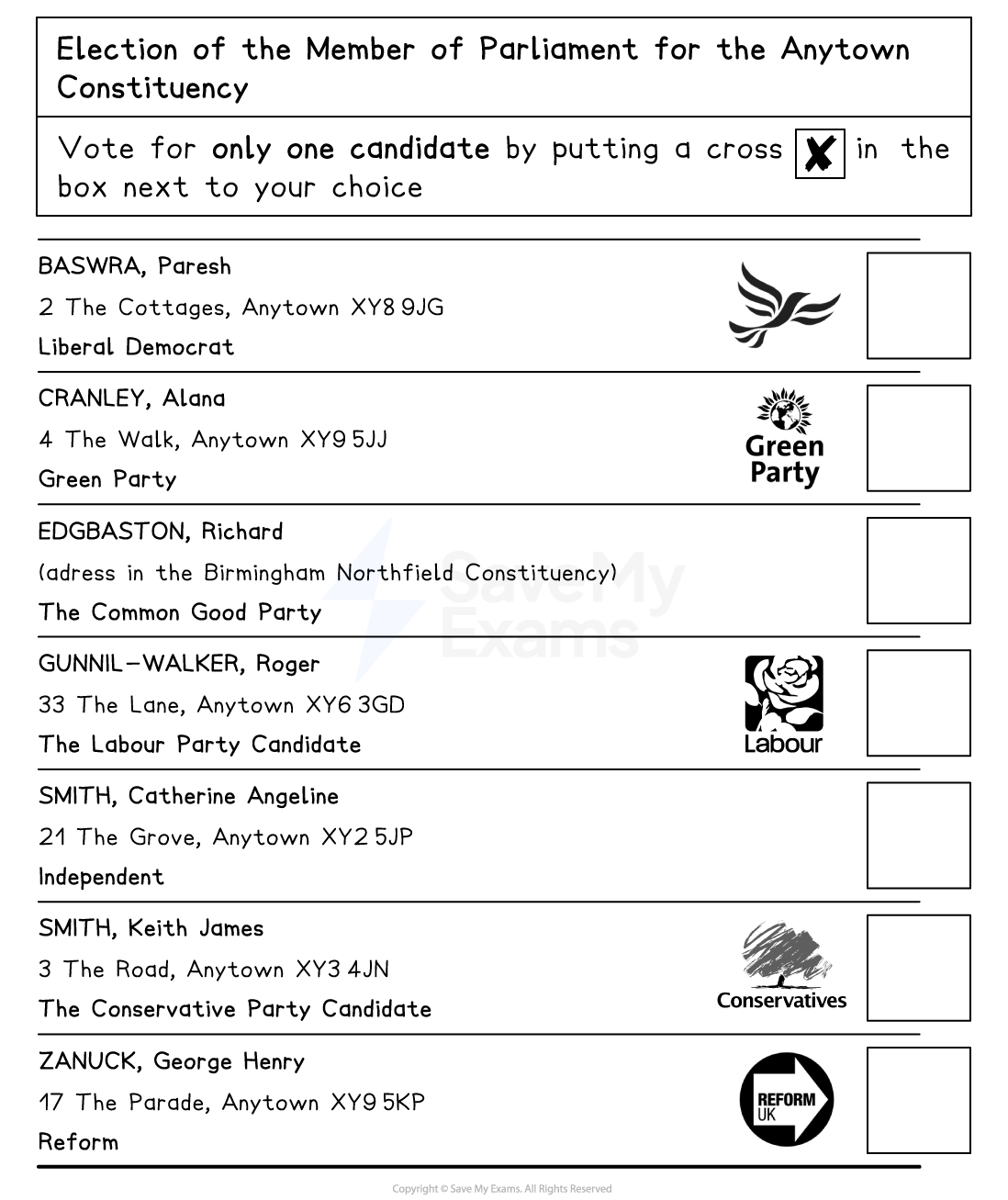
Each voter chooses one candidate by placing a cross (X) next to their name on a secret ballot paper, which is placed into a sealed ballot box at a polling station (or submitted by post)
An example ballot paper
How First Past the Post works
In a general election, each area, known as a constituency, elects one Member of Parliament (MP)
The candidate who receives the most votes wins the seat
They do not need a majority (over 50%) of the votes
In local elections, the process is similar
Electors select their chosen candidate to represent a specific ward
All other votes are not counted towards representation
This system is described as winner takes all
Evaluation of First Past the Post
Advantages | Disadvantages |
|---|---|
|
|
Why FPTP is controversial
Supporters argue it creates stable governments
Critics argue it is unfair and unrepresentative
This debate has led to calls for electoral reform, such as proportional representation
Proportional representation
Proportional voting systems help ensure that the number of seats a party or group wins closely matches the share of votes they receive
Proportional systems aim to make election results fairer and more representative
Fewer votes are wasted and smaller parties have a better chance of gaining representation
Proportional voting systems used in the UK

Supplementary Vote (SV)
Supplementary Vote has been used for directly elected mayors and Police and Crime Commissioners (PCCs) in England
How the system works
Voters choose a first-choice and a second-choice candidate
If one candidate receives more than 50% of first-choice votes, they win outright
If no candidate reaches 50%, all but the top two candidates are eliminated
The second-choice votes of eliminated candidates are then transferred if they chose one of the remaining two
The candidate with the most votes after transfers wins
Key points
SV encourages candidates to appeal to a broader range of voters
It reduces the chance of a winner being elected on a very small share of the vote
Single Transferable Vote (STV)
The Single Transferable Vote is used for elections to the Northern Ireland Assembly
It is also used in local elections in Northern Ireland and Scotland
How the system works
Voters rank candidates in order of preference (1, 2, 3, etc.)
A quota of votes is needed to be elected
If a candidate receives more votes than the quota, their surplus votes are transferred to voters’ next choices
If no candidate reaches the quota, the candidate with the fewest votes is eliminated, and their votes are transferred
This process continues until all seats are filled
Key points
STV produces very proportional results
Voters have more choice, including between candidates from the same party
Elections using STV often result in coalition or power-sharing governments, especially in Northern Ireland
Additional Member System (AMS)
The Additional Member System is used to elect members to:
The Scottish Parliament
The Welsh Parliament (Senedd)
The London Assembly
How the system works
Voters are given two ballot papers:
One to elect a constituency representative using First Past the Post (FPTP)
One to vote for a party list in a wider region
Seats from the party list are allocated to correct imbalances created by FPTP
For example, if a party deserves 15 seats overall based on its list vote but has already won 5 constituency seats, it receives 10 additional seats from its list
Key points
AMS is a mixed system, combining FPTP and proportional representation
It keeps a local representative while making results fairer overall
Smaller parties gain better representation than under FPTP alone
Examiner Tips and Tricks
To gain marks on elections questions, always link the voting system to its outcome
For example, explain how FPTP can create strong governments but wasted votes, or how proportional systems improve fairness but often lead to coalitions
Evaluating impact, not just describing the system, is what examiners look for

Unlock more, it's free!
Join the 100,000+ Students that ❤️ Save My Exams
the (exam) results speak for themselves:

Was this revision note helpful?
