Youth Justice (Edexcel GCSE Citizenship Studies): Revision Note
Exam code: 1CS0

How the youth justice system works
The criminal justice system treats children and young people differently to adults
Children aged 10 to 17 can be arrested and appear in court
In 2023, 59,045 children were arrested
16,589 appeared in court
5,014 received a caution
In 2023, 11,911 children were sentenced
8,306 received community sentences
544 received custodial sentences
3,061 received other court sentences
Youth Court hearings
Cases are usually heard in a Youth Court
The case is heard by three local magistrates or a district judge
If the accused is under 16, a parent, guardian or carer must attend court
The hearing follows similar procedures to a magistrates’ court, including how evidence is presented
If the accused pleads guilty, they may receive a caution
Other sentences include community sentences, training orders or detention in secure youth centres
Serious cases can be transferred to the Crown Court
Youth Offending Teams and the Youth Justice Board
Youth Offending Teams (YOTs) work locally with young people who are in trouble with the law
They support young people who are arrested, charged or sentenced
The Youth Justice Board oversees the youth justice system
It supports improvements in youth justice services
It works to reduce racial inequality in the system
It helps develop youth justice policy and practice
How the youth justice system differs to other courts
Youth Courts are less formal than adult courts
Defendants are usually called by their first names
Children are given greater protection than adults
Their identity cannot usually be disclosed outside court
Reporting restrictions prevent publishing names, addresses, schools or photographs
There is a greater focus on rehabilitation rather than punishment
Community sentences and support are used more often than prison
Custodial sentences are used only in serious cases
Case Study
Ten-year olds in the dock
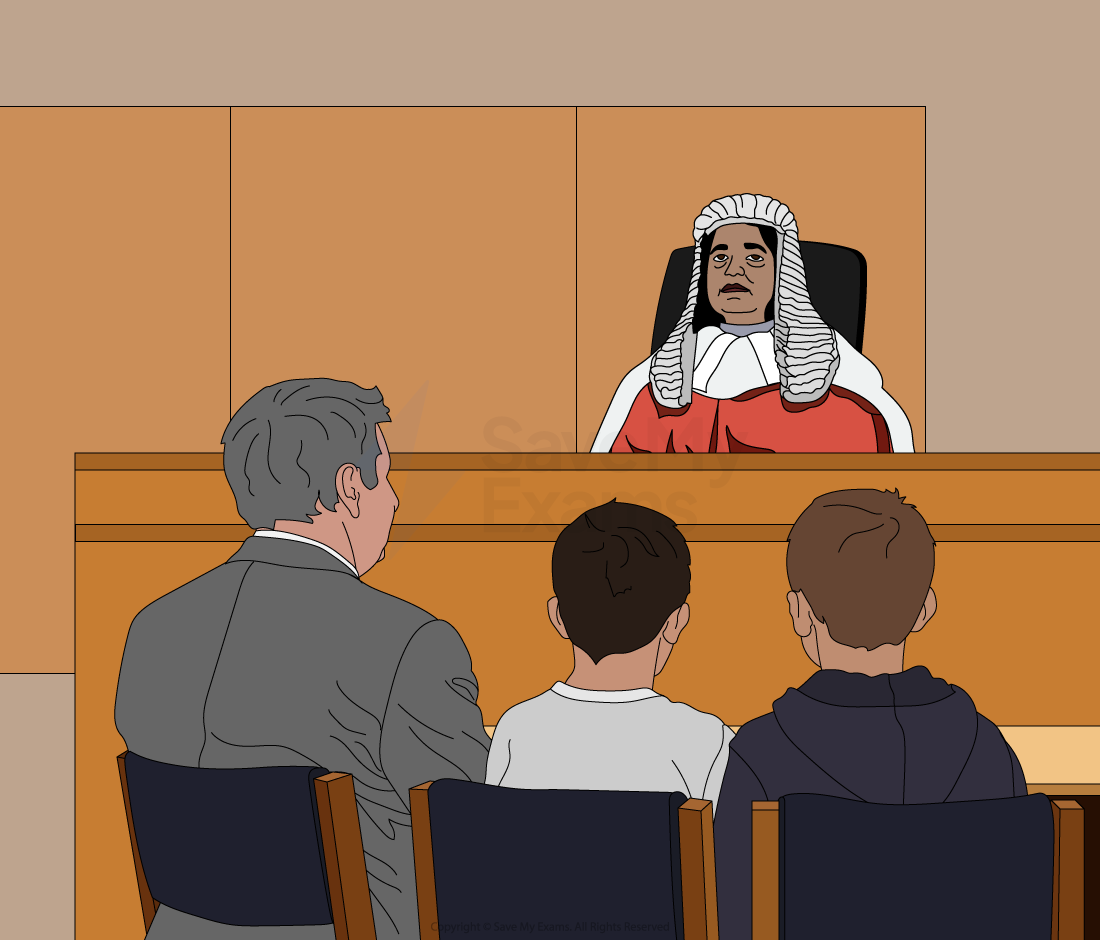
Crime and sentence
In 1993, a two-year-old boy was abducted from a shopping centre, then tortured and murdered by two 10 year old boys
The two boys were arrested and tried in an adult court and found guilty of abduction and murder
They were sentenced to be ‘detained at Her Majesty’s pleasure’ - an indefinite sentence
Further developments
After 8 years, both were released on a lifetime licence and given new identities
One of the boys was returned to prison after several breaches of his licence
In December 2023 he was refused parole, as it was believed he still posed a danger to children

Unlock more, it's free!
Join the 100,000+ Students that ❤️ Save My Exams
the (exam) results speak for themselves:

Was this revision note helpful?
