Principles & Sources of Law (Edexcel GCSE Citizenship Studies): Revision Note
Exam code: 1CS0

Fundamental principles of law
The basis of law in the UK has developed over time
Key concepts are
No person or government is above the law
Legal certainty
People must believe that laws are fair and can be applied in a predictable way
Laws are properly enacted and clear in their purpose
Laws cannot be retrospective
You can be charged for something that was not illegal at the time
There must be due legal process
You cannot be arrested without charge
You have a right to a trial, to legal advice, the right to defend yourself and the right not to speak
If found guilty, you have the right of appeal against the conviction or sentence
In 2023 the House of Lords described the ‘rule of law’ as ‘vitally important to the health of democracy’
Core principles
The legal system in the UK has been built around three core principles
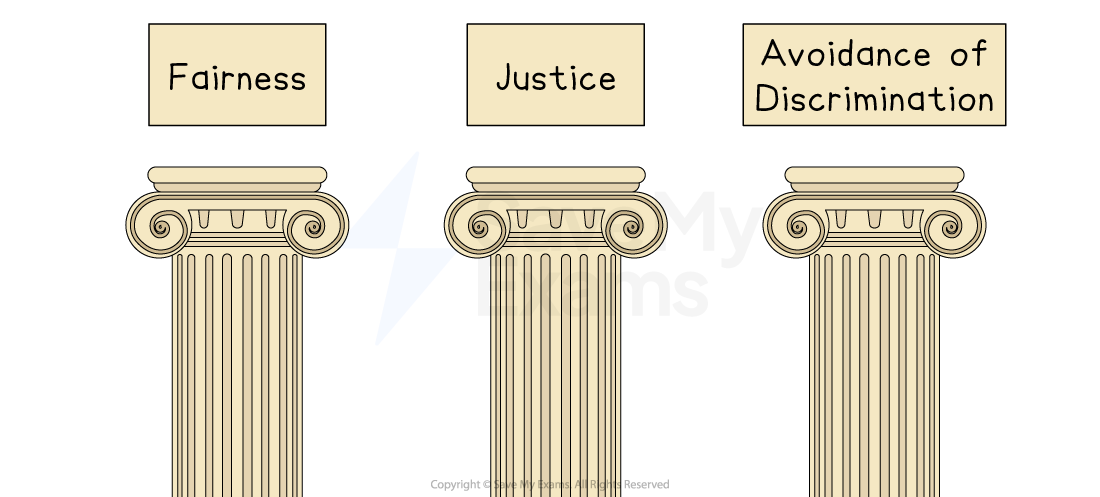
Justice relates to a legal system in which every person is treated equally and has full access to their legal rights
Fairness means that people are treated equally by the law and have the opportunity to present their case
Procedural fairness relates to the legal process - what happens during a criminal investigation and court case
Substantive fairness relates to the outcomes of a case
Avoidance of discrimination means treating everyone fairly and equally by not acting in a way that disadvantages people because of who they are
This element has evolved over time and continues to be developed
Some changes have occurred by changing attitudes in society, other changes by legislation
Examples include the role of women and their rights in society changing dramatically in the last two hundred years, recognition of the rights of children and the passing of laws regarding race relations
Presumption of innocence
The justice system in the UK works on the principle that the accused person has a presumption of innocence
This means it is up to the state to prove to the court that the accused is guilty of the offence for which they are charged
Beyond reasonable doubt is the highest legal standard of proof in a criminal case
It means that a person considering all the evidence believes that the person is clearly guilty
In civil cases the standard of proof is lower
This means a person can be found not guilty in a criminal court but lose in a civil court about the same issue
E.g. In 2015 in Scotland a man was found not guilty of rape. In 2018 the victim in the case brought a civil court case. The court found in her favour and she was awarded damages
Examiner Tips and Tricks
Students often confuse criminal and civil law standards
Remember: criminal cases use beyond reasonable doubt, while civil cases use the balance of probabilities
Case Study
The Hillsborough Disaster
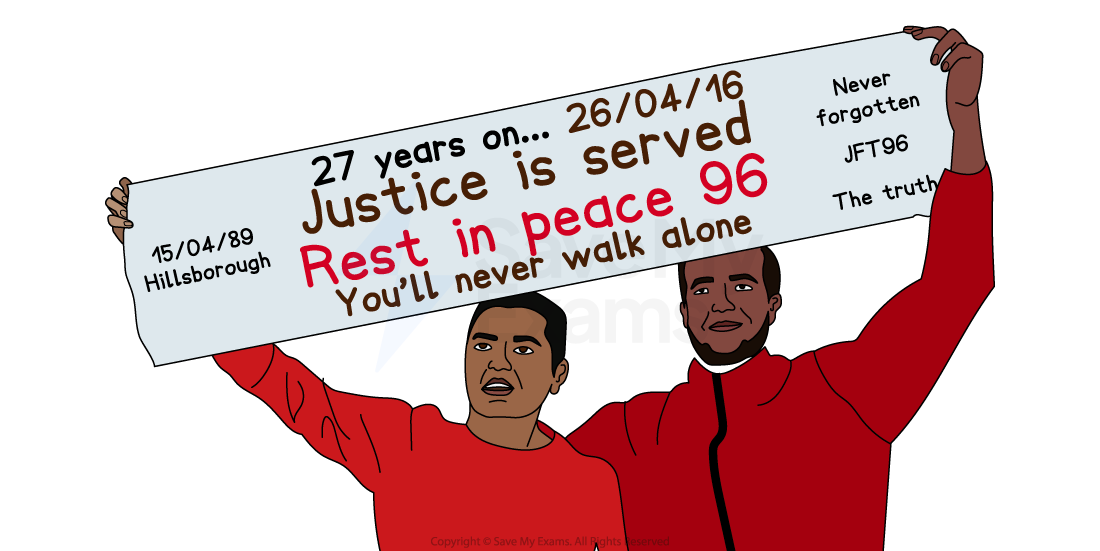
Although no individual police officers were convicted for unlawful killing after the Hillsborough stadium disaster in 1989, civil courts later found authorities liable for negligence
What happened
97 Liverpool fans were killed due to a crush at Hillsborough Stadium
In the criminal courts, senior police officers were found not guilty of manslaughter
However, in the civil courts, families brought negligence claims
Civil court outcome
South Yorkshire Police and Sheffield Wednesday FC were found liable in civil actions for negligence
Families received compensation because the civil court used the balance of probabilities, unlike the criminal standard of beyond reasonable doubt
Legal systems in the UK
The UK does not have one single legal system
England and Wales share one legal system
Laws passed by the UK Parliament apply across England and Wales
The courts and legal procedures are the same in both countries
Scotland has a separate legal system
Scottish law is based on a different legal tradition with its own courts and judges
Some laws and legal processes in Scotland differ from those in England and Wales
For example, Scotland has a different jury system and verdict options
Northern Ireland also has a separate legal system
It has its own courts and legal procedures
Laws reflect Northern Ireland’s specific history and circumstances
Despite differences, there are similarities across the UK
All systems are based on the rule of law
All aim to ensure fairness, justice and protection of rights
Sources of law
Common law
Common law is law that develops through the decisions made by judges in court cases
When judges interpret existing law and make rulings, these decisions can create precedents
Future judges usually then follow these when making later decisions in court
Common law is flexible
Judges can adapt how the law is applied as society’s values change, even when Parliament has not passed a new law
Examples of common law
Donoghue v Stevenson (1932) | Fearn v Tate Gallery (2023) |
|---|---|
|
|
Legislation
Legislation, also known as statute law, is law made by Parliament in the form of an Act of Parliament
These laws set out rules, offences, rights and punishments in written form
Legislation is clear and authoritative, as it represents the will of Parliament, which is democratically elected
However, it can take time to change because it must go through the full parliamentary process
Example of legislation
The Theft Act 1968 | The Human Rights Act 1998 |
|---|---|
|
|
The relationship between common law and legislation
Common law and legislation work together
Judges apply and interpret legislation in court
In doing so they may develop common law to clarify unclear wording or apply laws to new situations
Common law often highlights areas where legislation is out of date or unclear
Parliament may then take steps to update or change the law
This makes the legal system both stable and adaptable

Unlock more, it's free!
Join the 100,000+ Students that ❤️ Save My Exams
the (exam) results speak for themselves:

Was this revision note helpful?
