The Role of Law (Edexcel GCSE Citizenship Studies): Revision Note
Exam code: 1CS0

What is law?
Law is a system of rules created by Parliament and enforced by the courts that people in society are expected to follow
These rules apply to everyone and are backed up by punishments, such as prison sentences, or penalties, such as fines, if they are broken
Law affects everyday life by setting standards for behaviour, rights and responsibilities
It helps people understand what they can and cannot do in different situations
Law plays a role in daily activities such as travelling, working and shopping
Road traffic laws set speed limits and rules to keep drivers, cyclists and pedestrians safe
Employment law regulates pay, working hours, health and safety and protection from unfair dismissal
Consumer law protects people when buying goods or services that are faulty or not as described
Law helps protect individual rights
It ensures people are treated fairly by employers, businesses and public authorities
Why we need laws
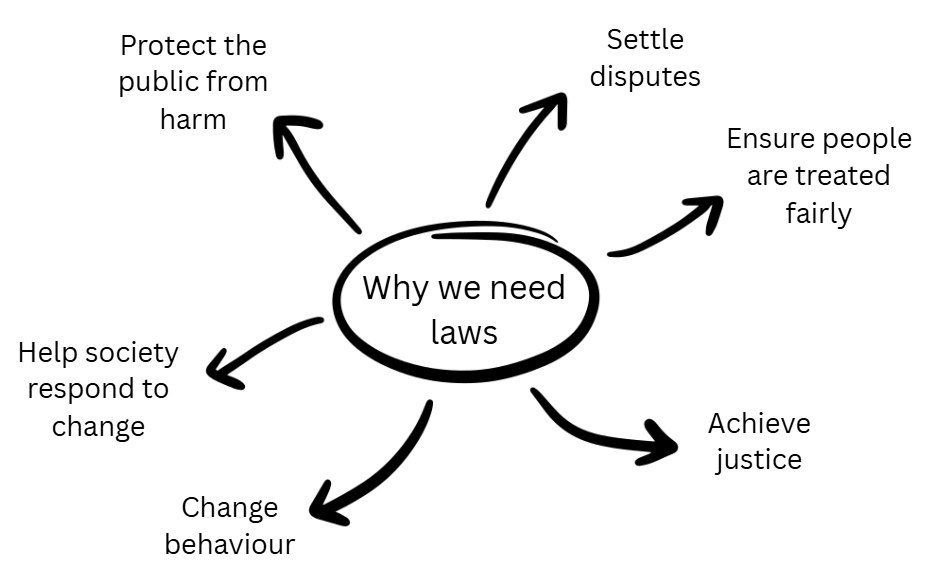
Laws are needed to protect the public from harm
Criminal laws make actions such as violence, theft and fraud illegal
Punishments such as prison sentences and fines act as a deterrent to others
Laws help to settle disputes peacefully
Civil law provides a legal way to resolve disagreements without violence
Courts can decide outcomes in cases involving contracts, housing disputes or personal injury
Laws ensure people are treated fairly and equally
Anti-discrimination laws protect people from unfair treatment
The Equality Act 2010 makes discrimination illegal based on characteristics such as race, sex and disability
Laws are needed to achieve justice
Courts aim to balance the rights of victims and defendants
Sentences and compensation are used to provide fairness and accountability
Laws are used to change behaviour
Penalties such as fines, community sentences or driving bans discourage harmful behaviour
Laws can encourage positive behaviour, such as recycling or paying taxes
Laws help society respond to new situations and changing values
New technology has led to laws on data protection and online safety
Scientific developments and social change have influenced laws on the environment and equality

Unlock more, it's free!
Join the 100,000+ Students that ❤️ Save My Exams
the (exam) results speak for themselves:

Was this revision note helpful?