Respect & Understanding (Edexcel GCSE Citizenship Studies): Revision Note
Exam code: 1CS0

The meaning and importance of respect
Mutual respect is when people value and treat each other fairly by accepting differences in beliefs, cultures and lifestyles
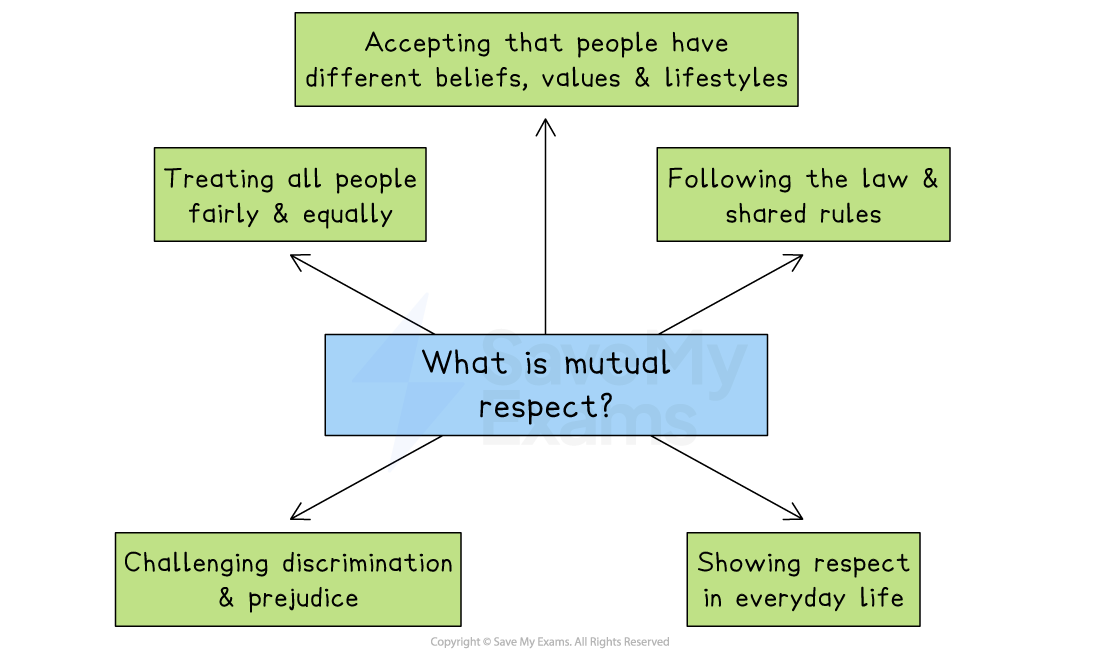
Treating all people fairly and equally, regardless of background
Respecting differences in ethnicity, religion, gender, disability, age and sexuality
Accepting that people may have different beliefs, values and lifestyles
Disagreeing without using discrimination, abuse or violence
Following the law and shared rules
Respecting the rule of law and the rights of others
Challenging discrimination and prejudice
Speaking out against racism, sexism and other forms of unfair treatment
Showing respect in everyday life
Using inclusive language
Respecting cultural or religious practices
Listening to different viewpoints
Why mutual respect is necessary in a diverse society
The UK is a diverse society with many cultures, religions and identities
Mutual respect helps people live together peacefully
It prevents conflict and division
Reduces tension between different groups
Helps resolve disagreements through discussion rather than violence
It promotes equality and fairness
Supports the idea that everyone has equal rights and opportunities
It strengthens community cohesion
Encourages trust and cooperation between individuals and groups
It supports democracy
Allows freedom of speech and freedom of belief while protecting others from harm
Inequality and discrimination
Inequality is when people or groups do not have the same opportunities, rights or access to resources like income, education and healthcare
Discrimination is treating someone unfairly or differently because of characteristics such as their age, gender, ethnicity, religion or disability
Effects on individuals
Effect | Explanation |
|---|---|
Reduced life chances |
|
Poor mental and physical health |
|
Economic disadvantage |
|
Effects on groups
Effect | Explanation |
|---|---|
Poverty and unemployment |
|
Under-representation and exclusion |
|
Stereotyping and prejudice |
|
Effects on communities
Effect | Explanation |
|---|---|
Social division and tension |
|
Reduced community cohesion |
|
Increased pressure on services |
|
Case Study
Inequality in Blackpool

Blackpool is one of the most deprived areas in England
High levels of unemployment and low-paid work
Many people have few financial opportunities and are at risk of poverty
Lower than average educational outcomes reduce people’s chances of accessing well-paid jobs and improving their quality of life
Health inequality means that life expectancy in some areas is several years below the national average
The area has higher rates of long-term illness and mental health issues
Health inequalities have a wider community impact
There is increased pressure on NHS services and local councils
Responses to inequality
Regeneration projects are funded by the government and the local council to improve deprived areas
Investment is made in skills training, housing improvements and health support services to increase opportunities and improve Blackpool residents' quality of life
The Equality Act, 2010
The Equality Act 2010 is a UK law designed to protect people from discrimination
It brings together and strengthens previous equality laws
It protects people with protected characteristics
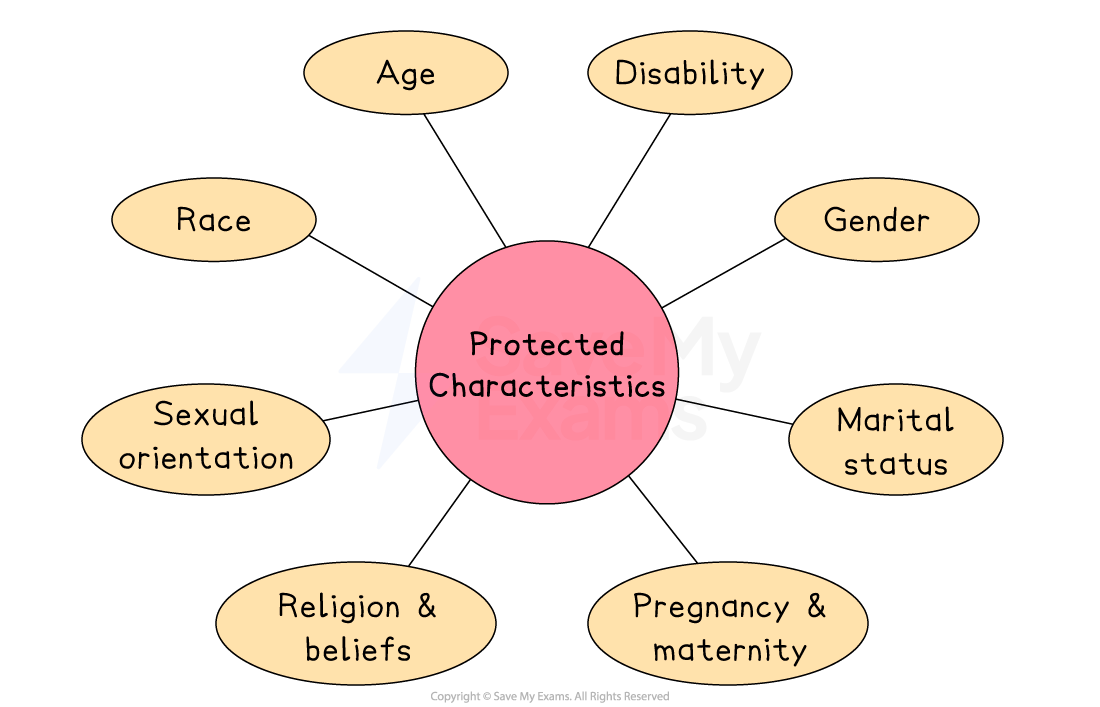
The Act makes discrimination illegal in key areas of life
Employment and the workplace
Education
Housing
Healthcare and public services
Shops, transport and other services
It prevents different types of discrimination
Direct discrimination
Treating someone worse because of a protected characteristic
Indirect discrimination
Rules or policies that unfairly disadvantage certain groups
Harassment
Unwanted behaviour linked to a protected characteristic
Victimisation
Treating someone unfairly because they complained about discrimination
The Act promotes equality and fairness
Employers and service providers must make reasonable adjustments for disabled people
Public bodies have a duty to reduce inequality and promote equal opportunities

Unlock more, it's free!
Join the 100,000+ Students that ❤️ Save My Exams
the (exam) results speak for themselves:

Was this revision note helpful?