Homologous Series (SQA National 5 Chemistry): Exam Questions

Exam code: X813 75

26 mins26 questions
1
1 mark

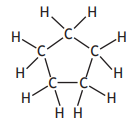
Compound X:

  • is saturated

  • is insoluble in water

  • has two hydrogen atoms for every carbon atom.

Which of the following could be compound X?

  • Propane

  • Propan-1-ol

  • Cyclopropane

  • Propene

2
1 mark

The structures of three members of a homologous series called the dienes are shown.
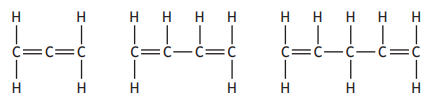
Structural formulas of alkynes: ethyne with a carbon-carbon triple bond, propyne with a triple bond, and 1-butyne with a triple bond and four carbons.

The general formula for the dienes is

  • CnHn+1

  • CnHn+2

  • CnH2n

  • CnH2n−2

3
1 mark

Which of the following formula masses belongs to a hydrocarbon that does not belong to the same homologous series as the others?

  • 16

  • 44

  • 58

  • 70

4
1 mark

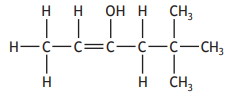
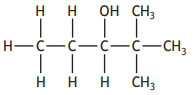
The shortened structural formula for a compound is shown.

CH3CHC(OH)C(CH3)3

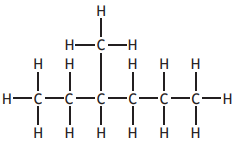
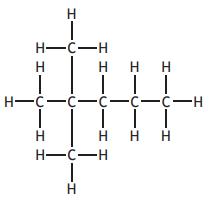
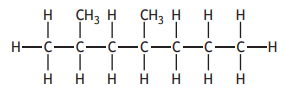
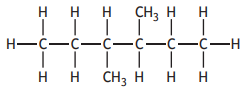
Which of the following is another way of representing this structure?
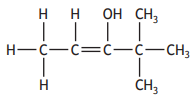
  • Structural formula of 4-methylpent-2-en-1-ol, showing carbon chain with an alcohol group (OH) and methyl side group, double bond in middle.
  • Structural formula of 3-methylbutan-2-ol, showing a four-carbon chain, a hydroxyl group on the second carbon, and a methyl group on the third carbon.
  • Structural formula of an organic compound with six carbon atoms, hydroxyl group, and single/double bonds, showing hydrogen and methyl groups attached.
  • Structural formula of an organic compound with six carbon atoms, including an alcohol group (OH) attached to the second carbon from the right.
5
1 mark

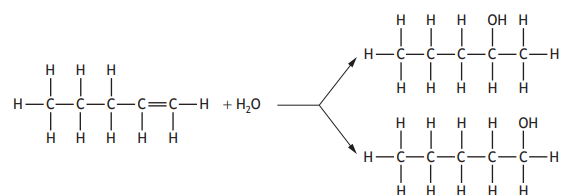
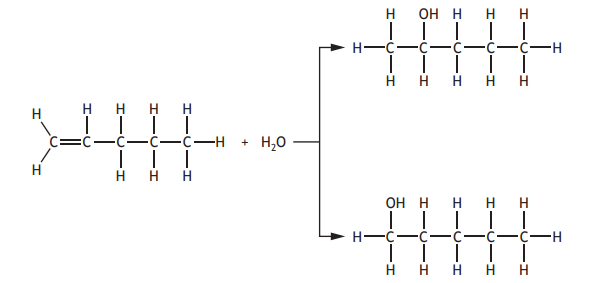
Pent-1-ene reacts with water to form two products.

Chemical diagram showing a linear hydrocarbon reacting with water to form two branched hydrocarbons with hydroxyl groups, indicating a reaction process.

Which of the following alkenes does not form two products on reaction with water?

  • But-1-ene

  • But-2-ene

  • Hex-1-ene

  • Hex-2-ene

6
1 mark

Which of the following is most likely to be a use for alkanes?

  • Fuels

  • Soaps

  • Medicines

  • Flavourings

7
1 mark

The table shows three members of the cycloalkyne family.

Name

Molecular formula

Cyclooctyne

C8H12

Cyclononyne

C9H14

Cyclodecyne

C10H16

Which of the following is the general formula for the cycloalkyne family?

  • CnH2n

  • CnH2n-2

  • CnH2n-4

  • CnH2n-6

8
1 mark

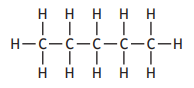
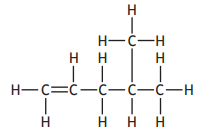
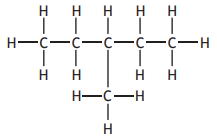
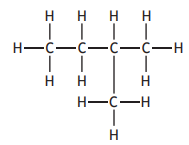
Which of the following compounds is an isomer of pent-2-ene?

  • Structural formula of butane, showing a chain of four carbon atoms, each bonded to hydrogen atoms.
  • Chemical structure of pentene, showing a five-carbon chain with single hydrogen bonds and a double bond between the fourth and fifth carbon atoms.
  • Chemical structure of pentene, a five-carbon alkene with a double bond between the second and third carbons, each bonded to hydrogen atoms.
  • Chemical structure of butane with a methyl group, showing carbon and hydrogen atoms connected by single bonds, depicting the isomer 2-methylpropane.
9
1 mark
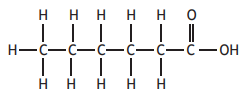
Structural formula of butanoic acid, showing four carbon atoms, single and double bonds with hydrogen, and a carboxyl group (COOH) at the end.

The shortened structural formula for this compound is

  • CH3CH2CH(C2H5)CH2COOH

  • CH3CH2C(CH3)2CH2COOH

  • CH3CH(C2H5)CH2CH2COOH

  • CH3C(CH3)2CH2CH2COOH

10
1 mark

Which bond do ethane, ethene, ethanol and ethanoic acid all contain?

  • C–C

  • C–O

  • C–H

  • O–H

11
1 mark

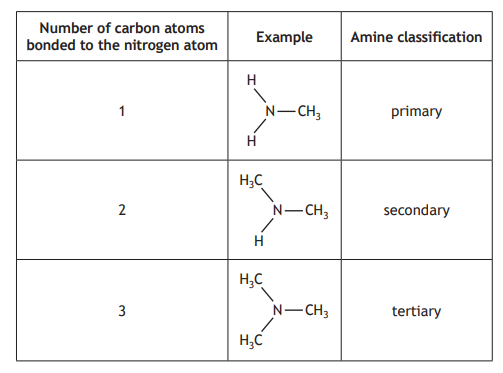
The table shows how the number of carbon atoms bonded to the nitrogen atom determines the classification of an amine.

Table showing amine classification based on carbon atoms bonded to nitrogen: primary (1 carbon), secondary (2 carbons), tertiary (3 carbons) with examples.

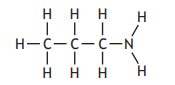
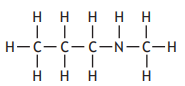
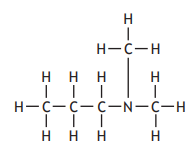
Which of the following is a secondary amine?

  • Structural formula of ethylamine molecule: two carbon atoms bonded to five hydrogens and one nitrogen atom bonded to two hydrogens.
  • Chemical structure of ethylamine, showing a chain of two carbon atoms bonded to hydrogen with an amino group (-NH2) attached to one carbon.
  • Chemical structure of ethylamine, showing nitrogen bonded to an ethyl group and a hydrogen atom, with all bonds and atoms labelled.
  • Structural formula of ethylamine showing a chain of two carbon atoms bonded to hydrogen atoms, with an amino group (NH2) attached to one carbon.
12
1 mark

CH3CH(CH3)CH2C(CH3)2CH3

The name of the above compound is

  • 2,2,4-trimethylpentane

  • 2,4,4-trimethylpentane

  • 2,2,4-trimethylpentene

  • 2,4,4-trimethylpentene.

13
1 mark

The structure of 2-methylbut-2-ene is

Chemical structure of 2-methyl-2-butene with five carbon atoms and eight hydrogen atoms, showing a branched chain and a double bond.

Which of the following represents an isomer of 2-methylbut-2-ene?

  • Chemical structure of 2-methylbut-2-ene, showing a five-carbon chain with double bond and a methyl group at the second carbon position, with hydrogen atoms.
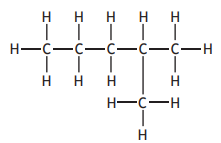
  • Structural formula of isopentane, showing a branched chain of five carbon atoms with hydrogen atoms attached.
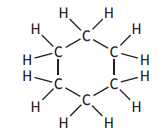
  • Hexagonal cyclohexane molecule diagram with alternating single bonds between carbon atoms, each bonded to two hydrogen atoms.
  • Structural formula of 2-methylpentane showing carbon and hydrogen atoms with lines representing single bonds between them.
14
1 mark

Which of the following would not be produced by an addition reaction of but-2-ene?

  • CH3CH2CH2CH3

  • CH3CH2CH2CH2OH

  • CH3CH(OH)CH2CH3

  • CH3CHBrCHBrCH3

15
1 mark

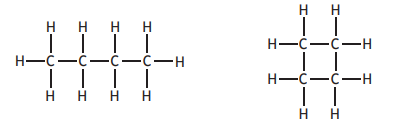
Which of the following is correct for both of the molecules shown below?

You may wish to use the data booklet to help you.

Two molecular structures: left shows a linear chain of four carbon atoms with hydrogen atoms, right shows a square formation of carbon and hydrogen atoms.
  • They can be represented by the general formula CnH2n.

  • They have the same melting point.

  • They are soluble in water.

  • They are saturated.

16
1 mark

Which of the following molecules will decolourise bromine solution and also form an acidic solution when added to water?

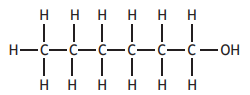
  • Chemical structure of hexanoic acid, showing a six-carbon chain with hydrogen atoms and a carboxyl group at one end.
  • Structural formula of hexanol showing six carbon atoms in a chain, each bonded to hydrogen, with an OH group at the end.
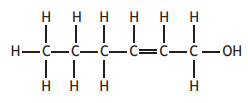
  • Chemical structure of hexanol showing a six-carbon chain with a double bond between the third and fourth carbon atoms and a hydroxyl group at the end.
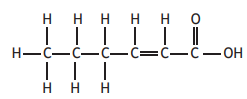
  • Chemical structure diagram of hexenoic acid, showing carbon, hydrogen, and oxygen atoms with single and double bonds.
17
1 mark

The first three members of the alkanones are

Three ethanol molecular structures in a row, each showing two carbon atoms bonded to hydrogen and hydroxyl groups, illustrating structural formulas.

The general formula for the alkanones is:

  • CnH2n−2O

  • CnH2nO

  • CnH2n+1O

  • CnH2n+2O

18
1 mark

Which of the following could be the formula mass of a cycloalkane?

  • 40

  • 42

  • 54

  • 58

19
1 mark

Which of the following compounds does not have an isomer?

  • Cyclopropane

  • But-1-ene

  • Pentane

  • Ethene

20
1 mark

The systematic name for CH3CH2C(CH3 )CHCH3 is

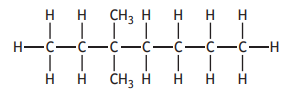
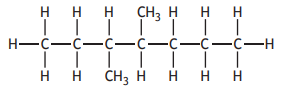
  • 3-methylpentane

  • 2-methylpentane

  • 3-methylpent-2-ene

  • 2-methylpent-3-ene.

21
1 mark

When pent-1-ene undergoes an addition reaction with water, two products are formed.

Chemical reaction showing hexane plus water, forming two potential alcohol products. One product has an OH group on the second carbon; the other on the first.

Which of the following alkenes will also produce two products when it undergoes an addition reaction with water?

  • Oct-2-ene

  • Hex-3-ene

  • But-2-ene

  • Ethene

22
1 mark

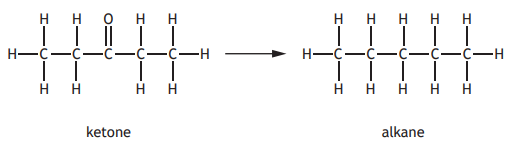
In the Clemmensen reaction, ketones can be converted to alkanes as shown.

Chemical reaction diagram showing a ketone with a C=O bond converting to an alkane with single C-C bonds, annotated with "ketone" and "alkane."

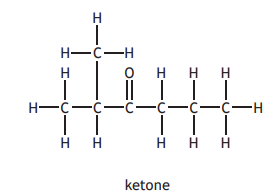
Identify the alkane produced if the following ketone was used in this reaction?

Chemical structure of a ketone molecule, showing carbon, hydrogen, and a single oxygen atom bonded. Underneath, the word "ketone" is written.
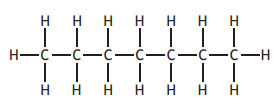
  • Structural formula of hexane, a straight-chain alkane with six carbon atoms and fourteen hydrogen atoms arranged in a single bond pattern.
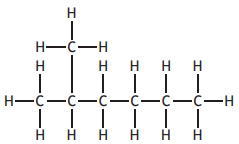
  • Chemical structure of 3-methylpentane with carbon and hydrogen atoms, including a branched carbon chain.
  • Skeletal structure of 2,2,4-trimethylpentane, showing a carbon backbone with hydrogen atoms bonded. Central carbon with three methyl groups attached.
  • Skeletal formula of 2,3,3-trimethylpentane, showing a branched carbon chain with hydrogen atoms attached.
23
1 mark

The shortened structural formula for a compound is

CH3CH2CH(CH3 )CH(CH3 )CH2CH2CH3

Which of the following is another way of representing this structure?
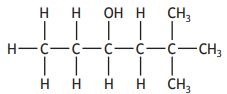
  • Structural formula of hexane with the chemical representation of carbon (C) and hydrogen (H) atoms arranged in a chain with two methyl groups attached.
  • Structural formula of hexane, a linear hydrocarbon chain with six carbon atoms and two methyl groups branching from the third and fourth carbons.
  • Molecular structure of hexane showing a chain of six carbon atoms bonded with hydrogen atoms, featuring two methyl groups attached to the chain.
  • Structural formula of octane, showing a linear chain of eight carbon atoms with bonded hydrogen atoms. Two methyl groups branch off carbon three and four.
24
1 mark

Identify which of the following is an isomer of
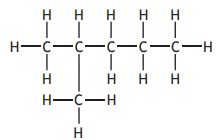
Chemical structure of 2,3-dimethylbutane showing a chain of six carbon atoms and fourteen hydrogen atoms, with lines indicating bonds.
  • Chemical structure of cyclohexane, a hexagonal ring with alternating carbon (C) and hydrogen (H) atoms attached, forming a six-sided shape.
  • Chemical structure of isopentane, showing a branched chain with five carbon atoms and twelve hydrogen atoms, arranged in a specific molecular geometry.
  • Chemical structure of 2,3-dimethylbutane with eight carbons and eighteen hydrogens arranged in a branched chain configuration.
  • Chemical structure of isopentane showing a branched chain of carbon (C) atoms bonded with hydrogen (H) atoms in a specific pattern.
25
1 mark

Which of the following reactions takes place when an alcohol is formed from an alkene?

  • Hydrogenation

  • Combustion

  • Hydration

  • Reduction

26
1 mark

The ether, 1-ethoxypropane, can be made by the Williamson reaction.
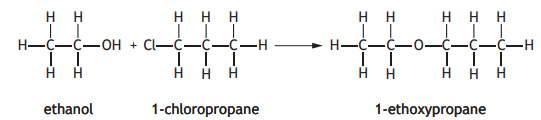
Chemical equation showing ethanol and 1-chloropropane forming 1-ethoxypropane, with labelled structural formulas and an arrow indicating reaction direction.

The structural formula for another ether is shown below.
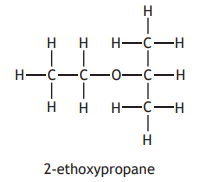
Structural formula of 2-ethoxypropane showing a carbon-oxygen-carbon linkage with surrounding hydrogen atoms, illustrating its chemical composition.

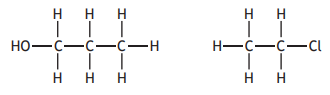
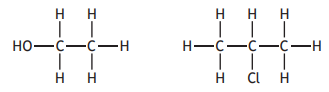
Which of the following pairs of compounds would react together to produce 2-ethoxypropane?
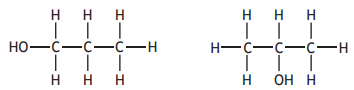
  • Two structural diagrams of propanol isomers: on the left, 1-propanol with the OH group on the first carbon; on the right, 2-propanol with the OH group on the second carbon.
  • Chemical structures of ethanol with two carbon chains and hydroxyl group, and chloroethane with two carbon chains and a chlorine atom.
  • Two chemical structures: the first is ethanol with hydroxyl, carbon, and hydrogen atoms; the second is 1,2-dichloroethane with chlorine and hydrogen atoms.
  • Two chemical structures: left shows chloroethane with chlorine (Cl) on the first carbon; right shows chloromethane with chlorine on the second carbon.