Multiculturalism: Core Ideas & Principles (Edexcel A Level Politics): Revision Note
Exam code: 9PL0

The core ideas of multiculturalism
Examiner Tips and Tricks
For Component 2, Non-Core Political Ideas, students only need to study one idea from the following:
anarchism, ecologism, feminism, multiculturalism
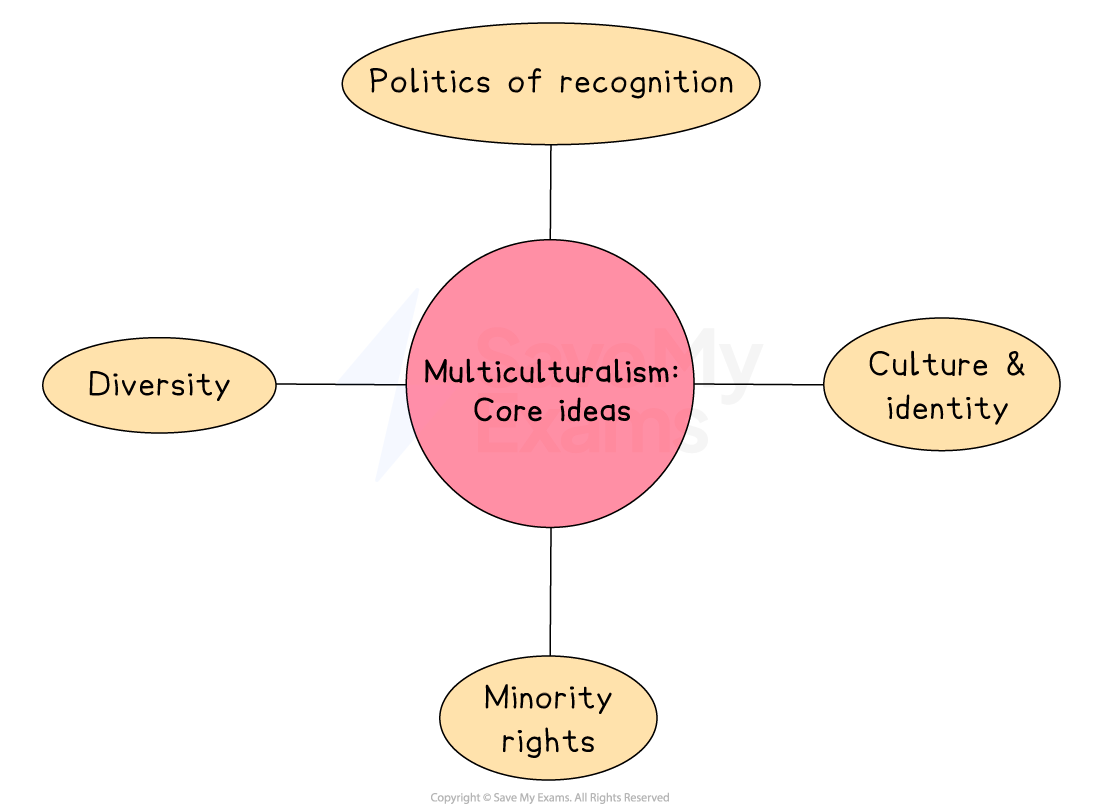
Multiculturalism is a political ideology that recognises and values cultural diversity within society
Multiculturalists argue that individuals and groups derive their identity, dignity and sense of belonging from their culture
These differences should be acknowledged rather than ignored or suppressed
As a result, multiculturalism focuses on ideas such as recognition, minority rights, cultural identity and diversity, and how societies and states can accommodate difference while maintaining social cohesion
Politics of recognition
Politics of recognition refers to the view that cultural, ethnic and religious differences should be formally recognised and respected by society and the state
This recognition affirms identity, dignity and equality for individuals and minority groups
For multiculturalists, the politics of recognition means
Respect for difference
Societies must acknowledge and value cultural, ethnic and religious diversity
Identity affirmation
Recognition supports individual and group self-worth
This affirms equal dignity
Formal equality
Recognition allows for formal equality
This refers to the legal and social equality of all members of society
Minority groups should have equal recognition of their:
languages
traditions
institutions
These have often historically not been respected
Combating marginalisation
Recognition reduces marginalisation of minority groups
Civic participation
Recognition promotes participation in civic life
Participation fosters further recognition
Key thinkers
Charles Taylor
In The Politics of Recognition, argued that misrecognition is a form of oppression
Claimed recognition is essential for personal and cultural identity
Isaiah Berlin
Recognised the value of pluralism
Argued there is a moral need to acknowledge diversity
Will Kymlicka
Argued for group-differentiated minority rights
Claimed these are necessary for full recognition and civic participation
Agreement within multiculturalism | Disagreement within multiculturalism |
|---|---|
|
|
Culture and identity
Culture and identity refer to the way shared values, beliefs and practices shape an individual’s understanding of who they are and their sense of belonging within society
For multiculturalists, culture and identity mean
Foundation of identity
Culture forms the foundation of personal and social identity
This is crucial to understanding who someone believes they are
Shared values
Communities may share values beyond geographical boundaries
These include:
language
religion
customs and traditions
Community cohesion
Shared cultural values can result in collective belonging
Culture provides a sense of:
belonging
security
social cohesion
Self-expression
Individuals express identity through cultural practices and lifestyle
Potential for division
Culture and identity may also create division within society as well as belonging
Key thinkers
Charles Taylor
Argued that personal identity is shaped by recognition within a cultural context
Bhikhu Parekh
Advocated understanding and respecting the norms and values of different groups
Argued this strengthens society
Tariq Modood
Argued that cultural identity is necessary for belonging
Agreement within multiculturalism | Disagreement within multiculturalism |
|---|---|
|
|
Minority rights
Minority rights refer to the legal protections and special measures required to safeguard minority groups from discrimination and exclusion within society
For multiculturalists, minority rights mean
Legal protection
Minority groups should have legal protections specific to their needs
These protections safeguard against discrimination and exclusion
Group-differentiated rights
Minority rights may differ from the rights of society as a whole
This is generally viewed as positive, provided such rights do not clash with broader societal rights
Cultural protection
Minority rights may include support for:
languages
traditions
community institutions
Fairness and inclusion
Rights aim to achieve fairness and prevent marginalisation
Self-governance and special measures
Some minority groups may require:
self-governance
special political or legal measures
Positive discrimination
Minority rights may involve positive discrimination to overcome historic discrimination
Key thinkers
Will Kymlicka
Differentiated between individual rights and group-differentiated rights
Argued group-differentiated rights are necessary for minorities to be treated equally
Charles Taylor
Argued for equal dignity
Claimed there is an ethical imperative to recognise and support minority groups with equal rights and protections
Agreement within multiculturalism | Disagreement within multiculturalism |
|---|---|
|
|
Diversity
Diversity refers to the existence and recognition of multiple distinct cultural groups within society, which multiculturalists see as a defining feature of modern, globalised societies
For multiculturalists, diversity means
Cultural pluralism
Society contains multiple distinct cultural groups
This is increasingly common in a globalised world
Social cohesion through acceptance
Social cohesion can be achieved through acceptance of diversity
When managed inclusively, diversity strengthens rather than weakens society
Cultural enrichment
Exposure to diverse cultures enhances:
creativity
knowledge
Schools, workplaces and the media should reflect and accommodate diversity
Shallow diversity
Diversity is tolerated
Minority groups are still expected to conform to dominant societal norms
Deep diversity
Greater recognition of cultural difference
Cultural differences are encouraged and embedded within a national framework
Key thinkers
Bhikhu Parekh
Argued that diversity enriches democracy
Claimed diversity encourages social learning
Will Kymlicka
Argued minority protections preserve diversity within liberal frameworks
Agreement within multiculturalism | Disagreement within multiculturalism |
|---|---|
|
|

Unlock more, it's free!
Join the 100,000+ Students that ❤️ Save My Exams
the (exam) results speak for themselves:

Was this revision note helpful?
