Nationalism: Core Ideas & Principles (Edexcel A Level Politics): Revision Note
Exam code: 9PL0

The core ideas of nationalism
Examiner Tips and Tricks
For Component 2, Non-Core Political Ideas, students only need to study one idea from the following:
anarchism, ecologism, feminism, multiculturalism
Nationalism is a political ideology centred on the belief that people are bound together through a shared identity and that this identity should be reflected in political organisation
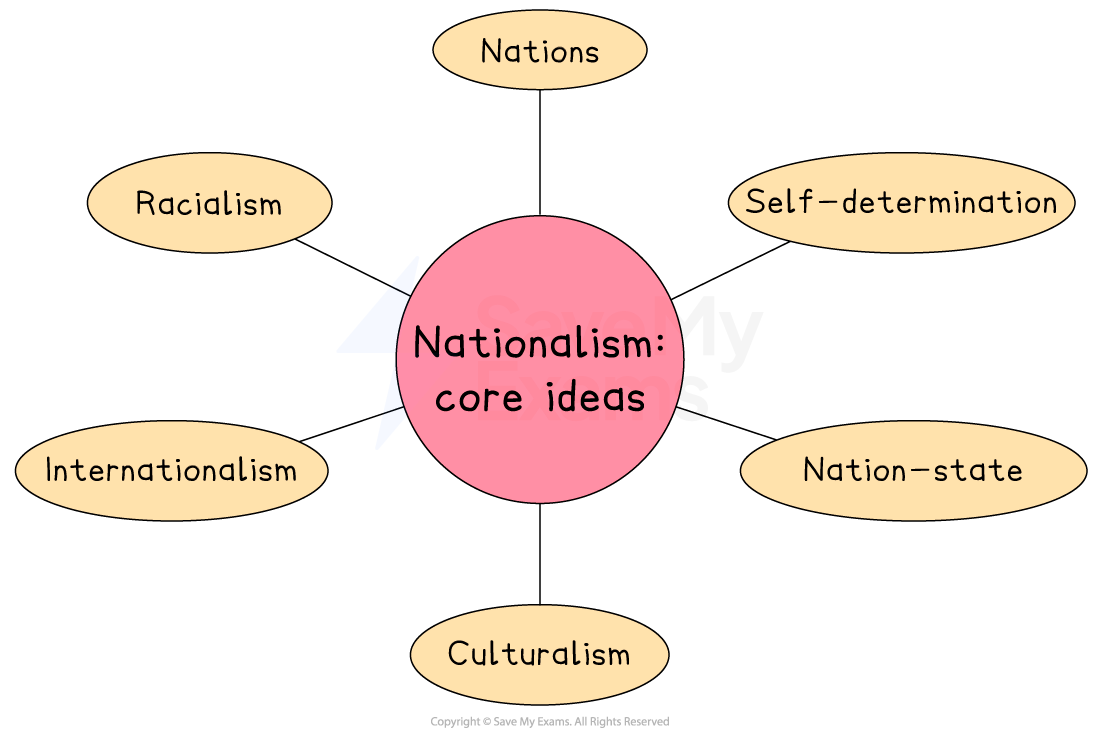
Nationalists argue that nations provide individuals with a sense of belonging and collective purpose, and that political power should be exercised in the interests of the nation
Nations
For nationalists, the existence of nations is central, as nations create a sense of belonging among people bound by shared identity, history and culture
This creates a collective identity
Often centred on citizenship, language and traditions
This shared identity can form a collective consciousness
Nations are often self-defined by those within them
Shared identity may be based on geography, ethnicity, language or culture
This can lead to conflict
Particularly where self-identified nations overlap with one another
Key thinkers
Jean-Jacques Rousseau
Advocated national identity as essential for collective sovereignty
Argued sovereignty originates from the general will
Viewed nations as civic rather than ethnic
Charles Maurras
Argued nations arise from a shared cultural understanding
Emphasised hierarchy and order within the nation
Johann Gottfried von Herder
Argued each nation has a unique ‘volksgeist’ or national spirit
Emphasised the role of language and traditions
Agreement within nationalism | Disagreement within nationalism |
|---|---|
|
|
Self-determination
For nationalists, self-determination is crucial for deciding how nations should be run
It refers to political autonomy
Nations should be self-governing without external control
This includes democratic participation
The people exercise power through national institutions
Citizens have a right to sovereignty
They should be able to establish independent governments to oversee the nation
Self-determination challenges imperialism and domination
It implies resistance to oppression by external powers
Key thinkers
Giuseppe Mazzini
Advocated self-rule, particularly in the unification of Italy
Argued citizens have a moral duty to their nation
Marcus Garvey
Promoted Black self-determination
Argued the African diaspora should achieve political autonomy
Agreement within nationalism | Disagreement within nationalism |
|---|---|
|
|
Nation-state
The nation-state refers to the geographical and political expression of the nation and should not be confused with the nation itself
It is an area of legal sovereignty
The state exercises authority over a defined territory
Within this territory, people are granted citizenship and rights
Legal frameworks define:
state membership
the duties of citizens
Nation-states are internationally recognised
They exist within a system of global legitimacy
Key thinkers
Giuseppe Mazzini
Linked national identity to political independence
Argued every nation should have its own state
Charles Maurras
Argued the nation-state was essential for:
order
hierarchy
tradition
Marcus Garvey
Emphasised the need for self-governed African states
Linked statehood to liberation and autonomy
Agreement within nationalism | Disagreement within nationalism |
|---|---|
|
|
Culturalism
Nationalists share a belief that a shared culture is central to understanding the nation
Shared culture includes:
language
traditions
arts
religion
Culture helps define and shape national identity
It provides continuity between past, present and future generations
Some nationalists argue national culture must be protected from external influence
They believe culture is what holds the nation together
Cultural pride is important
A shared collective memory creates cohesion and unity
Culturalism can be associated with racialism
Through expectations that citizens adhere to dominant cultural norms and values
Key thinkers
Johann Gottfried von Herder
Argued nations are defined by a shared ‘volksgeist’
Emphasised language and culture as the essence of the nation
Jean-Jacques Rousseau
Emphasised a civic culture
Argued participation and shared values support national cohesion
Charles Maurras
Argued traditional culture sustains national identity
Believed adherence to tradition prevents fragmentation of the state
Agreement within nationalism | Disagreement within nationalism |
|---|---|
|
|
Racialism
Racialism is the belief held by some nationalists that nations are created by people who share a common biology
It should not be confused with racism, which argues for a hierarchy of races
Some nationalists define the nation in biological or ethnic terms
Race is seen as central to maintaining national character
There is an underlying belief that members of a race share common characteristics
These characteristics are used to define national identity
Key thinkers
Charles Maurras
Advocated ethnic-based nationalism in France
Argued shared ancestry was central to national identity
Marcus Garvey
Promoted racial pride as a form of empowerment
Used shared racial identity to mobilise the African diaspora politically
Agreement within nationalism | Disagreement within nationalism |
|---|---|
|
|
Internationalism
For some nationalists, a belief in internationalism is fundamental to understanding relations between nations
Internationalism supports global cooperation
Nations should engage in diplomacy, trade and treaties
It emphasises peace and coexistence
Cooperation can prevent war
Sovereignty of other nations should be respected
Liberal internationalism
Supports international cooperation
Emphasises respect for self-determined nations
Socialist internationalism
Argues the interests of the working class transcend national boundaries
Class solidarity can form the basis for international cooperation
Key thinkers
Jean-Jacques Rousseau
Advocated collective peace between states
Supported international cooperation to avoid conflict
Marcus Garvey
Argued for Pan-African internationalism
Promoted solidarity between African-descended peoples across national borders
Charles Maurras
Was sceptical of internationalism
Viewed it as a threat to national culture and cohesion
Agreement within nationalism | Disagreement within nationalism |
|---|---|
|
|

Unlock more, it's free!
Join the 100,000+ Students that ❤️ Save My Exams
the (exam) results speak for themselves:

Was this revision note helpful?