Economic: Dealing With Poverty (Edexcel A Level Politics): Revision Note
Exam code: 9PL0

The north-south divide
The global north - south divide is a way of examining patterns of social, economic and political inequalities seen in the world
This divide makes the generalisation that most of the wealthier nation-states are found in the northern hemisphere of the planet
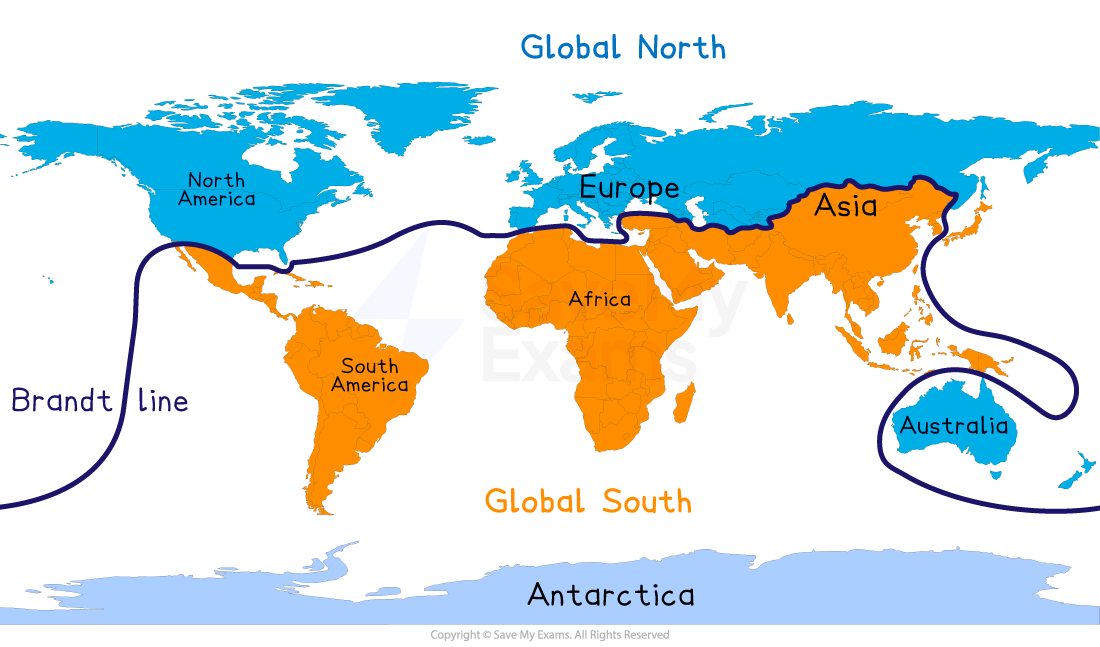
Disparities in wealth impact many aspects of daily life, including:
employment and income
political stability
access to technology
health
educational opportunities
Southern hemisphere states tend to have less power and influence in global politics compared with the northern hemisphere states
This disparity is often linked to a colonial history of exploitation
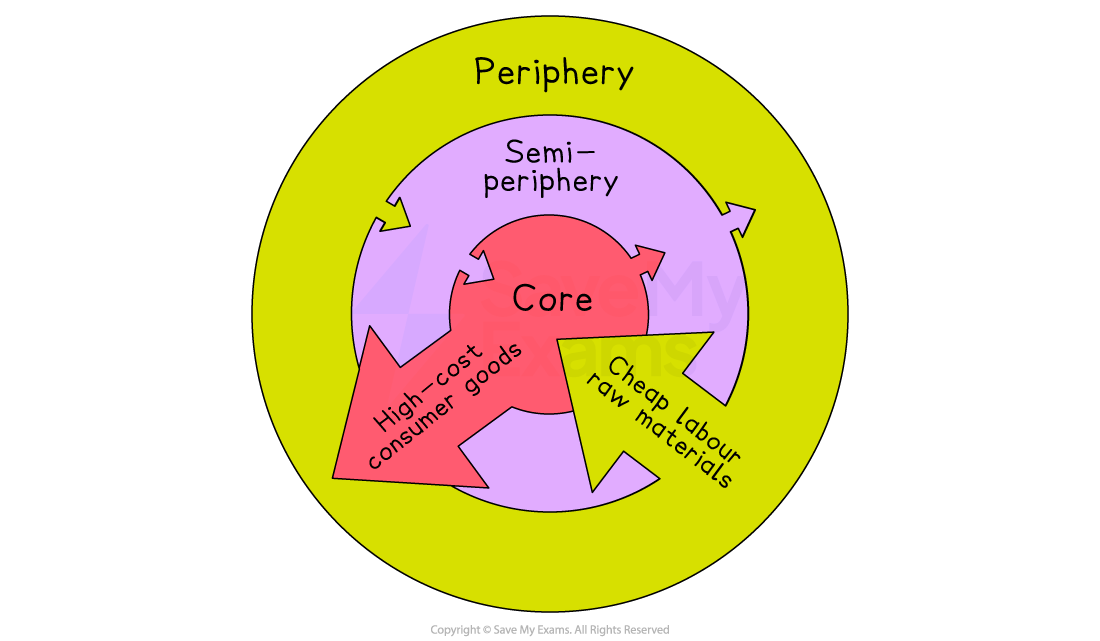
The North-South Divide is a world systems theory
These theories are global models of human, economic and political interactions
The components of a world-system are typically referred to as cores, peripheries and semi-peripheries
Components of a world system
Definition | Examples | Global north or south | |
|---|---|---|---|
Core |
|
|
|
Semi-Periphery |
|
|
|
Periphery |
|
|
|
Other measurements of world-systems theory
Dependency theory
Colonialism established significant power imbalances globally
The legacy of these exploitative relationships continues to shape global politics today
Although globalisation has brought interconnectedness, powerful states continue to dominate many economically focused intergovernmental organisations
Historically, economically developed states relied heavily on exporting one or two raw materials for processing in more economically developed nation states
This persists today
For example Botswana is reliant on the sale of uncut diamonds, which make up 80% of its exports
In recent years demand for natural diamonds has fallen dramatically, causing an economic crisis
Dependency theorists believe that globalisation exploits periphery states
Structural changes to global governance is the best pathway toward development and poverty reduction
Orthodox views
This model is based on a Western approach to development leading to poverty reduction.
The focus is on economic growth
Industrialisation and manufacturing should be prioritised
Free market relationships should be built with other states
Consumer consumption is promoted
It advocates external expertise and assistance from global governance bodies
For example from the IMF or World Bank
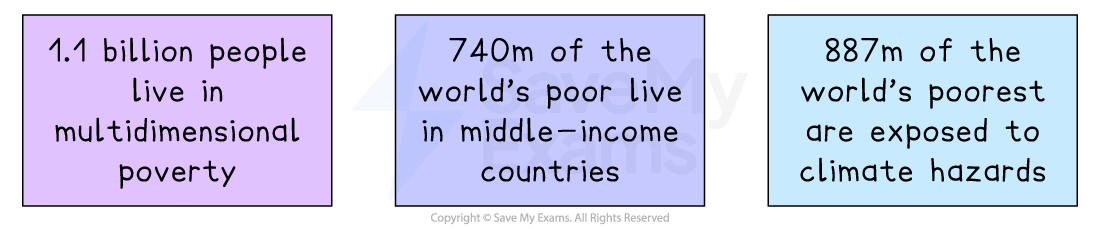
Alternate measurements of poverty
Rather than only measuring a nation state’s total wealth and wealth in relation to other states, other indicators can be considered which may give a more accurate picture of poverty
These can include:
Anyone living on less than US$3 a day is considered to be living in extreme poverty
Other factors beyond the wealth of the state give a better picture of how people live their lives and if they are living in poverty
For example, the United Nations Global Dimension Poverty Index considers multiple factors, including nutrition, years of schooling, child mortality, housing, drinking water, and access to electricity and sanitation
Classical economic development theory
Adam Smith, an 18th-century economist, declared that free markets driven by states, competing against each other without much government interference, lead to improved productivity, innovation and wealth
Although poverty reduction and economic development strategies are more diverse today some of these principles are seen today
Free markets are often associated with globalisation and economic growth
Many intergovernmental organisations, including the WTO, IMF and World Bank promote free trade
Structural theory
This theory proposes that poverty and lack of economic development can be attributed to the need for structural change
Structural change is needed to release periphery states from their subordinate relationship with other states
Less economically developed states must develop their own manufacturing industry and move away from supplying raw materials to core states
Governments must develop infrastructure and prioritise the interests of their own states by challenging existing global economic structures
Structural theory has informed the types of project supported by global governance institutions
For example, Justin Lin, former chief economist of the World Bank, has advocated for global governance institutions to have a renewed focus on supporting states to develop manufacturing and infrastructure to achieve economic equality
Neo-classical development theory
Neoclassical growth theory explains that a steady economic growth rate depends on labour, capital and technology.
Technological change is crucial for sustaining long-term economic growth
United Nations Sustainable Development Goal 9 emphasises the importance of industry, Innovation and Infrastructure in relation to sustainable development

Unlock more, it's free!
Join the 100,000+ Students that ❤️ Save My Exams
the (exam) results speak for themselves:

Was this revision note helpful?