Polarity (Edexcel A Level Politics): Revision Note
Exam code: 9PL0

Unipolarity
Unipolarity is when one state dominates world power
It is also referred to as hegemony
Realists consider all states strive to be the dominant world power
The one state may be benign | The one state may be predatory |
|---|---|
|
|
In reality a unipolar power probably combines the benign and predatory qualities above
The United States is considered to be the sole superpower of the world
Many would argue global politics today is a unipolar system that is under threat
Bipolarity
Bipolarity means that two states dominate world power
Bipolarity can be dangerous
The two states usually become antagonistic toward each other, resulting in conflict
Case Study
The Cold War and superpower rivalry (1945–1991)
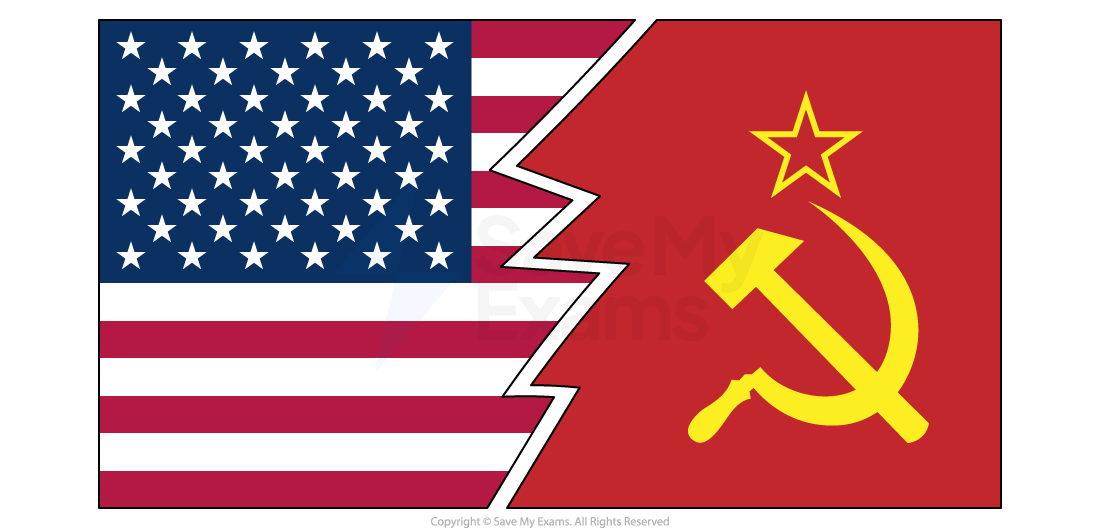
After the Second World War, the USA and the Soviet Union emerged as the two dominant global powers
This created a bipolar international system, with each superpower seeking to expand its influence and limit the power of the other
Both states competed for dominance through military build-up, nuclear weapons and technological advances, rather than direct warfare
The rivalry led to periods of extreme tension, including moments when the world came close to nuclear war, such as the Cuban Missile Crisis
The Cold War ended in 1991 with the collapse of the Soviet Union, leaving the USA as the sole superpower
Bipolar global power structures are not desirable but they may be somewhat inevitable as emerging powers attempt to challenge the power and authority of a unipolar system
Many see the emergence of BRICS states and, in particular, China, as a potential threat to the hegemony of the US
The Thucydides Trap
Greek political philosopher Thucydides, wrote about this situation over 2000 years ago
A unipolar system will always be challenged and other states will do everything they can to increase their power
Eventually a bipolar system will emerge
The original state of the unipolar system will attempt to destroy the rival state, leading inevitably to war
Multipolarity
Multipolarity is a global political situation where more than three states have significant economic, military, diplomatic and cultural power
The United Nations supports the ideas of a multipolar system, arguing this best guarantees economic development and peace
How Liberals see a multipolar world political system | How Realists see a multipolar world political system |
|---|---|
|
|
The changing world order since 2000
The USA has increasingly acted unilaterally rather than cooperatively with other states
The 2001 terrorist attacks in New York and Washington shifted US foreign policy toward a greater willingness to violate state sovereignty if they perceived actors within that state were a threat to themselves
The 2003 Iraq War was led by the USA and was not a UN-sanctioned mission, though allies chose to support the US
The US government under President Trump has withdrawn itself from multiple UN agencies
It has harshly criticised NATO and rescinded its support of multilateral treaties, including the 2017 Paris Climate Agreement
More states are questioning the benefits of multilateral intergovernmental organisations and prioritising sovereignty
The United Kingdom officially left the European Union (EU) in 2020, seeing it as a threat to their sovereignty and economic progress
There has been a rise in states prioritising their own interests over global cooperation, including several members of the UN Security Council (Russia, USA, UK and France)
BRICS nations and in particular China have seen significant growth in terms of economic and diplomatic power
This challenges traditional power structures and the supremacy of the USA in global politics

Unlock more, it's free!
Join the 100,000+ Students that ❤️ Save My Exams
the (exam) results speak for themselves:

Was this revision note helpful?