Systems of Government (Edexcel A Level Politics): Revision Note
Exam code: 9PL0

Democratic government
Citizens hold power through free and fair elections and can influence government decision-making
Multiple political parties operate, giving citizens political choice
Rights and freedoms of citizens are prioritised and protected
Examples of democratic states

Consequences for global order
Democratic states are generally politically stable because citizens have a say in government
International organisations such as the UN, EU and World Bank argue that global order benefits from a high number of democratic states
Democracies tend to favour multilateral cooperation with other states and non-state actors
Semi-democratic government
Contain some democratic features, such as elections and political parties
Despite elections, power is concentrated in the hands of a single leader or dominant party rather than citizens
Rights and freedoms of citizens are more limited than in full democracies
Examples of semi-democratic states

Consequences for global order
Semi-democratic states often appear democratic, with some argued to be in transition from non-democratic to fully democratic systems
NGOs such as Freedom House have raised concerns that some democratic states are becoming increasingly semi-democratic, reducing rights and freedoms
Non-democratic government
Elections do not take place, and citizens have no meaningful role in decision-making
The government is the sole legitimate source of power and is often presented as permanent
Rights and freedoms are heavily restricted, though some may be granted by the state
Examples of non-democratic states

Consequences for global order
Although non-democratic states are members of IGOs such as the UN, they often act unilaterally in global politics
Restricted rights and freedoms can increase the likelihood of internal instability and conflict
Autocratic states
Autocratic states share many features of non-democratic states, including limited political participation
Power is usually held by a small political elite, often centred on a single leader
Leaders are commonly in power for extended periods or for life
Examples of autocratic states

Consequences for global order
The effects on global order are often similar to those of non-democratic states
Autocratic states tend to prioritise their own national interests over international cooperation
They are frequently perceived as a threat by other states, increasing global tensions
Failed states
In failed states, the government lacks internal sovereignty
The state cannot control its borders
It does not have the exclusive use of force
The government lacks authority and trust among citizens
It cannot protect citizens or provide basic necessities
Examples of failed states
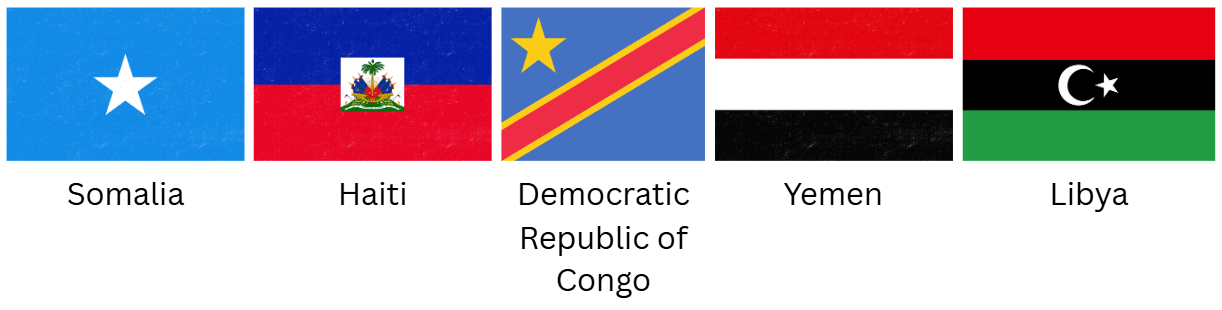
Consequences for global order
In a globalised and interconnected world, the impact of failed states can be far-reaching
Citizens often flee failed states, creating refugee crises that can destabilise neighbouring and distant states
Violent non-state actors may cross borders, spreading conflict and insecurity regionally
Case Study
Haiti as a failed state
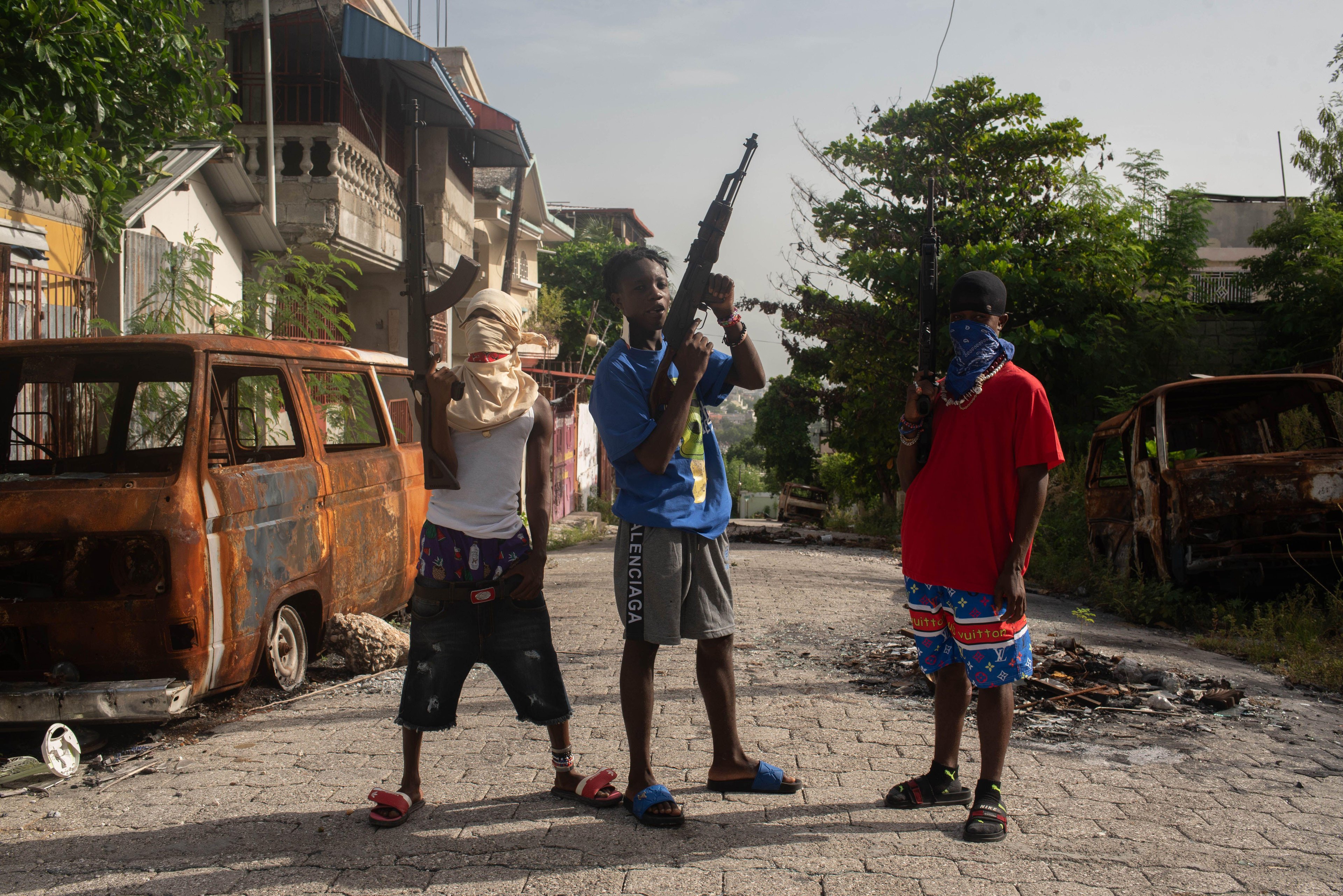
Haiti has a long history of political instability, foreign intervention and corruption
Until 1990 it was ruled by an autocratic regime, and later attempts at semi-democracy failed due to weak sovereignty and gang violence
State collapse
A devastating earthquake in 2010 caused the effective collapse of government
Gangs expanded their control, prisons were emptied and citizens lost access to basic security and essential services
Despite emergency aid from the UN, Red Cross and NGOs, long-term stability was not achieved, earning Haiti the label Republic of NGOs
Breakdown of authority
The assassination of President Moïse in 2021 led to a near-total collapse of law and order, with gangs dominating large areas of the country
International response
In 2025, the UN authorised a Multinational Gang Suppression Force to restore security and deliver humanitarian support
Rogue states
The term “rogue state” is mainly used by the USA to describe states seen as threatening world peace
This label is often applied to states accused of:
sponsoring terrorism
extreme violations of human rights
lacking democratic governance
Many political scientists argue the term is politically motivated, used by powerful states to justify economic isolation or violations of sovereignty
Some scholars have even described the USA itself as a rogue state, arguing its actions pose the greatest threat to world peace
Examples of states labelled as rogue states

Consequences for global order
Hard power tactics, such as economic sanctions, are frequently used against states labelled as rogue
The label has been used to justify military intervention and war, for example, in Libya
Being labelled a rogue state damages international legitimacy, weakens economic stability and can lead to isolation and further decline
Many argue the concept reflects a unipolar global order, where the USA acts as a global police force

Unlock more, it's free!
Join the 100,000+ Students that ❤️ Save My Exams
the (exam) results speak for themselves:

Was this revision note helpful?
