The Spread of Liberalism, Democracy & the Rule of Law (Edexcel A Level Politics): Revision Note
Exam code: 9PL0

The growth of liberal economies
Liberal economies encourage globalisation and the end of trade barriers between states
They are promoted and reinforced by many IGOs (for example the UN, World Bank, IMF) who see it as the best pathway to successful economic growth and development
Economic liberalism
Economic liberalism is an ideology that argues the economy works best when government interference is kept to a minimum and individuals are free to make their own economic choices
It assumes that free markets will regulate themselves through supply and demand, without heavy regulation
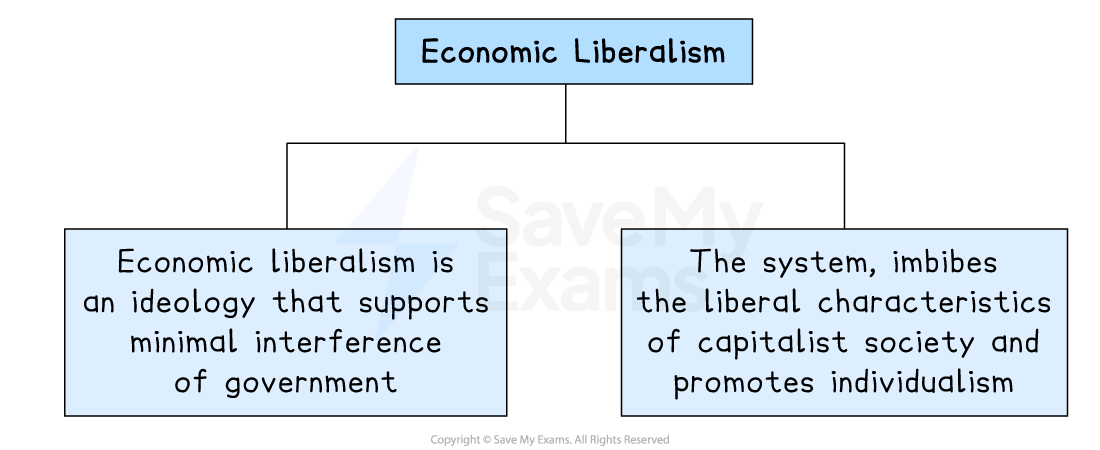
It is a system rooted in capitalism
This means it supports private ownership, free markets and competition rather than state control
It supports minimal government intervention
The state’s role is limited to maintaining law and order, enforcing contracts and protecting property rights, rather than managing the economy
It promotes individualism
Individuals are encouraged to pursue their own economic interests, with the belief that this leads to greater efficiency, innovation and overall prosperity
The growth of democracy
From the start of the 20th century, democracy has been promoted as the ideal form of government by many actors
It enables citizens of states to have power to get rid of corrupt or inefficient governments
It provides transparency into how the government and judicial systems operate and thereby reduces corruption
Democracies are more likely to support efforts to improve the lives of citizens by funding such essential services as infrastructure, education and healthcare
A healthy and educated workforce contributes to a stronger economy
Democracies are more likely to support human rights, which leads to a more stable society
Democracies are more likely to enter into economic and diplomatic relationships, strengthening economic and political stability
The United Nations, World Bank and IMF development initiatives all promote the democratisation of the state seeking aid or assistance
Many argue that although democracies are not perfect, they are the best political system available
The development and spread of the rule of law
The rule of law is the democratic idea that laws, institutions and norms must regulate how power is exercised from the local to the international level
The four main principles of the rule of law
Accountability
Those who exercise power, including government officials, are subject to the law and can be held legally responsible for their actions
Fair and just laws
Laws must be clear, consistent, protect fundamental rights, and apply equally to all citizens
Open government
Laws and decisions should be made through transparent processes, allowing public scrutiny and access to information
Accessible and impartial justice for all
Everyone must be able to access independent courts that apply the law fairly, without bias or discrimination
Although the rule of law is not a modern concept, it is associated with the rise of democratic states
Global governance institutions such as the UN heavily promoted the idea of the rule of law as a means of preserving peace in the aftermath of World War 2

Unlock more, it's free!
Join the 100,000+ Students that ❤️ Save My Exams
the (exam) results speak for themselves:

Was this revision note helpful?
