Types of Power (Edexcel A Level Politics): Revision Note
Exam code: 9PL0

Optional unit
Examiner Tips and Tricks
For Component 3, students only study ONE route: USA Politics (3A) or Global Politics (3B)
Hard power
Power is, arguably, the most important concept in politics
Essentially power is the ability for an actor to create change and influence or sometimes force others to act in a way that is beneficial to the actor
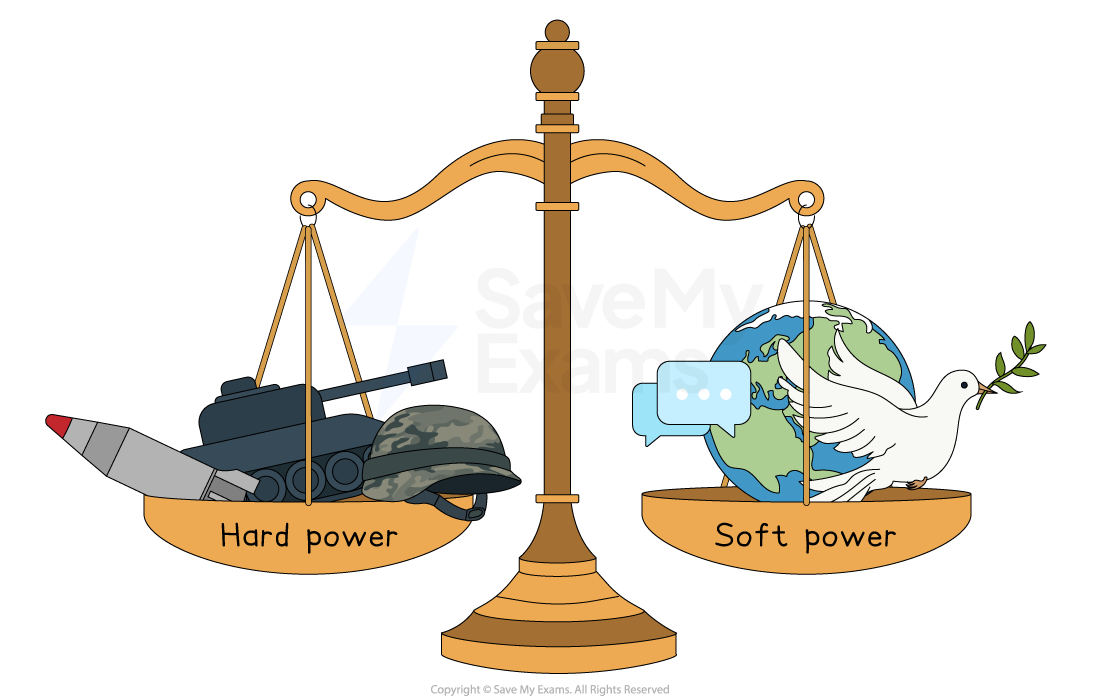
What is hard power?
Political scientist Joseph Nye described hard power as involving force or coercion
By threatening or forcing an actor to do something they would otherwise not do
By promising to give an actor something they need so long as they do what you want them to do
Hard power is often associated with military power
The size and capability of a state’s military power can be a threat to other states even if no violence takes place
It is assumed that a strong military can ensure victory in conflict and may make a state more likely to make use of it to get what they want
Governments have been overthrown by their own state’s military
For example the military seized control of Myanmar's government in 2021
Economic power can also be associated with hard power
States, IGOs, companies and other actors possessing economic strength and resources can provide economic incentives to ensure compliance
Militaries are expensive and require economic power
Wealthy individuals and businesses receive privileges and in some cases are above the law in corrupt political systems
Soft power
Nye also described soft power as that which does not use force or coercion
Soft power uses persuasion rather than force
Over time an actor may present a convincing argument or enough evidence to encourage other actors to do what the actor wants
Diplomatic power is associated with soft power
Dialogue between actors (often states) to discuss mutually beneficial outcomes, thereby resulting in action being taken
The United Nations was established on the principle of using soft power to create positive change and secure global peace
Cultural power is linked with soft power
Power can be gained internationally through cultural factors that have spread globally because they are seen as desirable
France is seen as a culturally powerful state because of its art, fashion, language and cuisine
The United States’ film and entertainment industry has influenced how people talk, dress and even think around the world
Case Study
China’s use of soft power through Confucius Institutes
China has established Confucius Institutes in universities and schools across the world, including in Europe, Africa and the UK
These institutes promote Chinese language, culture and history, offering language courses, cultural events and academic exchanges
They are funded and supported by the Chinese state, linking cultural outreach to foreign policy goals
By improving global perceptions of China, the government aims to increase its international influence without using military or economic coercion
Confucius Institutes can help China build long-term relationships with future political, academic and business elites
However, critics argue they may limit academic freedom and promote a state-approved narrative, leading some countries to close or restrict them

Unlock more, it's free!
Join the 100,000+ Students that ❤️ Save My Exams
the (exam) results speak for themselves:

Was this revision note helpful?
