The Concept of Hazards (AQA AS Geography): Exam Questions

Exam code: 7036

43 mins7 questions
1
1 mark

What is risk sharing as a response to natural hazards?

  • Where people and communities adjust how they live their lives in order to reduce their level of vulnerability to hazards.

  • Where people and communities feel there is little that can be done to mitigate the hazard they face, so take no preventative measures.

  • Where people and communities jointly invest in projects to protect against impacts and take out insurance against losses.

  • Where people and communities monitor hazards in order to give warnings for future potentially hazardous events.

2
6 marks

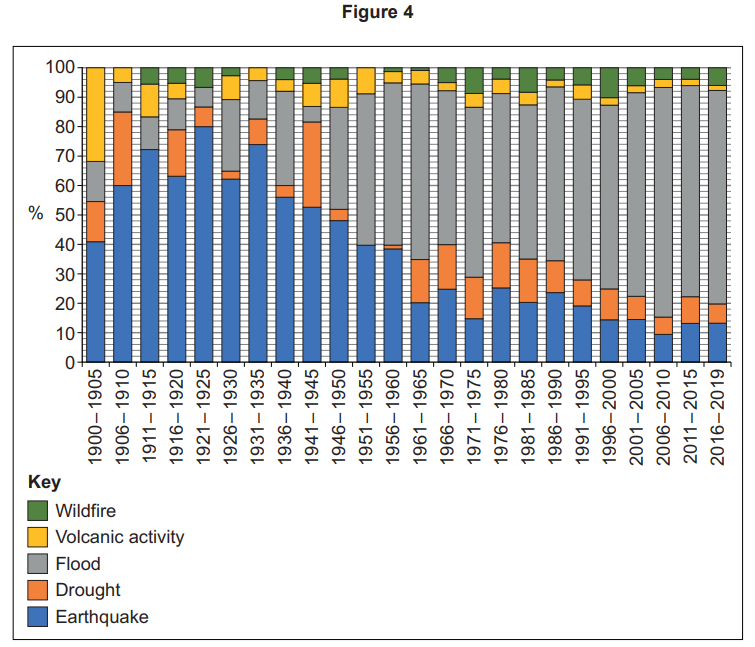
Figure 4 shows information about the proportions of selected natural hazards reported globally from 1900 to 2019.

Stacked bar chart showing types of natural disasters from 1900 to 2019. Categories include wildfire, volcanic activity, flood, drought, and earthquake.

Analyse the information shown in Figure 4.

3
3 marks

Summarise the main features of the Hazard Management Cycle.

4
6 marks

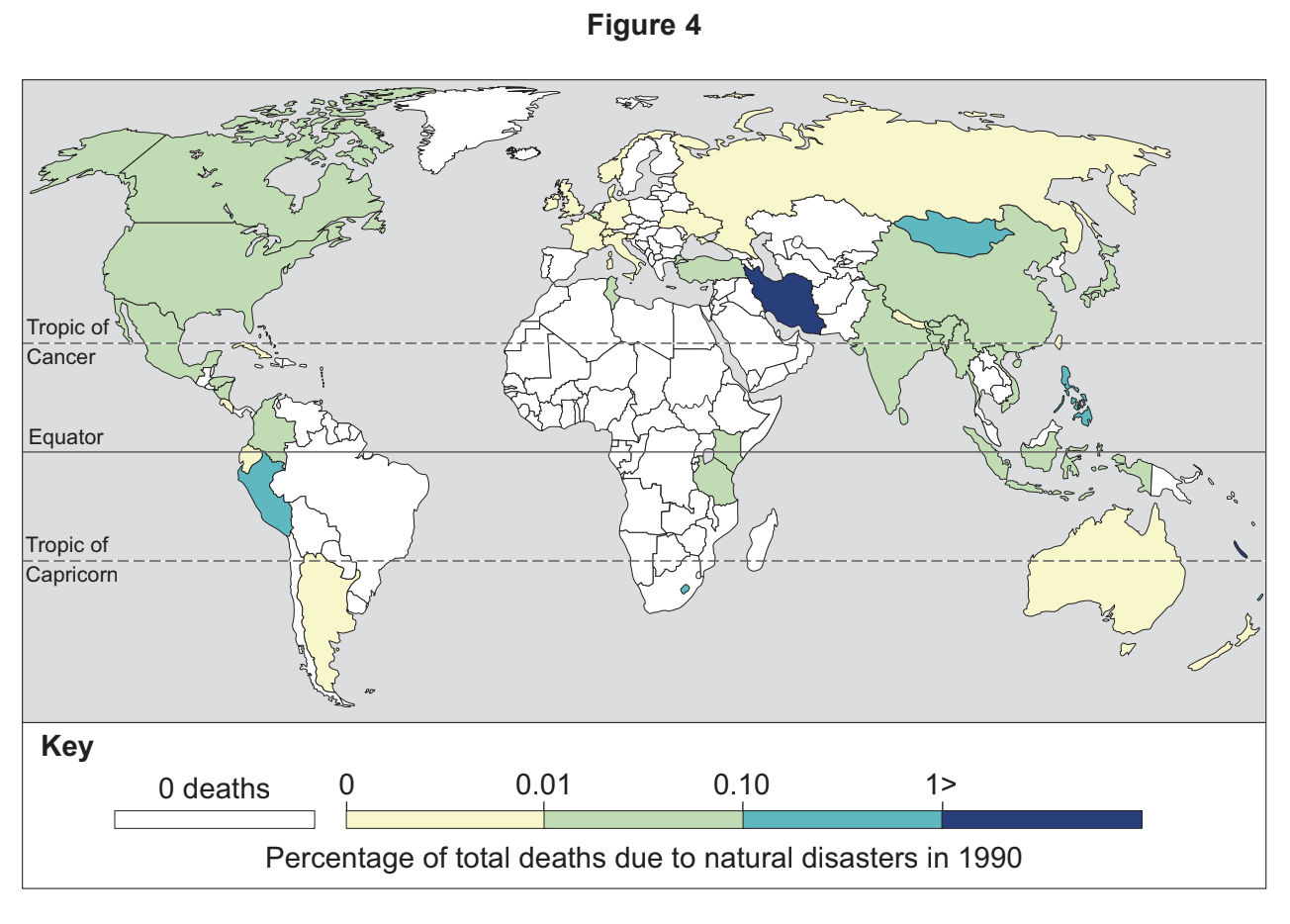
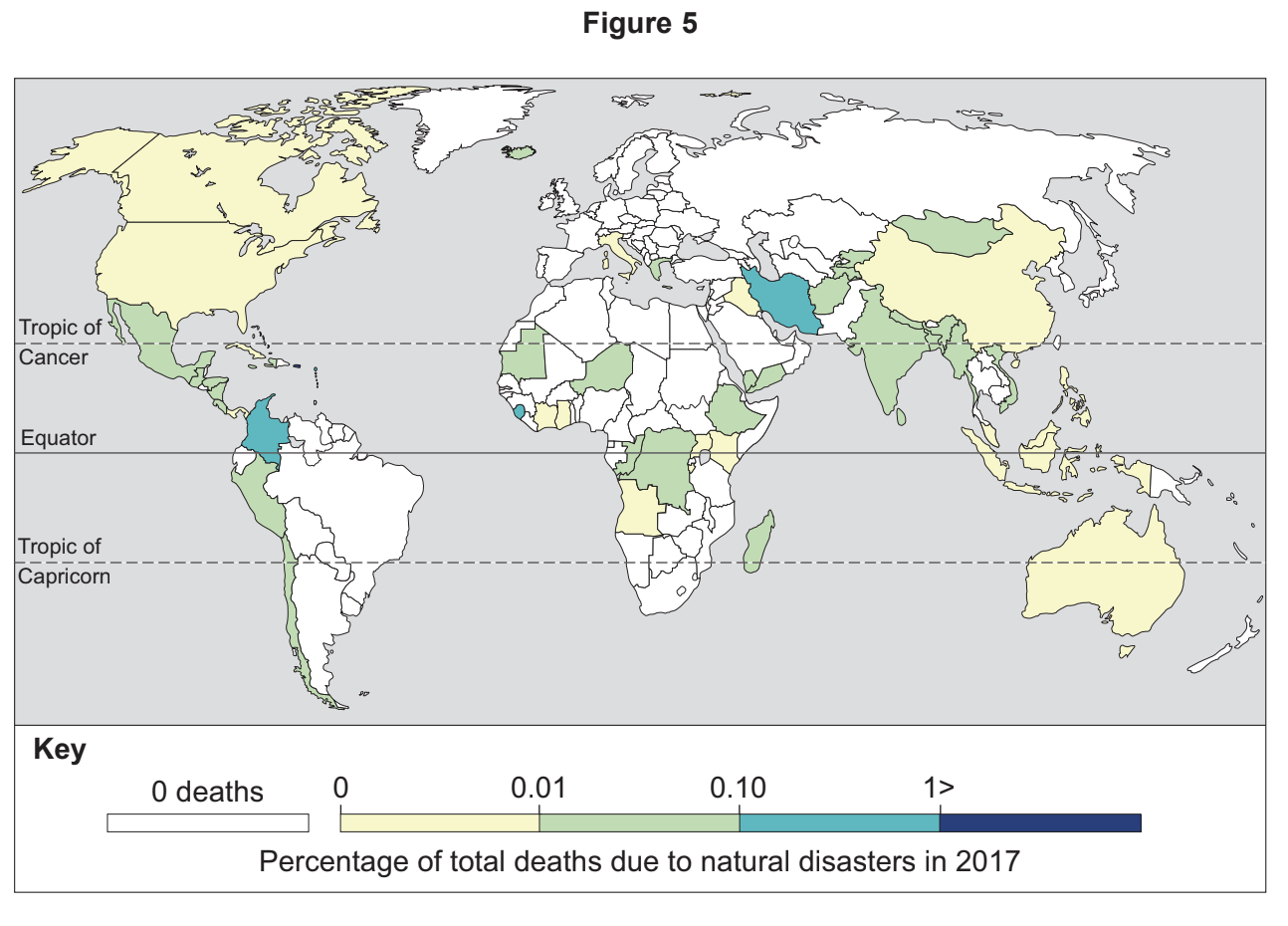
Figure 4 and Figure 5 show information about deaths from natural disasters as a share of total deaths in each country in 1990 and 2017.

World map displaying percentage of deaths from natural disasters in 1990, using shades from light green to dark blue; darker indicating higher percentages.
World map showing percentage of deaths due to natural disasters in 2017, with varying shades from white (0 deaths) to dark blue (over 1% deaths).

Analyse the information shown in Figure 4 and Figure 5.

5
20 marks

‘The Park model shows that the human response to a hazard always leads to an improvement in quality of life from that before the event.’

With reference to a recent wildfire event you have studied, how far do you agree with this statement?

6
6 marks

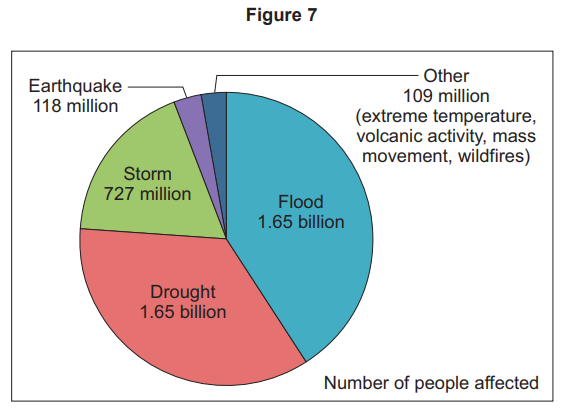
Figure 7 shows the number of people affected by different natural hazards globally between 2000 and 2019.

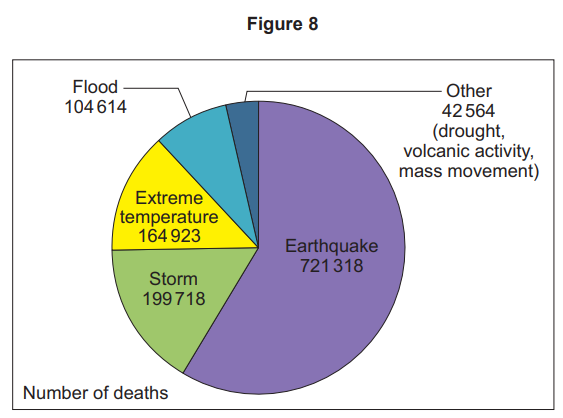
Figure 8 shows the number of deaths from different natural hazards globally between 2000 and 2019.

Pie chart titled "Figure 7" shows people affected by disasters: Flood and Drought 1.65 billion each, Storm 727 million, Earthquake 118 million, Other 109 million.
Pie chart showing natural disaster deaths: Earthquakes 721,318, storms 199,718, extreme temperature 164,923, floods 104,614, others 42,564.

Analyse the data shown in Figure 7 and Figure 8.

7
1 mark

Which of the following describes a fatalistic attitude to natural hazards?

  • Governments create regulations to ensure developers modify buildings to make them hazard resistant.

  • Natural hazards create so much fear that residents move elsewhere to live.

  • People accept the risk but choose to do nothing to reduce the risk from the natural hazard they face.

  • People take actions to mitigate the impacts of the natural hazards they face.