Management of Tectonic Hazards (Edexcel AS Geography): Exam Questions

Exam code: 8GE0

2 hours9 questions
1
16 marks

Study Figures 4a, 4b, 4c and 4d
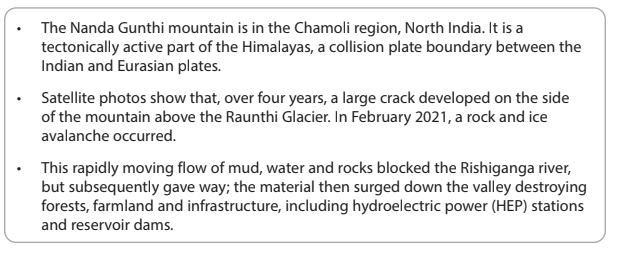
Bullet points detail Nanda Gunthi mountain's tectonic activity, a crack above Raunthi Glacier, and the 2021 avalanche affecting rivers and infrastructure.

Figure 4a
Information about the cause of the disaster
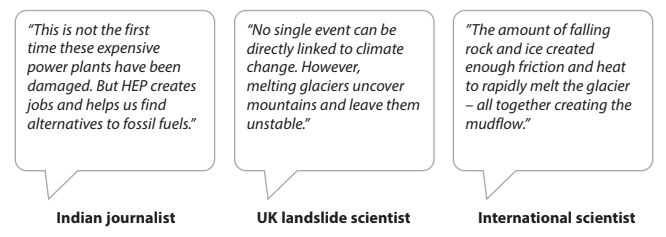
Three speech bubbles feature quotes from an Indian journalist, a UK landslide scientist, and an international scientist about power plants and climate change.

Figure 4b
Three viewpoints about the Chamoli disaster
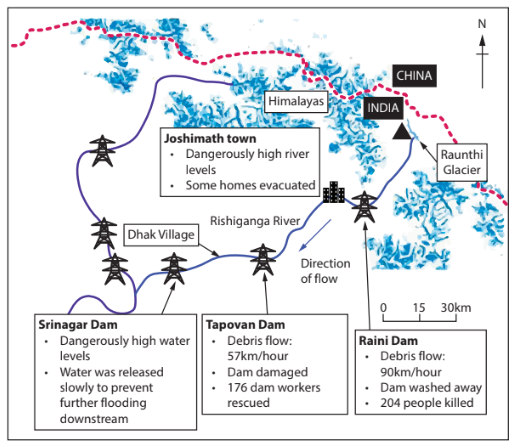
Map showing the Rishiganga River in the Himalayas with dam locations. Labels detail debris flow speeds, damage extent, and affected areas in India.
Map key showing symbols: hydroelectric power, river, Nanda Gunthi mountain, glaciers, international border, and major urban area.

Figure 4c
Selected impacts of the Chamoli disaster in February 2021
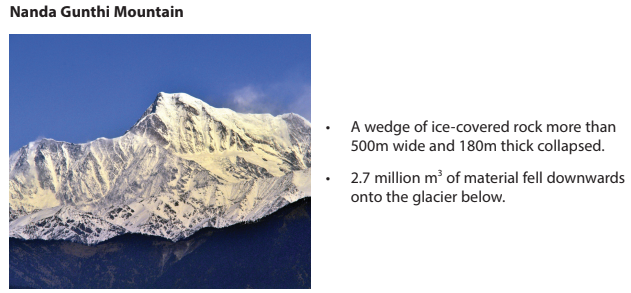
Nanda Gunthi Mountain with snow-covered peaks beside text describing a rock collapse over 500m wide and 180m thick, affecting the glacier below.
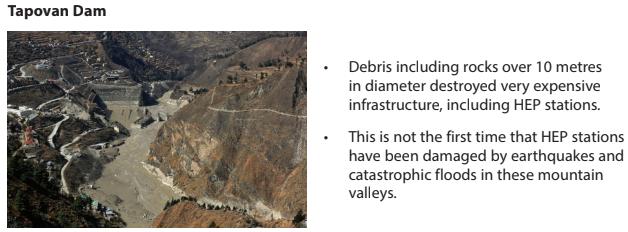
Aerial view of Tapovan Dam showing extensive damage from debris, surrounded by rugged mountain terrain and infrastructure affected by natural disasters.
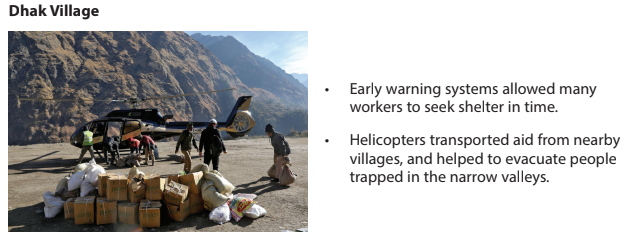
A helicopter lands in Dhak Village with aid supplies, surrounded by mountains, as people load boxes for evacuation and relief efforts.

Figure 4d
Three scenes from the Chamoli region, February 2021

Evaluate the relative importance of physical and human factors in causing the Chamoli disaster.

2
16 marks

Study Figures 7a, 7b, 7c and 7d

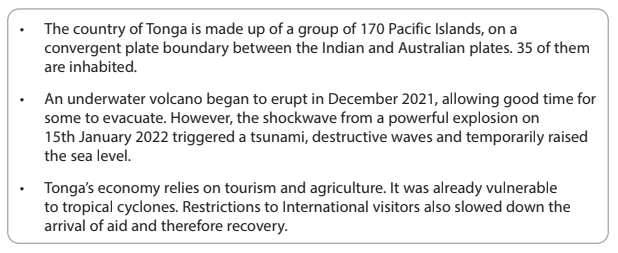
Text box summarising the impact of a volcanic eruption in Tonga in January 2022, including tsunami effects and economic challenges.

Figure 7a
Information about the causes of the disaster

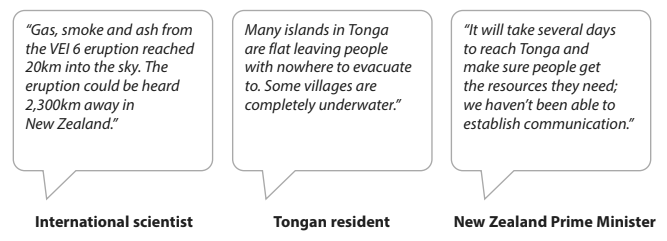
Quotes about the Tonga eruption: an international scientist describes the eruption's impact; a Tongan resident notes villages underwater; NZ PM discusses aid delays.

Figure 7b
Three viewpoints about the Tonga disaster

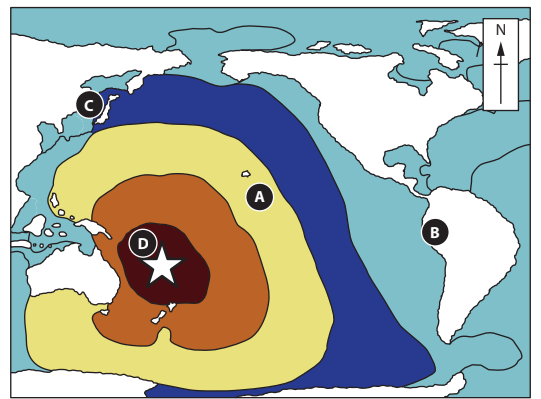
Map of the Atlantic Ocean with coloured zones, labelled A to D. Zone D has a star in the centre. Points B and C mark locations on land.
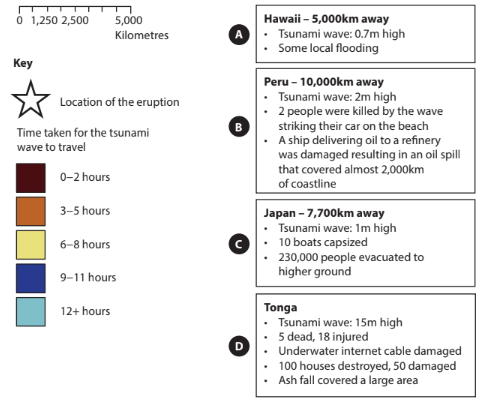
Diagram depicting tsunami impact at four locations: Hawaii, Peru, Japan, Tonga. Details include wave height, damage, casualties, and distance from eruption.

Figure 7c
The impact of the Tongan tsunami wave around the Pacific region

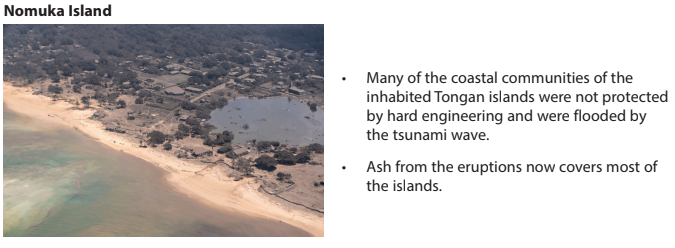
Aerial view of Nomuka Island showing flooded areas and ash-covered land. Sandy beach on the left, with scattered structures and vegetation inland.
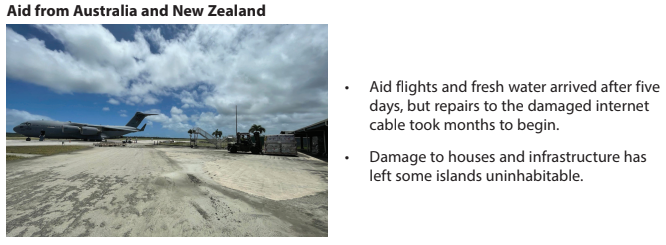
Military transport aircraft parked on a tropical airstrip under a cloudy sky, with aid supplies being unloaded for disaster relief efforts.
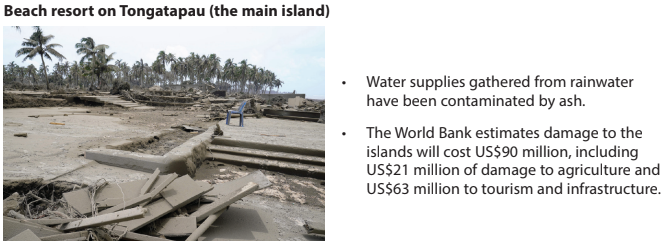
Damaged beach resort on Tongatapu with debris and palm trees; text notes ash contamination and World Bank’s US$90 million damage estimate.

Figure 7d
Three scenes from Tonga

Evaluate the relative importance of physical and human factors in causing the Tonga disaster.

3
6 marks

Using one named example, explain the economic and human impacts of a tectonic mega-disaster.

Named example

4
12 marks

Assess the view that tectonic disasters are affecting more people in the world, but causing fewer deaths than in the past.

5
16 marks

Study Figures 4a, 4b, 4c and 4d

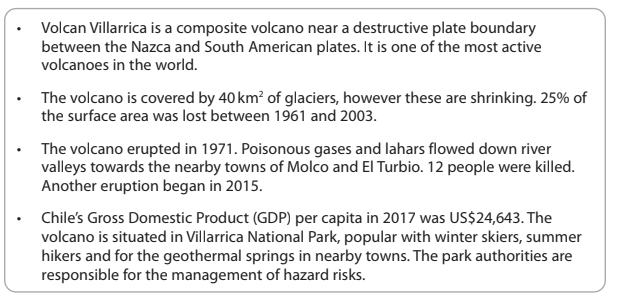
Bullet points describe Volcan Villarrica as an active composite volcano in Chile, with shrinking glaciers, eruptions in 1971 and 2015, and a significant GDP context.

Figure 4a
Information about Volcan Villarrica in the Andes, Chile, South America

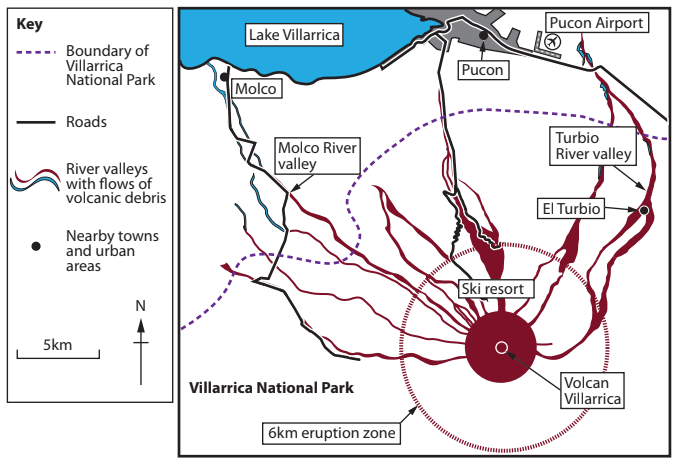
Map of Villarrica National Park showing the volcano, ski resort, river valleys with volcanic debris, towns, roads, and a 6 km eruption zone.

Figure 4b
Villarrica National Park showing nearby towns and major threats

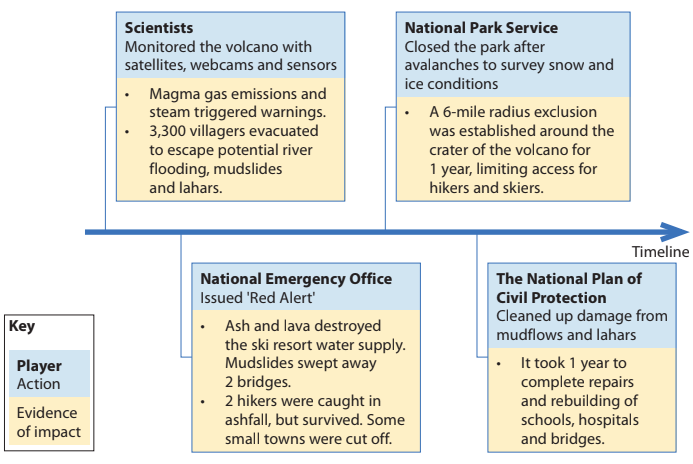
Timeline illustrating the response to a volcanic eruption including actions by scientists, the National Park Service, the National Emergency Office, and Civil Protection.

Figure 4c
Hazard responses during the 2015 eruption of Volcan Villarrica

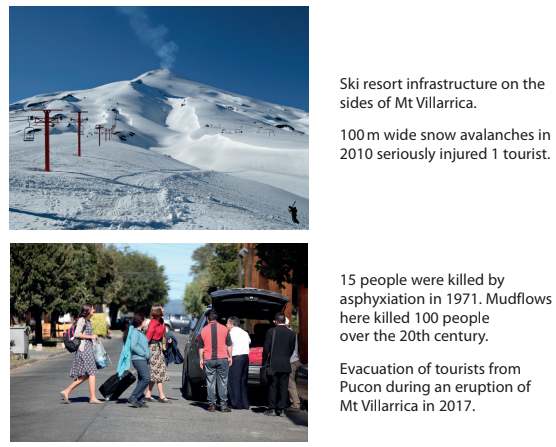
Top image: Snow-covered Mt Villarrica with ski resort structures. Bottom image: Tourists evacuating Pucon with luggage during Mt Villarrica eruption.
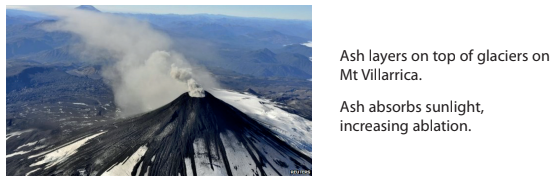
Aerial view of Mt Villarrica with smoke emitting from the crater. Ash covers black and white glaciers. Text beside explains ash increases ablation.

Figure 4d
Three scenes from Mt Villarrica

Evaluate the view that the risks from tectonic activity in Villarrica National Park outweigh those from glacial processes.

6
16 marks

Study Figures 7a, 7b, 7c and 7d

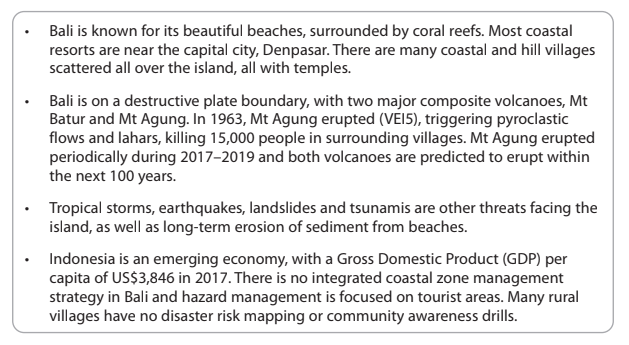
Text about Bali's tourism, volcanic activity, natural threats, and economic status. Highlights lack of disaster management in rural areas, focuses on tourist safety.

Figure 7a
Information about Bali, a volcanic island in Indonesia

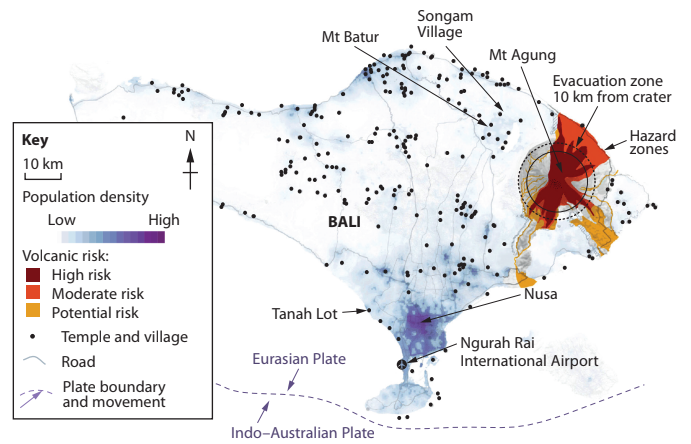
Map of Bali showing volcanic risk zones around Mt Agung, population density, temples, roads, and key locations like Ngurah Rai Airport.

Figure 7b
Major threats and concentration of population in Bali

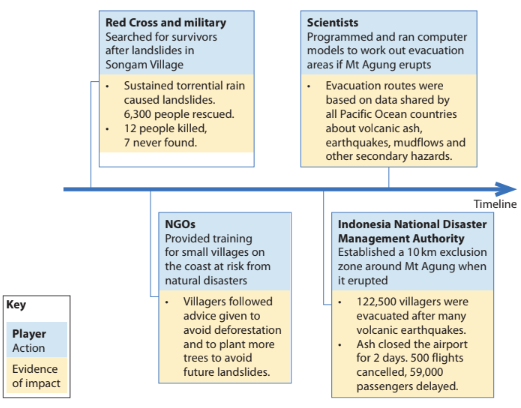
Flowchart detailing disaster response in Songan Village with actions by the Red Cross, NGOs, scientists, and Indonesian authorities, highlighting impacts.

Figure 7c
Hazard responses during landslides and volcanic eruptions in 2017

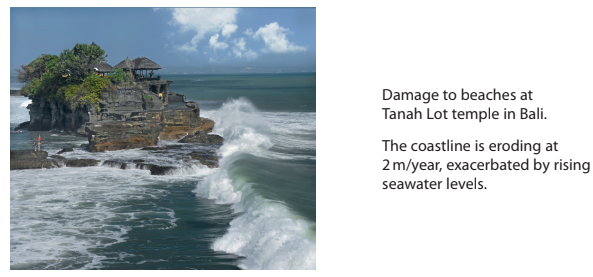
Rocky coast at Tanah Lot temple in Bali with large waves crashing against it; text highlights erosion and rising sea levels as issues.
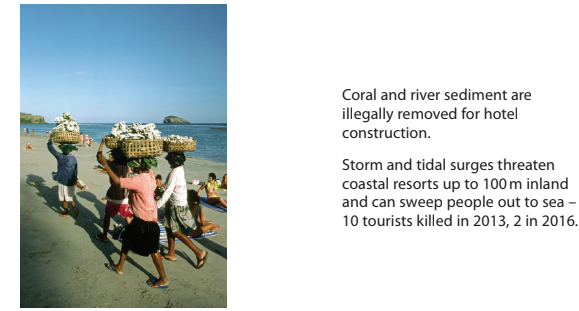
People carrying baskets on a beach. Nearby text discusses illegal coral and sediment removal for hotels and risks from storm surges killing tourists.
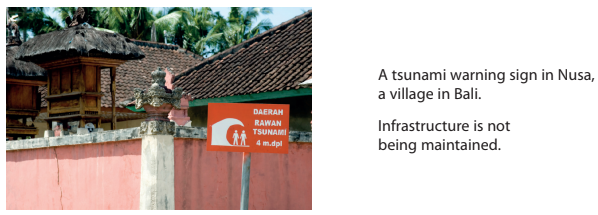
Tsunami warning sign in Nusa, Bali, by a pink wall and traditional thatched roofs; text highlights maintenance issues.

Figure 7d
Images showing a lack of planned coastal management

Evaluate the view that the risks from tectonic activity in Bali outweigh those from coastal processes.

7
4 marks

Explain two strategies used to modify tectonic hazard events.

8
2 marks

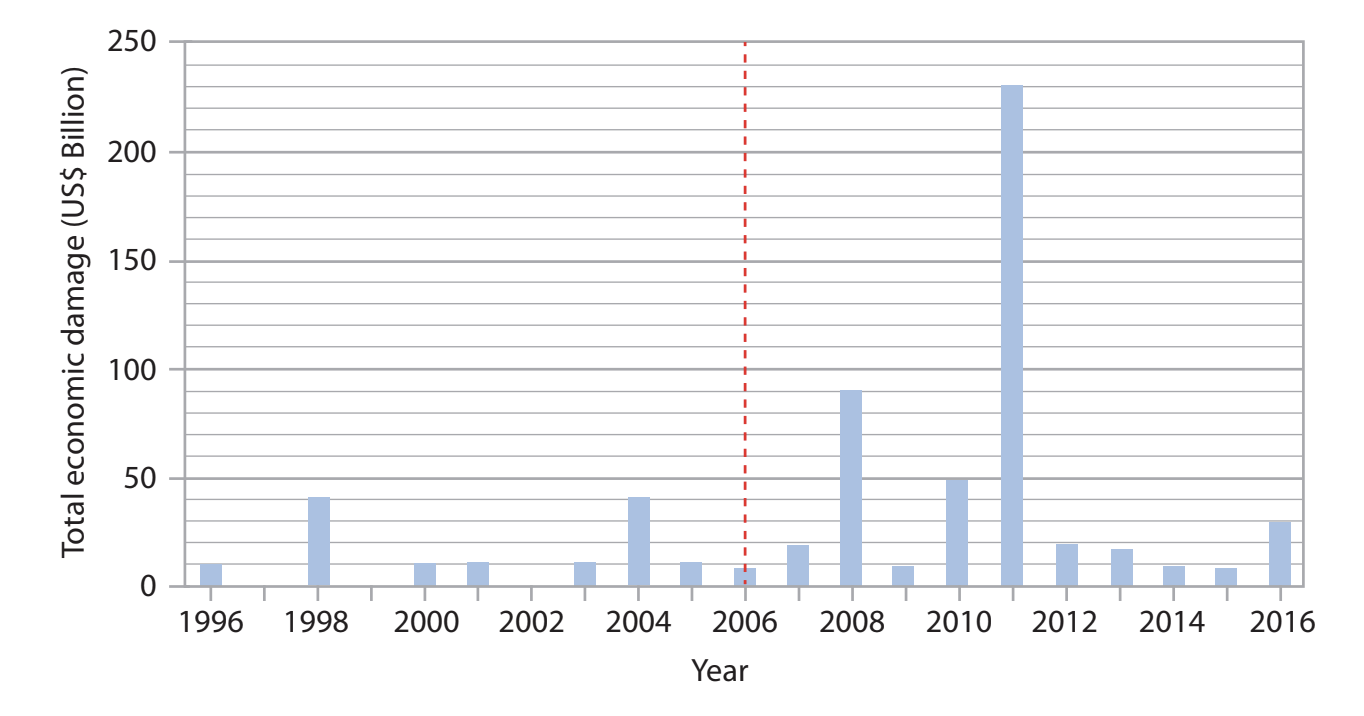
Study Figure 1

Bar chart showing total economic damage from natural disasters, 1996-2016. Peaks in 2005, 2008, 2010; vertical line in 2006. Damage in US$ billion.

Figure 1
Total reported economic damage caused by tectonic hazards between 1996 and 2016

Compare the economic damage caused by tectonic hazards before and after 2006.

9
12 marks

Assess the effectiveness of prediction and forecasting in the management of tectonic hazards.