Risk of Tectonic Hazards (Edexcel AS Geography): Exam Questions

Exam code: 8GE0

1 hour17 questions
1a
2 marks

Study Figure 1
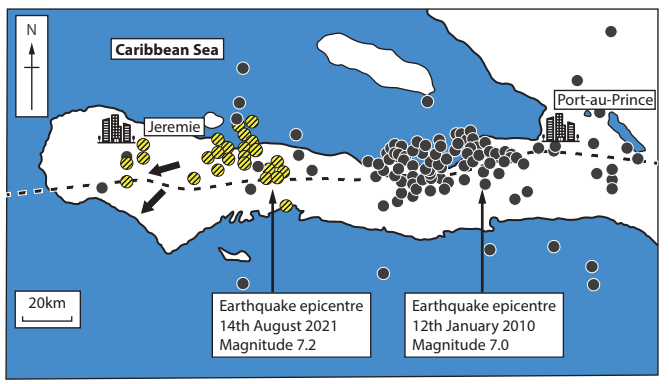
Map of Haiti showing earthquake epicentres near Jérémie and Port-au-Prince in 2021 and 2010, with magnitude 7.2 and 7.0, respectively.
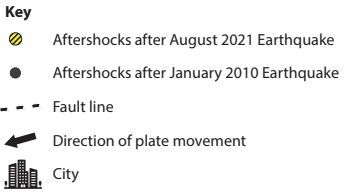
Map key showing symbols: yellow striped circle for August 2021 aftershocks, black circle for January 2010 aftershocks, dashed line for fault line, arrow for plate movement, building for city.

Figure 1
Aftershocks reported following two earthquakes in Haiti, 2010 and 2021

Compare the distribution of aftershocks between the two earthquakes.

1b
3 marks

Suggest one reason for the different pattern of aftershocks shown in 2021.

2
4 marks

Explain two hazards caused by volcanoes.

3
6 marks

Explain the global distribution of earthquake hazards.

4a
2 marks

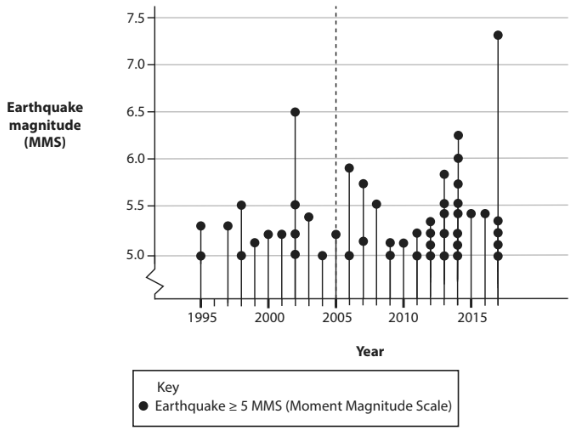
Study Figure 1a

Graph showing earthquake magnitudes (≥5 MMS) from 1995 to 2018. Peaks at around 7.5 in 2015. Increasing frequency and magnitude after 2005.

Figure 1a
Significant earthquakes (magnitude 5 and above) in Iran and Iraq, 1995–2017

Compare the data about earthquakes before and after 2005.

4b
3 marks

Suggest one reason why this data might concern the governments of Iraq and Iran.

5
4 marks

Tectonic mega-disasters can have regional or even global impacts.

Explain two impacts of a tectonic mega-disaster.

6
6 marks

Explain the global distribution of volcanic eruptions.

7a
2 marks

Study Figure 1a

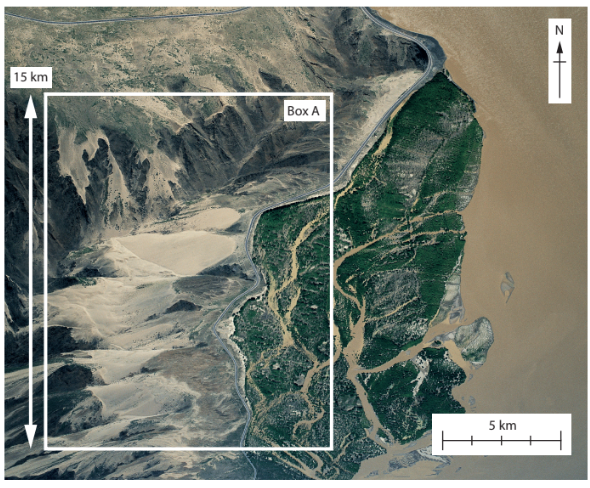
Satellite image showing a coastal area with sandy beaches and greenery. A white box indicates "Box A," with scale bars showing 15 km and 5 km distances.

Figure 1a
A satellite image of the Tsangpo River in the Himalayas

Calculate the area of Box A in Figure 1a. The length has been calculated for you.

Show your working.

Give your answer to the nearest whole number.

.............................................................. km2

7b
3 marks

Study Figure 1b. Earthquakes occurred in this region in 2017.

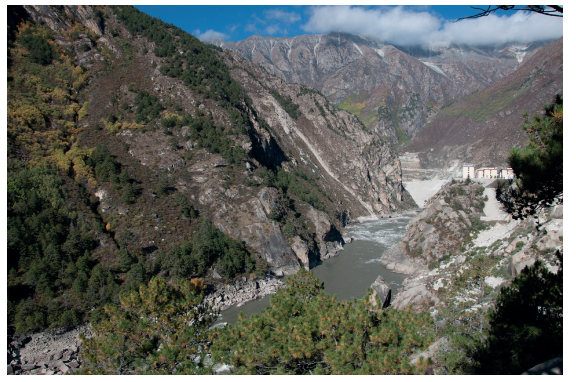
Mountainous landscape with a winding river cutting through steep, rocky slopes, lined with scattered trees under a blue sky with few clouds.

Figure 1b
A photo of a gorge on the Tsangpo River, further upstream

Suggest one factor that could increase hazard risk in Tsangpo Gorge, shown in Figure 1b.

8
4 marks

Explain two tectonic processes that occur at a convergent plate margin.

9
1 mark

Identify which hazard is a primary impact of an earthquake.

  • Aftershocks

  • Crustal fracturing

  • Pyroclastic flow

  • Tsunamis

10a
2 marks

Study Figure 1

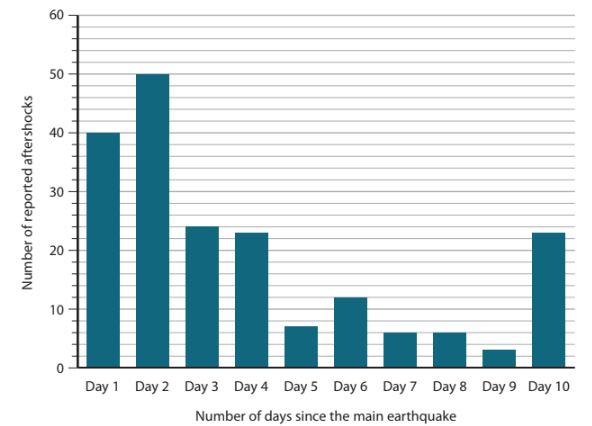
Bar graph showing the number of aftershocks over ten days post-earthquake, peaking at 50 on day 2 and declining, with a small rise on day 10.

Figure 1
Aftershocks reported after the February 2018 earthquake in Papua New Guinea

Papua New Guinea experienced a magnitude 7.5 earthquake in February 2018.

Figure 1 shows the frequency of the aftershocks that were reported.

Calculate the mean number of aftershocks per day.

Show your working.

Give your answer to 1 decimal place.

10b
3 marks

Suggest one reason for the changing number of aftershocks each day.

11
6 marks

Explain why some tectonic hazards occur away from plate boundaries.

12
1 mark

State which type of earthquake wave travels fastest.

13a
2 marks

Study Figure 1a

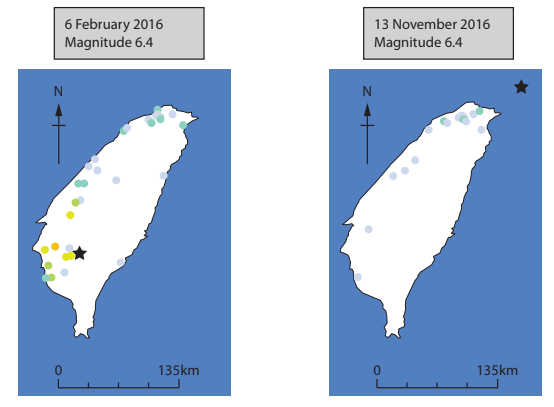
Two maps of Taiwan showing earthquake epicentres. Left: 6 Feb 2016, multiple coloured dots near the southwest. Right: 13 Nov 2016, dots dispersed north to south.
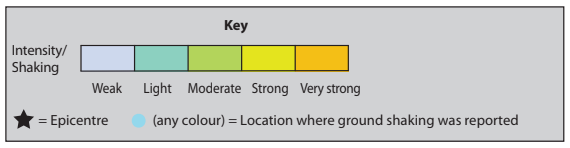
Earthquake map key showing intensity levels: weak (purple), light (green), moderate (yellow-green), strong (yellow), very strong (orange); epicentre as star.

Figure 1a
Reported ground shaking after two earthquakes in Taiwan in the Pacific Ocean

Compare the distribution of reported ground shaking between the February and November earthquakes.

13b
3 marks

Suggest one reason for the pattern of reported ground shaking in the February earthquake.

14
6 marks

Explain how plate tectonic theory is used to explain plate movements.

15
1 mark

State one tectonic hazard that can cause coastal flooding.

16
4 marks

Explain two characteristics of volcanic hotspots.

17
6 marks

Explain why volcanic eruptions vary in their magnitude.