Rules (DP IB Global Politics): Revision Note

Rules-based international system
A rules-based system is one in which countries follow agreed laws, rules and institutions to guide their behaviour and resolve disputes
It is linked to the theory of liberalism and emerged after the devastation of World War 2 to keep peace and support development
As part of an interconnected global community, countries must work together to ensure peace and prosperity
Accepted laws and norms must be followed by all states and non-state actors
Although state sovereignty is respected, large intergovernmental organisations, such as the United Nations, World Trade Organisation and North Atlantic Treaty Organisation, guide and enforce the principles of these laws
Realism argues that the idea of a rules-based international system is an illusion
States will always act in their own self-interest and will only follow laws and rules if they benefit from them
The role of IGOs
Intergovernmental organisations (IGOs) are made up of member states that work together to cooperate on international issues and achieve shared goals
They play an important role in a rules-based international order
Obligations of states are outlined in the foundation treaties of all IGO
These are the rules members must follow
There are also general agreements directly related to the purpose and values of the IGO
For example, upholding the Universal Declaration of Human Rights is required as part of membership in the United Nations
IGOs formulate specific laws and treaties and encourage member states to ratify them
Member states of an IGO debate and discuss political issues of global significance
The IGO then formulates a law outlining the requirements of states
States have the right to either agree to the law or refuse it - in this way state sovereignty is respected
If the state agrees and ratifies the law, the IGO monitors its application within states, and may take action against a state if it is violated
Challenges to a rules-based international system
The biggest challenge to the idea of a rules-based international system is that it relies on the willing participation of states
Rules only work if they are universally accepted
States must see that a rules-based approach is beneficial to them and to global stability
If states violate the rules, it can be very challenging for IGOs and other actors to force them to comply
Powerful states are more able to get away with behaviour that violates rules more easily than less powerful states
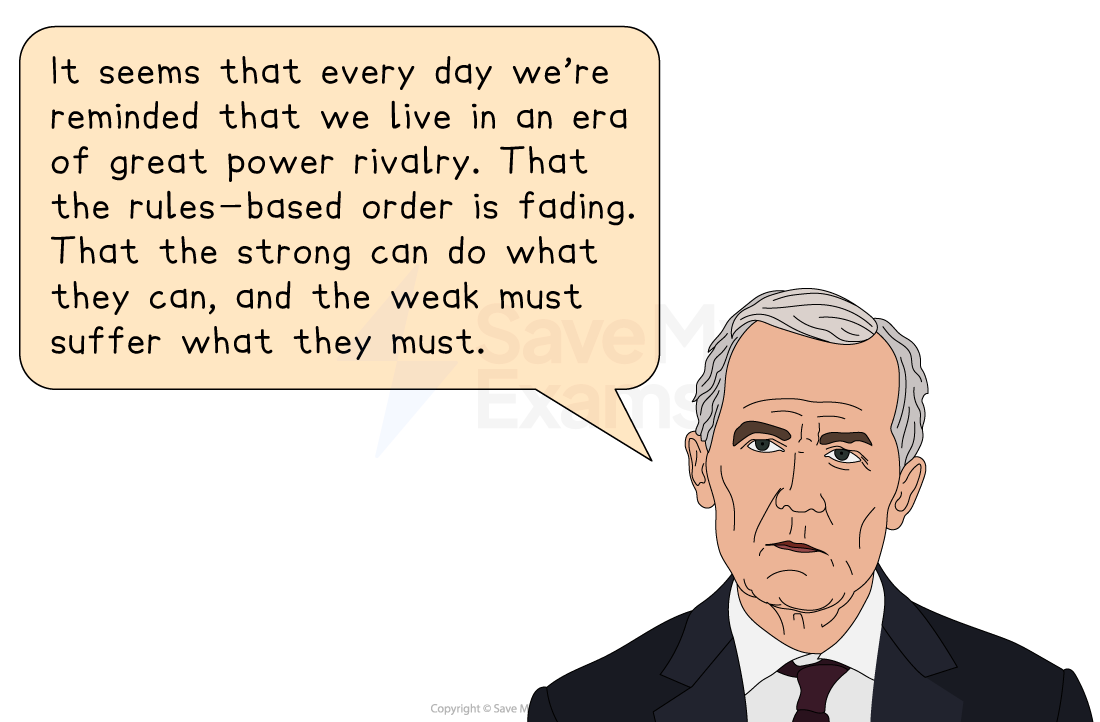
In recent years the idea that we live in a rules-based international system has been challenged

Unlock more, it's free!
Join the 100,000+ Students that ❤️ Save My Exams
the (exam) results speak for themselves:

Was this revision note helpful?
