Social Structures (DP IB Global Politics): Revision Note

International social structures
Social structures are the relationship patterns that define how actors and stakeholders interact in global politics
In global politics states are often considered in terms of their power
Social structures at the international level could be seen as a hierarchy of the most powerful states to the least powerful states
Top levels of the international power structure
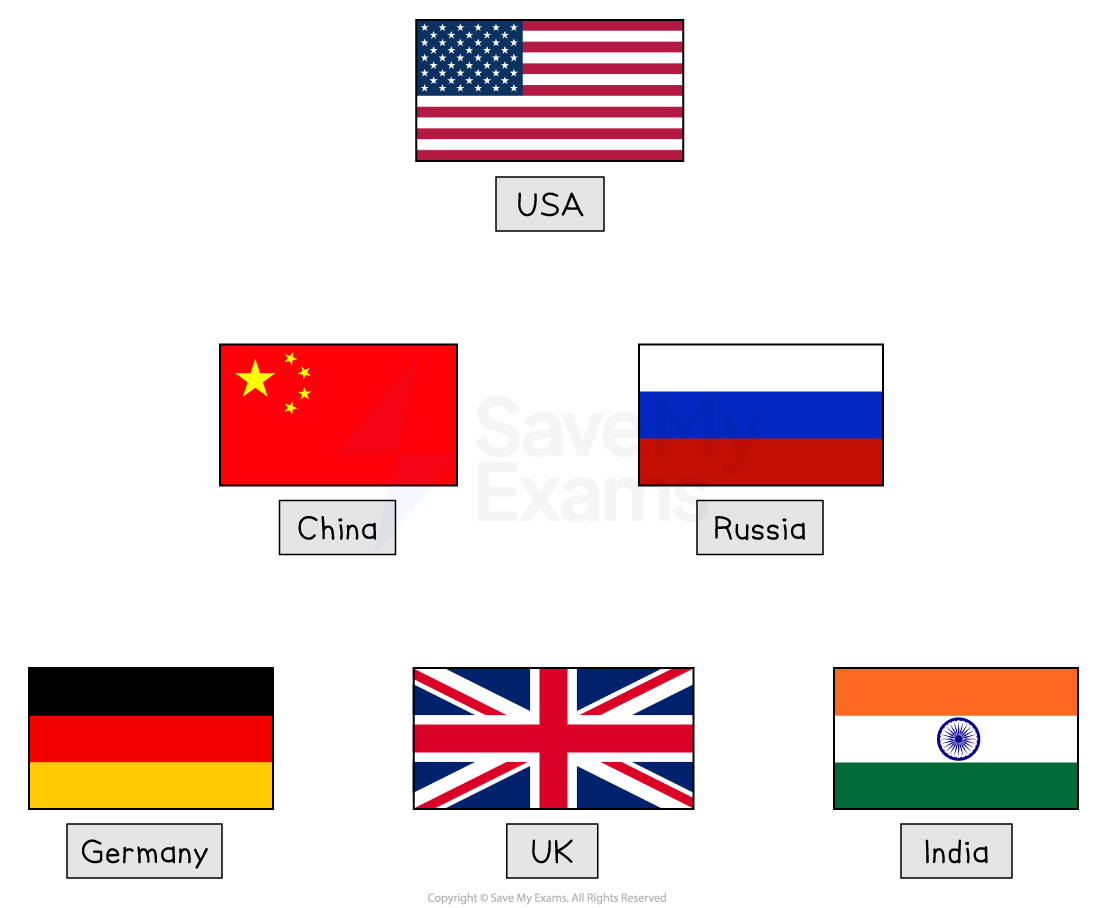
The perception of power determines how states interact with each other
This is an example of a social structure at the international level
Realism argues that the only social structure of any significance at the international level is the complex relationships of power between powerful states
Maintaining that balanced structure, is the best chance at global stability
However, there are actors other than states
At the international level IGOs, MNCs, private actors, NGOs and others should also be considered
Their relationships are dependent on many factors
IGOs made up of states are perceived as non-state actors - in reality, the opposite is true
Some MNCs and private actors have more wealth and influence than some states - this impacts how they are treated by other actors and states
NGOs work collaboratively with IGOs and state actors but only when invited
States are the most influential actors in global politics
Their relationships with IGOs, MNCs, private actors and NGOs hugely influence international social structures
Regional social structures
Regions within global politics are geographic areas which encompass at least two states
There are different understandings and definitions of regions, but this map produced by the UN is widely accepted
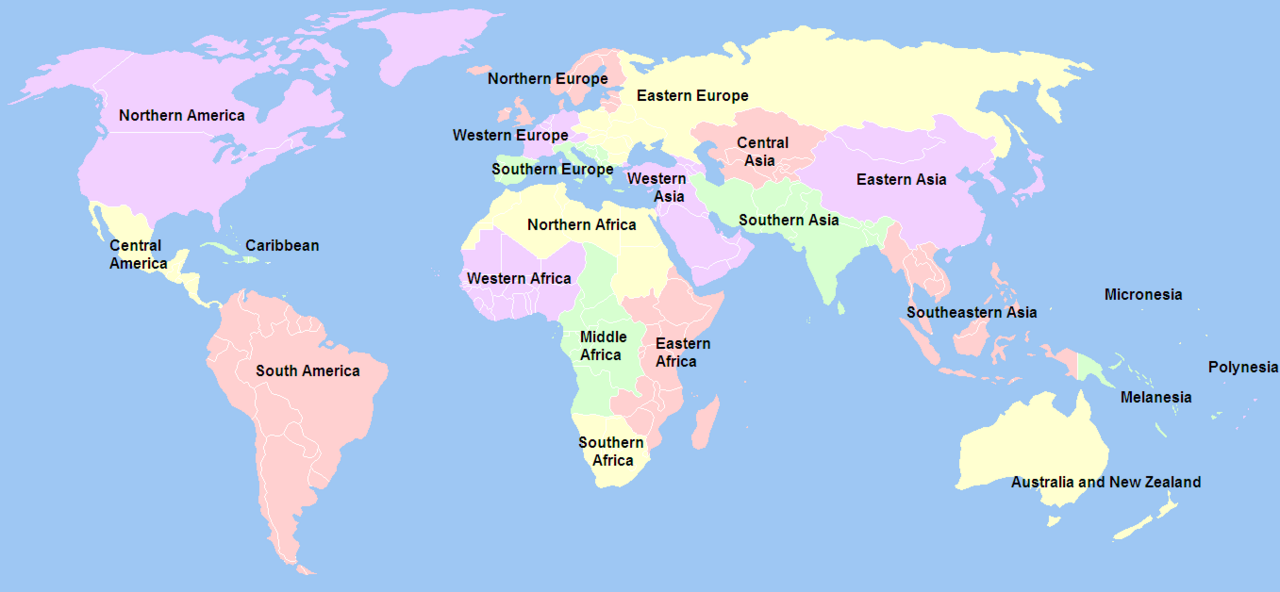
Within regions people often (but not always) share
Geographic features and concerns
History
Cultural, linguistic and religious values
Similar political systems
Similar levels of economic and social development
States within regions may work together by forming IGOs or agreements to promote
Security
Economic growth
Political development
In recent years regions have strengthened their unity to counteract the power imbalances seen at the international level of politics
However, international social structures continue to dominate
Social structures within the state
Government and political institutions provide the necessary foundation for social structures and interactions within the state
Ultimately, within the state, the government is at the centre of all social structures
Some of the ways this can be seen include
The enforcement of laws and maintenance of social order by
Judicial and legal systems
Policing systems
The military
Shaping social services
Social services
Education
Healthcare
Housing
Care for those unable to care for themselves
Economic responsibilities
Sound economic policies
Job creation
Tax taking and spending
Within states other actors such as NGOs, private individuals or religious groups may be actively involved in social services, but only with the permission of the government
Companies must operate in ways determined by the government
Other political parties will operate in the case of a democracy
Social and resistance movements may also be allowed by law in the case of democracies

Unlock more, it's free!
Join the 100,000+ Students that ❤️ Save My Exams
the (exam) results speak for themselves:

Was this revision note helpful?
