Ethical & Environmental Considerations (OCR GCSE Business): Exam Questions

Exam code: J204

1 hour18 questions
1
9 marks

Case Study

Primark Ltd

Primark Ltd is a fashion retailer that sells clothing and homeware at prices lower than most other retailers. The company is aware of the importance of consumer law and of having low-cost suppliers.

Primark Ltd started to sell its products online in 2022. After changes in buying habits and pressure from customers, in 2022 Primark Ltd launched an online click and collect service for shoppers.

Primark Ltd is very aware of the need to have ethical suppliers. The following ethical factors are among those important to Primark Ltd:

  • giving clothes a longer life by using material from sustainable sources

  • encouraging its supply chain to pay a living wage and look after the health and well-being of their workers.

Evaluate whether Primark Ltd’s use of ethical suppliers comes into conflict with its shareholders’ objectives.

2
12 marks

Case Study

NEXT plc.

Entrance to a Next clothing store with large glass doors and mannequins visible inside. The store name is prominently displayed above the entrance.

NEXT plc. is a clothing retailer selling clothing, footwear, accessories and home products through its high street shops and online across the UK. NEXT plc. understands the importance of creating good relationships with its customers and constantly tries to improve its levels of customer service. Customer service is important for NEXT plc.

For NEXT, responsible business behaviour includes addressing key business-related social, ethical and environmental impacts in a way that aims to bring value to all its stakeholders, including its shareholders. NEXT plc. sources products from many suppliers across the world. The company takes its environmental and ethical responsibilities very seriously.

Analyse one way in which being environmentally friendly could impact on each of the following:

(i) NEXT plc.’s marketing function

[3]

(ii) NEXT plc.’s human resources function

[3]

(iii) NEXT plc.’s finance function

[3]

(iv) Recommend which function would be most affected by NEXT plc. being environmentally friendly. Give reasons for your answer.

[3]

3
3 marks

Case Study

NEXT plc.

Front entrance of a Next clothing store, featuring large glass doors and the store's name in bold letters above; mannequins and displays visible inside.

NEXT plc. is a clothing retailer selling clothing, footwear, accessories and home products through its high street shops and online across the UK. NEXT plc. understands the importance of creating good relationships with its customers and constantly tries to improve its levels of customer service. Customer service is important for NEXT plc.

For NEXT, responsible business behaviour includes addressing key business-related social, ethical and environmental impacts in a way that aims to bring value to all its stakeholders, including its shareholders. NEXT plc. sources products from many suppliers across the world. The company takes its environmental and ethical responsibilities very seriously.

Analyse how NEXT plc. could ethically source the clothes that it sells.

4
1 mark

A health centre wishes to improve its environmental sustainability.

Which of the following would help achieve this?

  • Asking doctors to wash their hands more frequently

  • Encouraging nurses to go out walking during their lunch break

  • Giving out free fruit to health centre staff and patients

  • Installing sensors to switch off lights when not needed

5
2 marks

Case Study

AstraZeneca plc

AstraZeneca plc (AZ) is a multinational pharmaceutical company that operates in over 100 countries around the world. AZ develops treatments for a range of diseases. It sells its medicines and vaccines worldwide. Its headquarters are in Cambridge, England. In 2021 AZ’s sales revenue was £37 417m, from which it made £24 980m gross profit.

AZ has a code of ethics, which is at the centre of everything that it does. The company has approximately 75 000 employees worldwide; 10 000 of these work in its three research and development centres.

AZ uses technology throughout its operations to provide high quality products for its customers. These customers include doctors, hospitals and governments from around the globe.

In the UK, AZ has changed the way it sells its products. Previously, sales staff would visit medical professionals; now it uses a call centre and website where medical professionals can order products and samples. AZ says this means it can now provide a high quality service that meets the needs of its customers at a lower cost.

Identify two ethical considerations a business may have.

6
2 marks

Case Study

BP plc

BP plc is a UK energy company, which has its headquarters in London. BP produces oil, gas and petrol. It sells and distributes these products to customers all over the world. It also produces some environmentally friendly energy including biofuels, as well as wind- and solar-powered electrical energy.

The company’s finance function is critical in ensuring the business is managed efficiently. BP plc’s revenue increased from $245 billion in 2017 to $283 billion in 2019.

One of BP’s operations involves selling of petrol to the public. BP has 18 700 petrol stations around the globe, with 8500 in the UK. Another of BP’s operations involves extracting oil, using its oil rigs. These are located in the seas around the UK, Norway, Australia, Angola, the Gulf of Mexico (USA) and off the coast of many other countries. Once the oil is extracted it is then transported to refineries.

BP strives to be more sustainable. BP has the aim of cutting its carbon emissions by 2050 to help reduce the effects of climate change. It is installing electric charge points for Police Scotland’s electric vehicles and is developing wind farms in America in partnership with an American company.

Identify two possible advantages to a business of being environmentally friendly.

7
2 marks

Case Study

BP plc

BP plc is a UK energy company, which has its headquarters in London. BP produces oil, gas and petrol. It sells and distributes these products to customers all over the world. It also produces some environmentally friendly energy including biofuels, as well as wind- and solar-powered electrical energy.

The company’s finance function is critical in ensuring the business is managed efficiently. BP plc’s revenue increased from $245 billion in 2017 to $283 billion in 2019.

One of BP’s operations involves selling of petrol to the public. BP has 18 700 petrol stations around the globe, with 8500 in the UK. Another of BP’s operations involves extracting oil, using its oil rigs. These are located in the seas around the UK, Norway, Australia, Angola, the Gulf of Mexico (USA) and off the coast of many other countries. Once the oil is extracted it is then transported to refineries.

BP strives to be more sustainable. BP has the aim of cutting its carbon emissions by 2050 to help reduce the effects of climate change. It is installing electric charge points for Police Scotland’s electric vehicles and is developing wind farms in America in partnership with an American company.

Explain one way climate change might affect business activity.

8
4 marks

Case Study

Quality Textiles (QT)

Quality Textiles Ltd (QT) is a medium-sized, established business that manufactures clothes from its factory in Birmingham. Its clothes are sold to retail shops around the country. A summary of its profitability is shown in Table 1.

This year

Last year

Two years ago

Gross Profit Margin

65%

60%

57%

Net Profit Margin

27%

25%

23%

Table 1

QT wants to expand the business by using a bank loan to buy a large van to help with deliveries. It will use average rate of return (ARR) to assess which model of van it will buy. Further information is provided in Table 2, below. The new van will mean employing a driver, in addition to the five drivers already working for the business.

Standard Van

Superior Van

Price

£40 000

£50 000

Total net profit for the life of the van

£60 000

£70 000

Estimated life

3 years

4 years

ARR

?

35%

Table 2

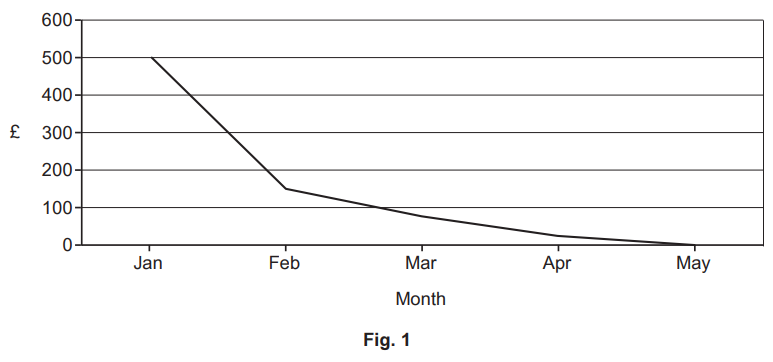
QT’s cash flow forecast suggests it may struggle to pay the monthly van loan repayment. QT’s closing bank balance for the last five months is shown in Fig. 1.

Line graph showing a steady decline in value from £500 in January to £0 in May, with significant drops between January and February.

QT had problems earlier in the year. It found its way into the local newspaper as part of an investigation into ethical practices in its business activities and supply chain.

(i) Identify two ethical considerations for a business.

[2]

(ii) Explain one reason why a business should act ethically.

[2]

9
1 mark

A business wishes to be known as an ethical employer.

Which of the following is not an example of ethical treatment of the workforce?

  • Allowing flexible working

  • Paying high wages

  • Providing good working conditions

  • Using robotics

10
3 marks

Case Study

Barclays plc

Increased globalisation has led to more firms becoming multinational companies. Barclays plc is a multinational banking company. Its headquarters are in London. One of the bank’s core values is integrity – it tries to act fairly, ethically and openly in all it does.

Barclays plc’s personal banking division provides banking services to the general public. These services include providing a place to save and borrow money, as well as a place where customers can obtain advice on financial matters. In 2020 Barclays plc had 24 million UK personal banking customers.

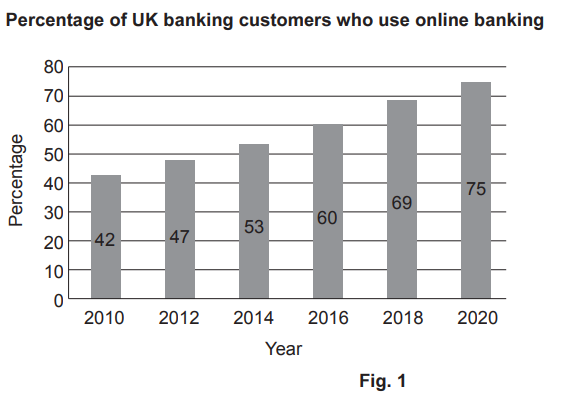
Banks are typically among the first industries to embrace technological advances. Barclays plc has been able to make use of e-commerce by selling loans, savings accounts and insurance through its websites. The bank has also invested in computer technology to provide online banking services to its customers. Online banking services allow customers to access their bank accounts on the Internet. Customers can carry out banking transactions, pay off credit cards or deposit savings 24 hours a day, worldwide. Online banking is one of the fastest growing areas of Internet activities, see Fig. 1, below.

Bar chart showing the rise in UK online banking users from 42% in 2010 to 75% in 2020, with increments every two years.

Analyse one way Barclays plc could treat its customers ethically.

11
9 marks

Case Study

Pukka Pies Ltd

Pukka Pies Ltd is a family-owned business with approximately 360 employees. It makes a range of high-quality savoury pies, including steak, chicken and mushroom, and chicken balti, in batches at its factory in Leicester, England. Pukka Pies are sold in more than 4000 food stores nationwide as well as in sports stadiums, fish and chip shops and cafés across the country.

Three of Pukka Pies Ltd’s key values are recruiting people who are ambitious, delighting customers with quality pies, and building trust with suppliers through food safety. Each of these values helps the business meet the requirements of consumer law.

The success of Pukka Pies Ltd is affected by many factors, including its logistical and supply chain decisions. Pukka Pies Ltd procures the ingredients for its pies from businesses across the UK and overseas; consequently its supply chain is long. Nevertheless, all of these ingredients need to arrive in good condition and, therefore, its logistics are time-critical. Unemployment levels also have a significant impact on Pukka Pies Ltd.

Pukka Pies Ltd considers its environmental impact across all aspects of business activity. It has already replaced some of the non-recyclable plastics used in its packaging with alternatives that can be recycled. In addition, none of the company’s waste goes to landfill.

Evaluate how Pukka Pies Ltd’s environmental considerations might influence its marketing mix.

12
1 mark

Which of the following issues is climate change an example of?

  • A financial issue

  • A quality control issue

  • An economic issue

  • An environmental issue

13
1 mark

Case Study

Aston Martin plc

Aston Martin plc (AM plc) is a British manufacturer of luxury sports cars. It has more than 150 car dealerships in over 50 countries on six continents. Its globalised supply chain includes suppliers from the UK, EU and across the world. The company is also expanding its brand to include speed boats, submarines and property development.

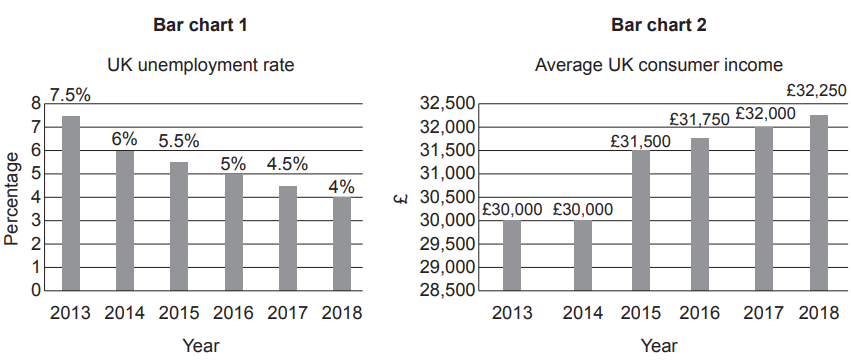
Its headquarters and the main production site are centrally located in Warwickshire, England, on the site of a former RAF airbase. It employs over 3000 workers on this site, who are highly skilled engineers and who produce each car using the most up-to-date machinery. When the cars are finished, they are then transported from central England all over the UK and beyond. The demand for AM plc products is influenced by many factors, including UK unemployment rates and consumer income levels.

Two bar charts: UK unemployment rate fell from 7.5% in 2013 to 4% in 2018; average UK consumer income rose from £30,000 in 2013 to £32,250 in 2018.

AM plc is proud of its commitment to the environment, which includes trying to produce goods sustainably. It also considers ethical issues in its decision making.

State one ethical consideration a business may need to consider.

14
1 mark

Case Study

Aston Martin plc

Aston Martin plc (AM plc) is a British manufacturer of luxury sports cars. It has more than 150 car dealerships in over 50 countries on six continents. Its globalised supply chain includes suppliers from the UK, EU and across the world. The company is also expanding its brand to include speed boats, submarines and property development.

Its headquarters and the main production site are centrally located in Warwickshire, England, on the site of a former RAF airbase. It employs over 3000 workers on this site, who are highly skilled engineers and who produce each car using the most up-to-date machinery. When the cars are finished, they are then transported from central England all over the UK and beyond. The demand for AM plc products is influenced by many factors, including UK unemployment rates and consumer income levels.

Two bar charts: UK unemployment rate fell from 7.5% in 2013 to 4% in 2018; average UK consumer income rose from £30,000 in 2013 to £32,250 in 2018.

AM plc is proud of its commitment to the environment, which includes trying to produce goods sustainably. It also considers ethical issues in its decision making.

Analyse one method of sustainable production that AM plc could use.

15
5 marks

Case Study

Costa Coffee

Costa Coffee is a British multinational coffee shop company owned by Coca-Cola. It is the second largest coffeehouse chain in the world behind Starbucks, and the largest in the UK. It has over 2100 branches in the UK and over 1200 branches in the rest of the world including Dubai, China and Poland.

Costa Coffee has recently opened a new branch in Welshpool. It is located in the town centre on the high street near lots of other businesses, including offices and shops. There were only two other coffee shops in the town before they opened.

Costa Coffee takes ethics very seriously and it has switched to environmentally-friendly coffee beans to make its supply chain more sustainable. Now all its stores worldwide use beans from Rainforest Alliance-certified suppliers, who meet ethical and environmental standards for the sustainable supply of coffee beans.

In order to be successful, Costa Coffee sells a wide range of products and constantly invests in updating this product range as well as refurbishing its shops. Recently it has invested heavily in updating its computer software to assist its many functional areas such as finance.

(i) State two environmental considerations for a business.

Consideration 1 ..................................................................................................

Consideration 2 .................................................................................................

[2]

(ii) Analyse one advantage to Costa Coffee of being a sustainable business.

[3]

16
4 marks

Case Study

Costa Coffee

Costa Coffee is a British multinational coffee shop company owned by Coca-Cola. It is the second largest coffeehouse chain in the world behind Starbucks, and the largest in the UK. It has over 2100 branches in the UK and over 1200 branches in the rest of the world including Dubai, China and Poland.

Costa Coffee has recently opened a new branch in Welshpool. It is located in the town centre on the high street near lots of other businesses, including offices and shops. There were only two other coffee shops in the town before they opened.

Costa Coffee takes ethics very seriously and it has switched to environmentally-friendly coffee beans to make its supply chain more sustainable. Now all its stores worldwide use beans from Rainforest Alliance-certified suppliers, who meet ethical and environmental standards for the sustainable supply of coffee beans.

In order to be successful, Costa Coffee sells a wide range of products and constantly invests in updating this product range as well as refurbishing its shops. Recently it has invested heavily in updating its computer software to assist its many functional areas such as finance.

Explain two possible reasons why Costa Coffee uses coffee beans from Rainforest Alliancecertified coffee suppliers.

Reason 1..........................................................................................

Reason 2 .........................................................................................

17
3 marks

Case Study

Marks and Spencer plc

Marks and Spencer (M&S) is one of the UK’s leading retailers. It is committed to making every moment special for its customers, through its high quality, own-brand food, clothing & home products.

M&S has an ethical programme called ‘Plan A’. This was relaunched in 2017 with three new objectives for 2025:

  1. ‘Nourishing our wellbeing’ – including looking after staff and their needs.

  2. ‘Transforming local communities’ – including supporting staff who want to volunteer in charities.

  3. ‘Caring for the planet we share’ – including developing better recycling for packaging.

In 2017, 60% of M&S’s revenue came from the sale of food, which it sells through its 1025 UK stores as well as through e-commerce on its website.

The majority of the food it sells comes from one of its 283 ‘food factories’ located around the country. The Montana Bakery is one of these factories. It produces speciality breads, rolls, garlic breads and pizza bases for retailers and sandwich makers. The bakery has grown and has moved to a larger factory, where it is considering switching from batch production to flow production and automating some of the production.

Analyse how M&S’s ‘Plan A’ ethical programme may impact on the profitability of the business.

18
9 marks

Case Study

Marks and Spencer plc

Marks and Spencer (M&S) is one of the UK’s leading retailers. It is committed to making every moment special for its customers, through its high quality, own-brand food, clothing & home products.

M&S has an ethical programme called ‘Plan A’. This was relaunched in 2017 with three new objectives for 2025:

  1. ‘Nourishing our wellbeing’ – including looking after staff and their needs.

  2. ‘Transforming local communities’ – including supporting staff who want to volunteer in charities.

  3. ‘Caring for the planet we share’ – including developing better recycling for packaging.

In 2017, 60% of M&S’s revenue came from the sale of food, which it sells through its 1025 UK stores as well as through e-commerce on its website.

The majority of the food it sells comes from one of its 283 ‘food factories’ located around the country. The Montana Bakery is one of these factories. It produces speciality breads, rolls, garlic breads and pizza bases for retailers and sandwich makers. The bakery has grown and has moved to a larger factory, where it is considering switching from batch production to flow production and automating some of the production.

Evaluate how the ethical treatment of workers may have an impact on the motivation and retention of M&S’s staff.