The Nature of Citizenship Skills (AQA GCSE Citizenship Studies): Revision Note
Exam code: 8100
What is citizenship?
Citizenship is about the relationship between individuals and society and how people can make a positive difference in society
It explores:
how people are supported by society to take part fully in public life
how individuals can influence decisions and bring about change
how society reflects shared values such as democracy, fairness and equality
the rights, responsibilities and duties people have as members of society
What does it mean to be a citizen?
A citizen is a member of a country or community who:
has legal rights, such as protection under the law and freedom of expression
has responsibilities, such as obeying the law and respecting others
can take part in society through voting, volunteering, campaigning or community action
Being a citizen involves:
Being informed about issues that affect society
developing knowledge and understanding of society and key issues
staying informed about what is happening locally and nationally
Having a voice and using it responsibly
taking part in civic life
following laws, voting, signing petitions or engaging in community activities
Taking action, alone or with others, to improve society
joining campaigns or groups, volunteering or representing others
using citizenship knowledge and skills to support and advocate for others
Citizenship skills, processes and methods
Category | Explanation and examples |
|---|---|
Citizenship skills |
|
Citizenship processes |
|
Citizenship methods |
|
Why citizenship matters
Citizenship helps people to:
understand their place in society
recognise their rights and responsibilities
respect different viewpoints
take informed and responsible action
An effective citizen is informed, involved and willing to contribute to the common good
Opportunities for citizen participation
Citizens in the UK have a range of opportunities that allow them to take part in society and influence decisions
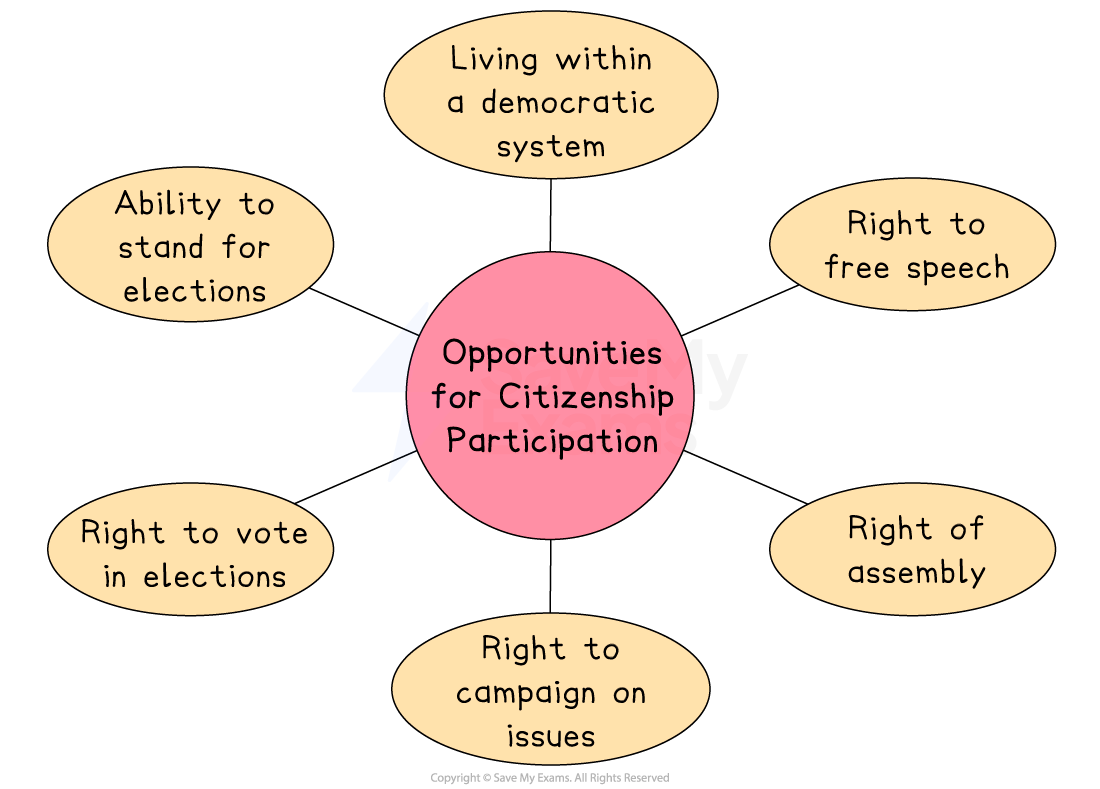
Living within a democratic system
Democracy encourages participation by allowing citizens to have a say in how the country is run, for example through elections or public debate
Right to free speech (within the law)
Citizens can express opinions, criticise the government and raise concerns, as long as they do not break the law, such as those on hate speech
Right of assembly
People are allowed to meet, protest and work with others to bring about change, such as joining demonstrations or supporting campaigns
Right to campaign on issues
Citizens can campaign for causes they care about, such as environmental protection or better local services, using petitions or social media
Right to vote in elections
Voting allows citizens to choose representatives and influence government decisions at local and national levels
Ability to stand for election
Citizens who meet legal requirements can stand for public office, such as becoming a councillor or Member of Parliament
Examiner Tips and Tricks
Many students think citizenship only means voting
Citizenship is broader - it also includes responsibilities, participation in the community, and taking action to bring about change
Barriers to citizen participation
Despite these opportunities, some citizens face barriers that prevent or discourage participation
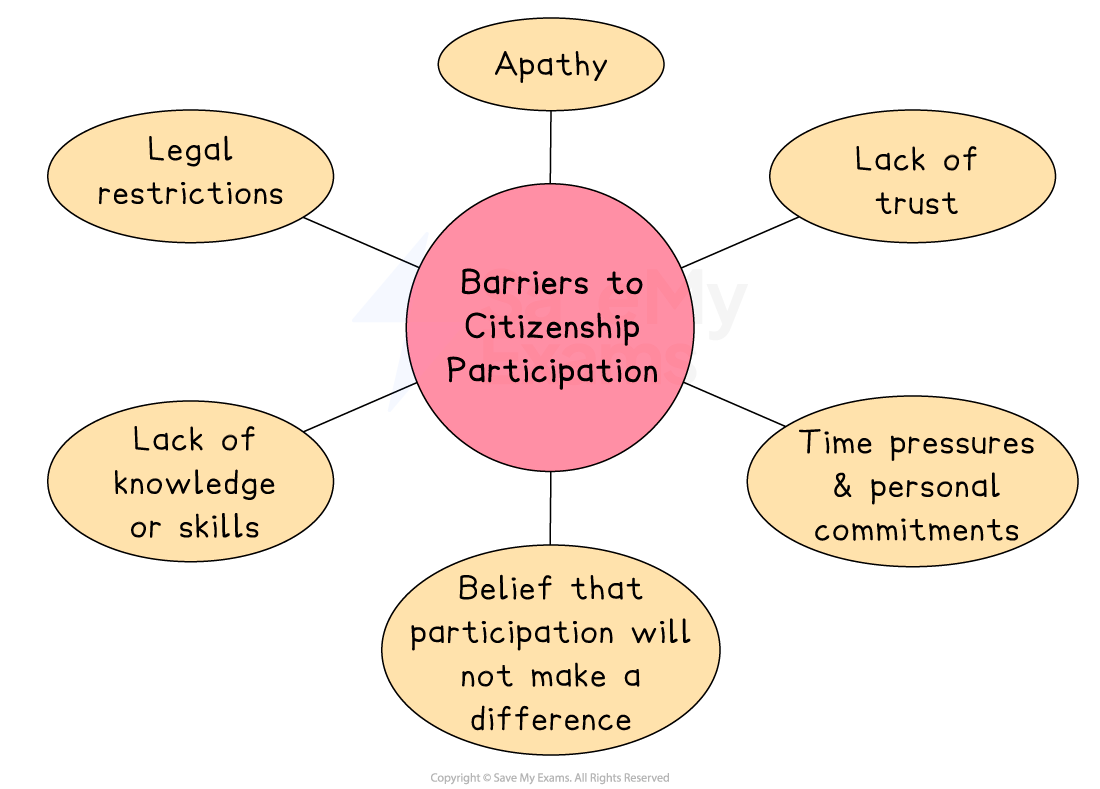
Apathy (lack of interest)
Some people do not take part because they feel politics does not affect them or is unimportant
Belief that participation will not make a difference
Citizens may feel their vote or actions will not change anything, reducing their motivation to get involved
Lack of trust in politicians or the political process
Scandals or broken promises can lead to low confidence in government and discourage participation
Legal restrictions on protest and campaigning
Public authorities, such as the police, can place limits on protests for reasons such as public safety, which may restrict participation
Lack of knowledge or skills
Some citizens do not understand how the political system works or how to take effective action
Time pressures and personal commitments
Work, caring responsibilities or education can make it difficult to attend meetings, campaign or volunteer

Unlock more, it's free!
Join the 100,000+ Students that ❤️ Save My Exams
the (exam) results speak for themselves:

Was this revision note helpful?
