The Nature of Citizenship Processes (AQA GCSE Citizenship Studies): Revision Note
Exam code: 8100

Forms of citizen action
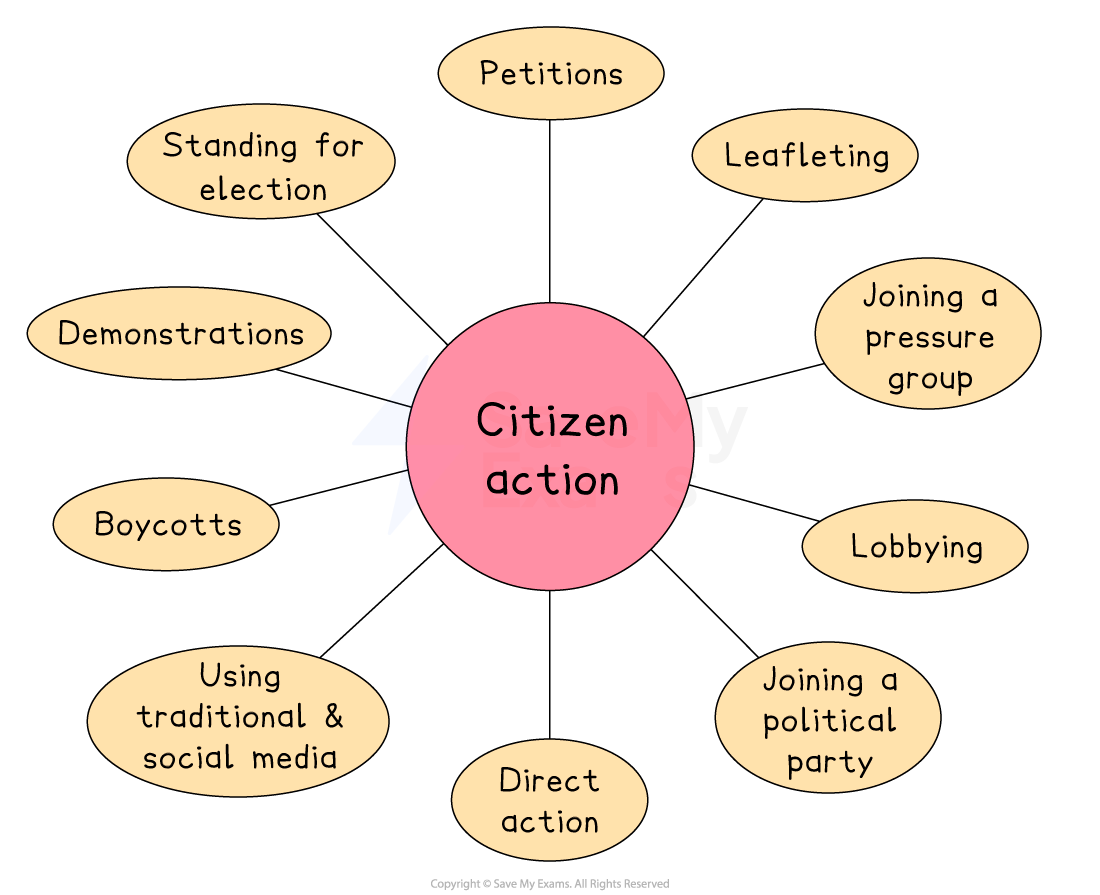
Citizen action refers to the ways individuals or groups try to influence decisions, bring about change or raise awareness of an issue
Ways citizens can take action
Petitions
Petitions involve collecting signatures to show support for a specific change
For example, over 400,000 people signed the petition opposing the expansion of the Ultra Low Emission Zone across Greater London in 2023, triggering debate and media attention
Advantages
They are easy and quick to organise, especially online
Large numbers of signatures show strong public support
They can raise awareness of an issue among the wider public
Disadvantages
The petition must clearly explain what change is being requested
People may sign without having a real connection to the issue
Online petitions often use identical messages, which can reduce their impact on decision-makers
Leafleting
Leafleting involves handing out or sharing written information about a cause
For example, in 2023, some London residents distributed leaflets explaining their objections to Low Traffic Neighbourhoods (LTNs)
Advantages
It helps raise awareness at a local level
It can reach a wider audience if shared online
It is relatively low-cost and easy to organise
Disadvantages
Leaflets usually present only one point of view
Many leaflets are ignored or thrown away
Few people take further action after reading them
Joining a pressure group
A pressure group is an organisation that tries to influence government decisions and public opinion about an issue without standing for election
They aim to bring together people who share the same concerns
For example, Just Stop OIl members campaign for an end to new oil and gas licences through protests, fundraising and coordinated direct action
Advantages
Members benefit from working with others who support the same cause
Groups are often better organised and more influential
They can use a range of methods, such as lobbying and media campaigns
Disadvantages
Individual members have limited control over decisions
The group’s actions and priorities may change over time
Some groups may use methods that members do not fully support
Lobbying
Lobbying involves trying to influence decision-makers directly, such as MPs or councillors
For example, in 2024, parents lobbied MPs over unsafe concrete used in the construction of school buildings and submitted evidence demanding emergency funding for school repairs
Advantages
It allows direct contact with those in power
Arguments can be explained clearly and in detail
It can be effective if the decision-maker is sympathetic
Disadvantages
Meetings with representatives are often very short
There is no guarantee the decision-maker will act
It can be difficult to gain access without influence or status
Joining a political party
Political parties aim to gain power and influence government policy
You can find out more about the main UK political parties here
Advantages
Membership provides a platform to influence decisions
Citizens can campaign, shape policy or stand for office
Parties have access to funding, media and organisation
Disadvantages
Members must follow party rules and policies
Parties cover many issues, not just one specific concern
Individual views may be overridden by the party's leadership
Direct action
Direct action involves taking immediate action to highlight an issue
For example, Extinction Rebellion took direct action in London to demand stronger government action on climate change
Activists blocked major roads and bridges, including sections of the M25, causing significant disruption to traffic and daily life
Advantages
It attracts public and media attention
It can raise awareness quickly
It may pressure authorities to respond
Disadvantages
It can involve illegal actions
Participants may face fines or arrest
Negative media coverage can harm the cause
Boycotts
Boycotts involve refusing to buy goods or services to apply pressure
For example, consumer boycotts of Starbucks and McDonalds in 2024 involved people refusing to buy from these companies because of concerns about their links to the Israel–Gaza conflict
Advantages
They can affect a company’s profits and reputation
They allow individuals to take action through everyday choices
They can raise ethical awareness
Disadvantages
They need to be large-scale to be effective
They may harm workers rather than company leaders
Results can take a long time to appear
Using traditional media and social media
Traditional media refers to established forms of communication that share information with large audiences, such as newspapers, television and radio
Social media refers to online platforms that allow individuals and groups to create, share and respond to content instantly, such as X, Instagram, TikTok and Facebook
For example, in 2023, Martin Lewis and MoneySavingExpert used TV appearances and social media posts to campaign on the cost-of-living crisis and pressure the government to improve support for vulnerable households
Advantages
It spreads messages quickly to large audiences
It can attract funding, supporters and publicity
Media organisations may take up the cause themselves
Disadvantages
Traditional media may interpret the campaign differently
Social media can attract criticism and abuse
Messages can be misrepresented or misunderstood
Demonstrations
Demonstrations involve public protests or marches
For example, between October 2022 and 2023, the TUC organised national cost-of-living marches, where tens of thousands of people called for higher wages, better public services and fairer taxation
Advantages
They show the level of public support for an issue
They attract media attention
They put pressure on decision-makers
Disadvantages
They can be difficult to control
Violence or disruption can occur
Negative media coverage may follow
Standing for election
Standing for election allows citizens to seek political power directly
For example, in the 2024 local elections, independent candidates in Birmingham stood on single-issue platforms such as housing development, clean air policies and opposition to council cuts
Advantages
It provides a formal position of influence
Elected representatives can shape laws and policies
It offers long-term opportunities for change
Disadvantages
Campaigning requires time, money and commitment
Party-backed candidates must follow party discipline
Independent candidates often struggle to gain support
Case Study
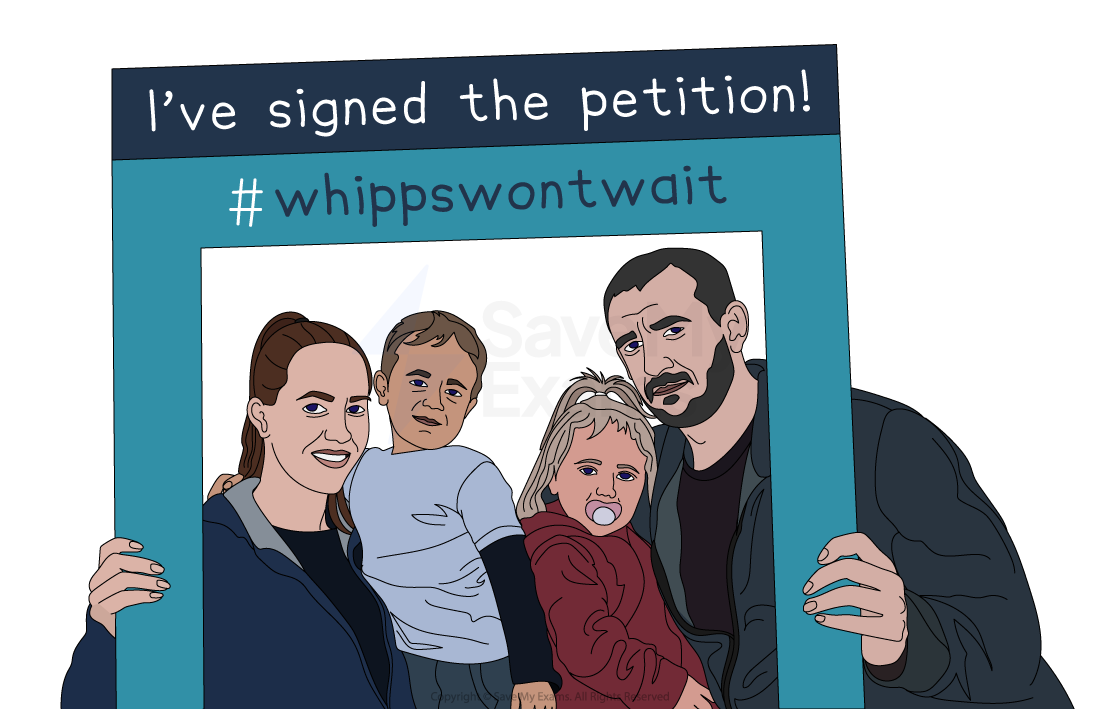
The campaign to Save Whipps Cross Hospital A&E in 2024
The issue
In 2024, local residents and campaign groups opposed proposed changes to Whipps Cross Hospital accident and emergency services in East London
Campaigners were concerned that reductions would increase waiting times and reduce access to emergency care
Actions taken by citizens
Petitions were organised both online and locally, gaining thousands of signatures to show public opposition
Demonstrations were held outside the hospital to raise awareness and attract media attention
Lobbying took place when campaigners met local councillors and MPs to argue for keeping services open
Social media and local press were used to share personal stories and maintain public pressure
The outcome
As a result, the issue gained significant media coverage and forced local health authorities to publicly respond and review the changes
Groups and organisations that give citizens a voice
Citizens do not always act alone when trying to make a difference
A range of organisations and groups exist to support citizens, represent their views and help them take action
These organisations can provide advice, organise campaigns, challenge decisions or offer practical support
Organisation or group | How they assist citizens |
|---|---|
Public services |
|
Pressure groups |
|
Trade unions |
|
Charities |
|
Voluntary groups |
|
How citizens can make a difference
Citizens can make a difference by raising awareness, working with others and putting pressure on decision-makers
This can be done through actions such as campaigning, using the media, signing petitions, lobbying politicians or working with organisations
When citizens act together and use the right methods, they are more likely to influence decisions and bring about change
Case Study
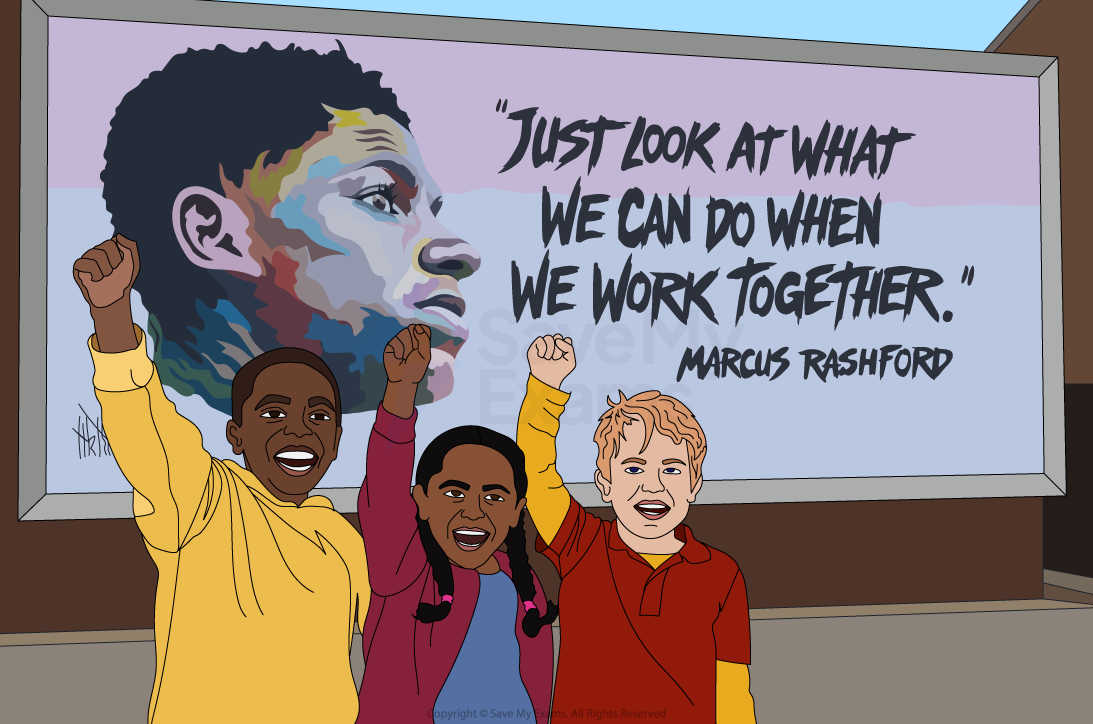
Marcus Rashford and Free School Meals
The issue
In 2020, footballer Marcus Rashford campaigned to extend free school meals for children during school holidays
He was concerned that many families were struggling to afford food during the COVID-19 pandemic
Actions taken
Rashford used social media and traditional media to highlight child food poverty
He lobbied the government by writing an open letter to MPs
Public support grew as citizens shared stories and backed the campaign
The outcome
As a result of this pressure, the government agreed to fund free school meal vouchers during holidays
How the media can bring about change
The media plays an important role in helping citizens make a difference
The media can influence public opinion by raising awareness of issues and promoting campaigns
Through investigative journalism, the media can expose problems and hold those in power to account
Media coverage can support or damage campaigns, depending on how issues and actions are reported
Examples of the media supporting change
Example | Explanation |
|---|---|
Fathers for Justice |
|
Sarah's Law |
|
Celebrity support, combined with traditional and social media, can raise awareness and influence government policy
Case Study
Celebrity support and the media – Jamie Oliver and the sugar tax

Actions taken
Celebrity chef Jamie Oliver used television programmes, newspaper articles and social media to campaign against high sugar levels in food and drinks
He focused on the impact of sugary products on children’s health and childhood obesity
The outcomes
Jamie's campaign gained widespread media attention and strong public support
This increased pressure on the government to take action
In 2018, the Soft Drinks Industry Levy (sugar tax) was passed, which encouraged companies to reduce the sugar content of their drinks
In early 2026, fast food adverts were banned from being shown on TV before 9pm
Examiner Tips and Tricks
In Citizenship Action questions, marks are gained by explaining why a method was chosen, not just what happened
Examiners look for justification linked to effectiveness and feasibility

Unlock more, it's free!
Join the 100,000+ Students that ❤️ Save My Exams
the (exam) results speak for themselves:

Was this revision note helpful?
