The Nature of Citizenship Methods: Democracy & Political Change (AQA GCSE Citizenship Studies): Revision Note
Exam code: 8100

How citizens contribute to Parliamentary democracy
Citizen participation is essential in a democracy
Parliamentary democracy depends on citizens taking part in the political process
Without participation, governments would lack legitimacy and accountability
Ways citizens participate
Voting in elections
Citizens vote in local, devolved and general elections to choose their representatives in Parliament
Citizens can remove governments they disagree with and support parties and policies they believe in
Elections ensure governments are accountable to the public
Voting in referendums
Referendums allow citizens to vote directly on a single issue
Decisions are made by a majority vote
E.g. The 2016 EU referendum on UK membership of the European Union was decided by 52% of those that chose to vote
Standing for election and forming political parties
Citizens have the right to stand for public office, such as MP or councillor
They can join existing political parties and create new political parties
Example: The Reform Party was established to represent dissatisfied voters
Other ways citizens influence Parliament
Parliamentary petitions allow citizens to raise issues for debate
Citizens’ Assemblies involve a representative group of citizens making recommendations
Televised election debates help inform voters about party leaders and policies
Some citizens support electoral reform such as proportional representation
How governments support citizen participation
Protecting political and legal rights
Citizens are protected by law when taking part in politics
These rights include
Freedom of speech
Freedom of assembly and protest
The right to vote in secret
These protections help ensure elections are fair and free
Improving political engagement and turnout
Governments have proposed extending polling station opening hours and allowing voting over several days
Polling stations are increasingly sited in accessible locations such as supermarkets
Governments have proposed increasing the use of postal voting to improve turnout
Encouraging younger and wider participation
Proposals include lowering the voting age to 16, online voting and making voter registration quicker and easier
Case Study
Votes at 16 and youth participation in Scotland
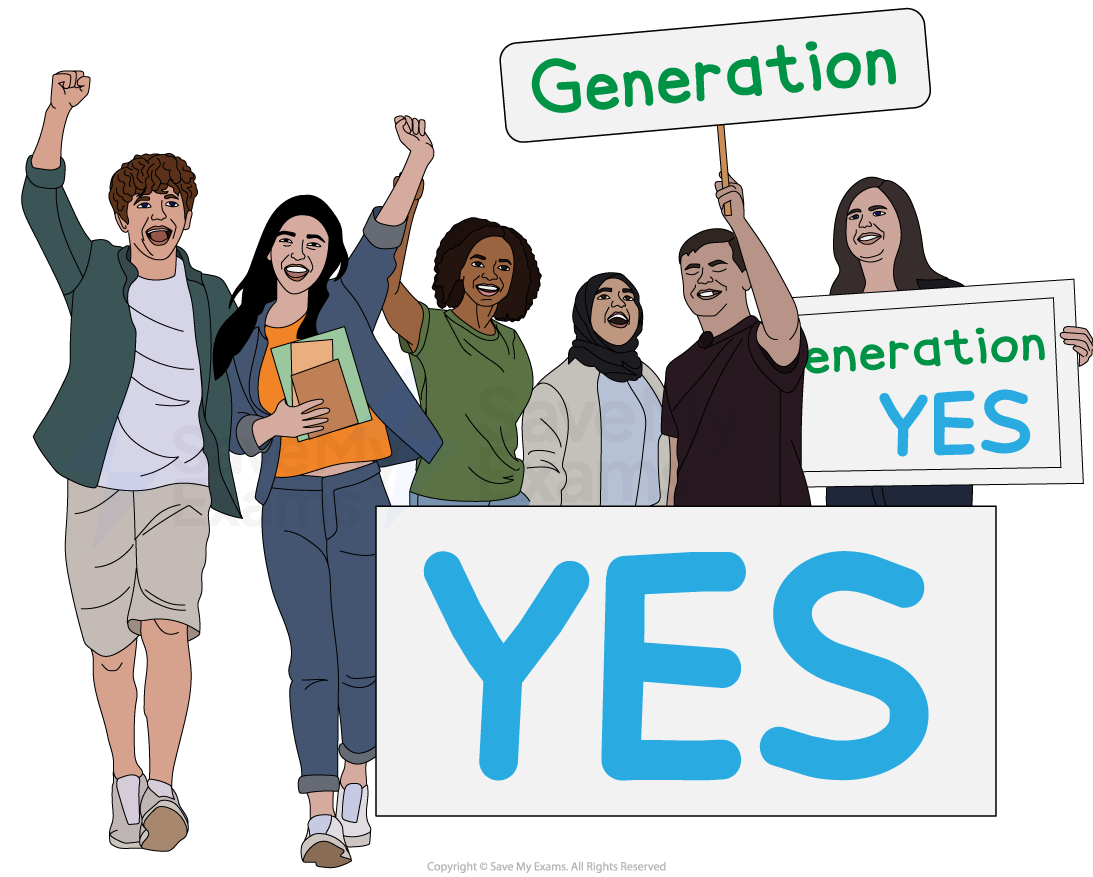
Change in Scotland
In Scotland, 16- and 17-year-olds were given the right to vote for the first time in the 2014 Scottish Independence Referendum
The aim was to encourage political engagement among young people and help them develop voting habits earlier
Outcomes
The change successfully increased youth participation
Around 75% of registered 16–17-year-olds voted in the 2014 referendum, which was higher than turnout among 18–24-year-olds
Many schools supported the process through political education and voter registration drives, helping young people feel informed and confident
The policy was continued for Scottish Parliament and local elections
In the 2016 Scottish Parliament election, turnout among 16–17-year-olds was around 55%, again higher than turnout for many older first-time voters
Surveys also showed that young voters felt more engaged and likely to vote again in future elections.
Citizen action to hold those in power to account
Citizens can participate in many different ways, ranging from contacting decision-makers and using the media, to protesting, standing for election and accessing information
Together, these actions help citizens hold those in power to account and strengthen democracy
Ways citizens can take action
Citizen action | Explanation |
|---|---|
Lobbying |
|
Pressure groups |
|
Petitions |
|
Freedom of Information (FOI) requests |
|
The media |
|
Demonstrations |
|
Standing for election |
|
Examiner Tips and Tricks
When identifying a Citizenship Action linked to Parliament, look for decisions or debates where people feel unheard
For example low youth turnout, access to voting, local services ignored by MPs, or unfair laws
Choose an issue with a clear decision-maker (MP, Parliament or government) and explain in the exam how your action could realistically influence them through petitions, lobbying or media pressure
Digital democracy and social media to improve engagement and participation
Digital democracy refers to the use of digital technology to increase citizen participation in political and democratic processes
It aims to make democracy more accessible, inclusive and responsive
Social media and political engagement
Social media platforms allow citizens to share opinions, debate issues and follow political events
It is especially effective at engaging younger people who are less likely to use traditional media
Politicians and political parties use social media to communicate directly with citizens
Raising awareness and campaigning
Citizens can use social media to raise awareness of issues quickly and at low cost
Online campaigns can reach national and international audiences
Hashtags and videos help mobilise support and encourage action
Online petitions and consultations
Digital platforms allow citizens to sign Parliamentary and local authority petitions online
If enough signatures are gathered, issues may be debated in Parliament
Governments also use online consultations to gather public views on policies
Evaluation of digital democracy
Advantages | Disadvantages |
|---|---|
|
|
How public bodies provide a voice for citizens
Citizens are not limited to acting alone, but can be supported by public bodies, pressure groups, trade unions, and charities to raise concerns, challenge decisions and campaign for change
How organisations and groups assist citizens
Organisation | How they assist citizens |
|---|---|
Public services |
|
Pressure groups and think tanks |
|
Trade unions |
|
Charities and voluntary groups |
|
Case Study
National Farmers Union (NFU) and inheritance tax on family farms
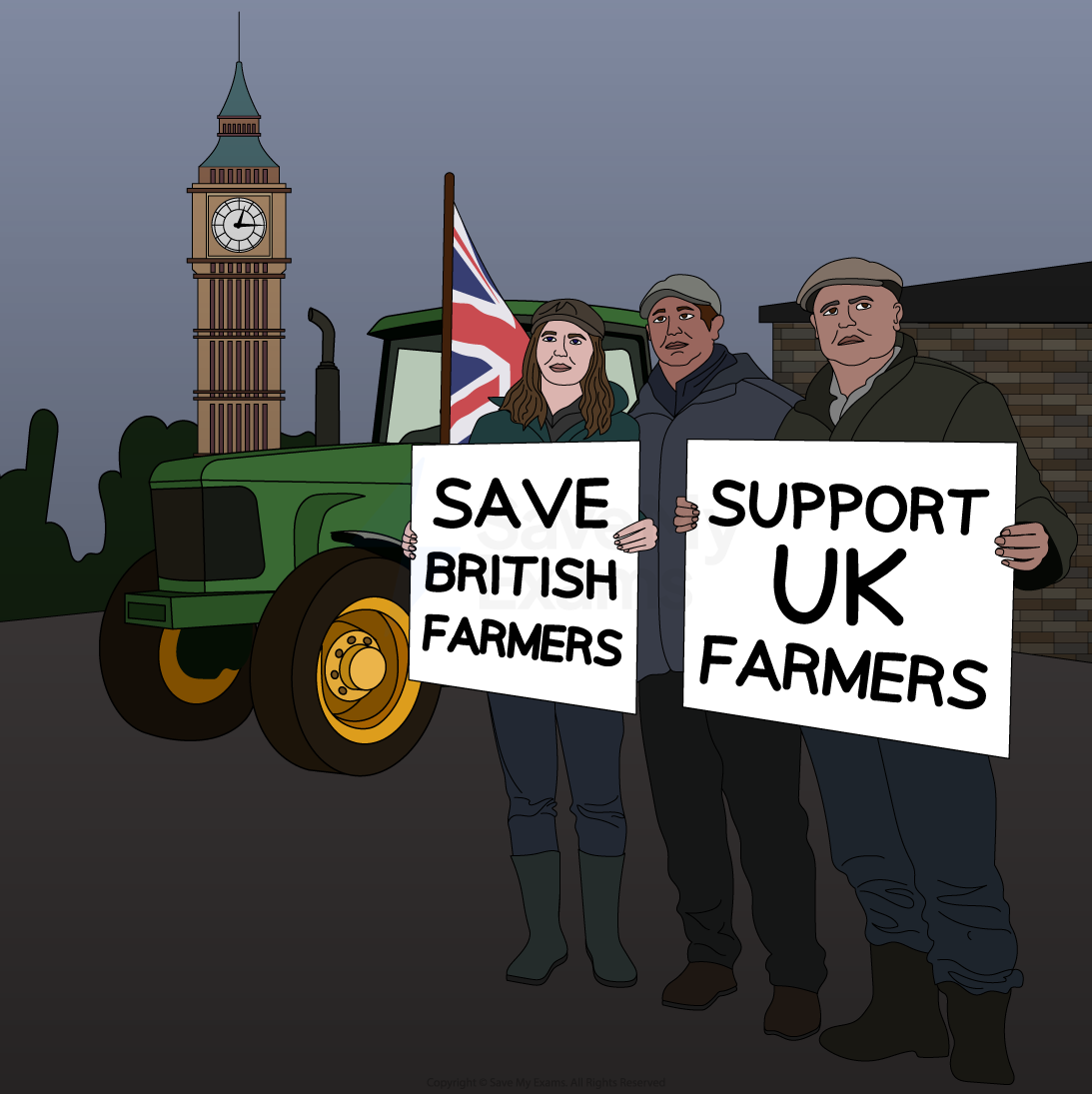
The issue
In the 2024 Budget, the Labour government proposed changes to inheritance tax rules that would have affected family-owned farms
Many farmers were concerned that the changes would make it difficult to pass farms on to the next generation
Action taken
Farming and countryside groups launched a campaign against the proposals, led by the National Farmers Union (NFU)
The NFU organised rallies and demonstrations across the UK, including high-profile tractor protests, to attract media attention and apply pressure on the government
The outcome
After several months of sustained campaigning, the government amended its proposals, announcing that most family farms would be exempt from the new inheritance tax rules

Unlock more, it's free!
Join the 100,000+ Students that ❤️ Save My Exams
the (exam) results speak for themselves:

Was this revision note helpful?
