The Nature of Citizenship Methods: Justice & Legal Change (AQA GCSE Citizenship Studies): Revision Note
Exam code: 8100

Roles for citizens in the justice system
The justice system is the set of institutions and processes used by the state to make, interpret and enforce the law, resolve disputes and ensure fairness
It includes the police, courts, judges, juries and legal professionals
It is designed to protect citizens’ rights, maintain order, and deal with those accused or convicted of breaking the law in a fair and lawful way
The justice system relies on citizens to play active roles
This includes preventing crime and supporting the police, deciding cases, giving evidence and holding the police to account
Roles for citizens in the justice system
Participation form | Explanation |
|---|---|
Jury service |
|
Witness |
|
Victim of crime |
|
Magistrate |
|
Special constable |
|
Police support volunteer |
|
Police and Crime Commissioner (PCC) |
|
Tribunal member |
|
Member of Neighbourhood Watch |
|
Citizen who has committed an offence |
|
Case Study
Ellen Roome and access to social media accounts

The issue
Ellen Roome campaigned for a change in the law following the death of her 14-year-old son, Jools
She believed his death was linked to an online challenge and argued that bereaved parents should have the legal right to access their child’s social media accounts
Actions taken
She used the Parliamentary petitions system to raise public awareness and apply pressure on the government
After gaining sufficient signatures, the issue was considered by Parliament
The outcome
As a result of the campaign, the government has indicated that the law may be changed in March 2026
Ellen Roome was awarded an MBE in recognition of her campaigning
Groups campaigning for legal change or fighting injustice
The legal system is not shaped by government alone
It is influenced by public services, pressure groups, trade unions, charities and voluntary organisations
These groups help protect rights, support individuals, campaign for fairer laws and push for greater accountability
Public services
Public services help protect citizens’ rights by being held accountable when things go wrong
This is done through an Ombudsman system, which investigates complaints made by the public
Examples of the Ombudsman system
Health Service Ombudsman | Parliamentary and Local Government Ombudsman | Independent Office for Police Conduct |
|---|---|---|
|
|
|
Professional bodies also deal with complaints about lawyers, such as solicitors and barristers
The Criminal Cases Review Commission investigates possible miscarriages of justice
The Law Commission reviews existing laws and recommends changes to make them fairer and more effective
Pressure groups
Pressure groups campaign to change the law and challenge injustice by raising awareness and influencing those in power
Some groups focus on specific areas of the legal system
For example, the Prison Reform Trust and the Howard League for Penal Reform campaign to improve prisons and the treatment of offenders
Other groups, such as Liberty, campaign to protect civil liberties and human rights
Some pressure groups, like Which?, represent the interests of consumers and campaign for legal change
Trade unions
Trade unions represent workers and campaign to improve employment laws and workplace conditions
They lobby the government for changes to the law on issues such as pay, working hours, health and safety and unfair dismissal
Much of this work is organised through the Trade Union Congress (TUC), which brings together 48 trade unions and represents over 5.5 million workers across the UK
Charities
Charities campaign to change laws or government policies related to the causes they support
They play an important role in giving a voice to groups who may not otherwise be heard
They raise public awareness and provide evidence to show why legal change is needed
For example, the NSPCC campaigns to protect children’s rights and improve child protection laws, while the RSPCA campaigns for stronger animal welfare laws
Voluntary groups
Voluntary groups provide practical support and legal advice to people who need help
For example, Citizens Advice centres are often the first place people go for guidance on legal, financial or employment issues
Organisations, such as LawWorks and the Free Representation Unit (FRU), offer free legal advice and help people prepare for and attend tribunal hearings
Citizen action to bring about change
Citizens are not passive within the justice system
They can actively challenge injustice, influence decision-makers and improve laws through a range of actions
Ways citizens can bring about change in the justice system
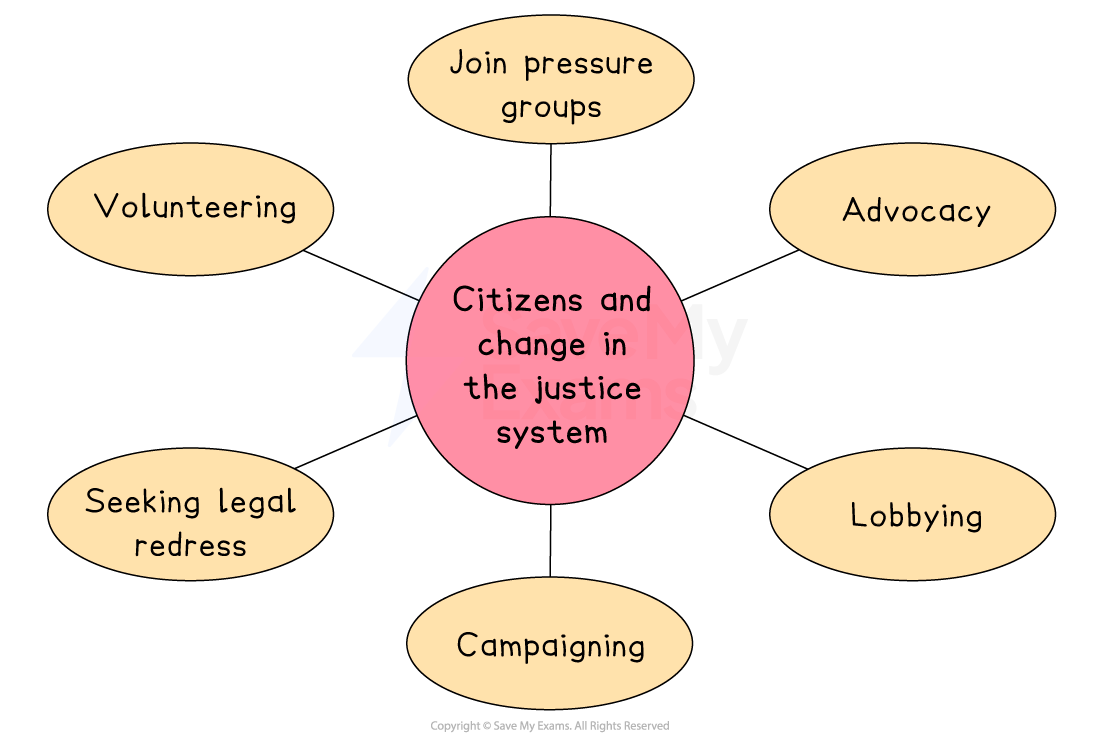
Citizens can join pressure groups to campaign on issues they care about and to push for changes in the law
Amnesty International campaigns for the protection of human rights around the world
Liberty works to defend legal rights and civil liberties in the UK by challenging unfair laws and government actions
Citizens can take part in advocacy, which means speaking up for themselves or on behalf of others
This may involve ensuring that the voices of young people, elderly people or the homeless are heard by decision-makers
Citizens can use lobbying to influence those in power by contacting or meeting people who make decisions
This may include writing to Members of Parliament, government ministers or local councillors to express concerns and ask for changes to laws or policies
Citizens can also get involved in campaigning to raise awareness and pressure the government to act
This can include signing or organising petitions, taking part in peaceful demonstrations, or using social media and other forms of direct action
Citizens can bring about change by using the legal system
This involves taking cases to court to challenge unfair laws or decisions
For example, some environmental campaigners have successfully used the courts to challenge government action on air pollution
Citizens can volunteer to support others and promote access to justice
For example, volunteering with organisations such as the Law Centres Network allows individuals to help people who need legal advice but cannot afford it
Examiner Tips and Tricks
When choosing a Citizenship Action issue linked to the justice system, you should look for real problems where people feel the law is unfair, outdated or not working properly
Good starting points include news stories about miscarriages of justice, victim rights, youth justice, policing powers or online harm
In the exam, clearly explain what the problem is, who is affected, and which decision-maker (courts, Parliament, police or ministers) could realistically change it
Case Study
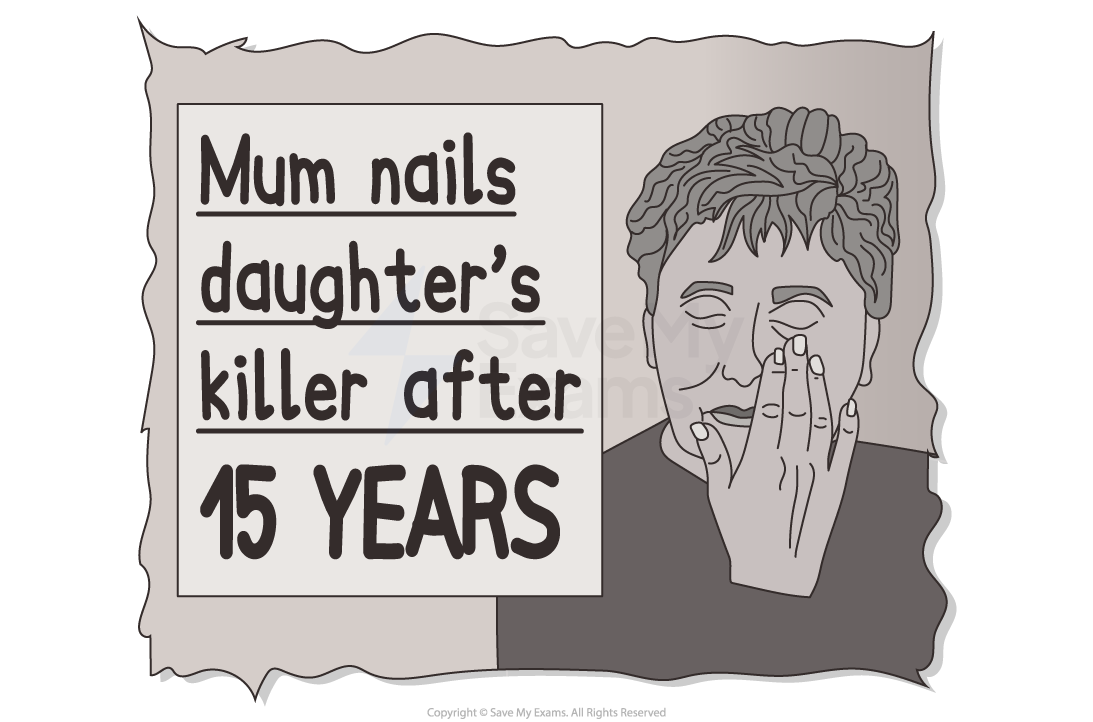
Ann Ming and the abolition of double jeopardy
The issue
Ann Ming campaigned to change the law following the murder of her daughter, Julie
The main suspect, William ‘Billy’ Dunlop, was tried twice for the murder in 1991, but both trials ended with no verdict
Under the long-standing rule of double jeopardy, he could not be tried again for the same crime.
While serving a prison sentence for another offence, Dunlop later confessed to Julie’s murder and admitted he had lied in court
However, he could only be charged with perjury, not murder
Action taken
Ann Ming began a public campaign to change the law, which gained national attention and was featured in the ITV series I Fought the Law
The outcome
As a result of this campaign, the law was changed, allowing retrials in serious cases where new evidence emerges
In 2006, Dunlop was retried and sentenced to life imprisonment

Unlock more, it's free!
Join the 100,000+ Students that ❤️ Save My Exams
the (exam) results speak for themselves:

Was this revision note helpful?