Duties, Equalities & Freedoms of Citizens (AQA GCSE Citizenship Studies): Revision Note
Exam code: 8100

Duties of citizens
Citizens have duties that come with being part of a society
These duties help keep society fair, safe and well-organised
Unlike rights, duties are not optional and many are protected by law
Key duties of citizens
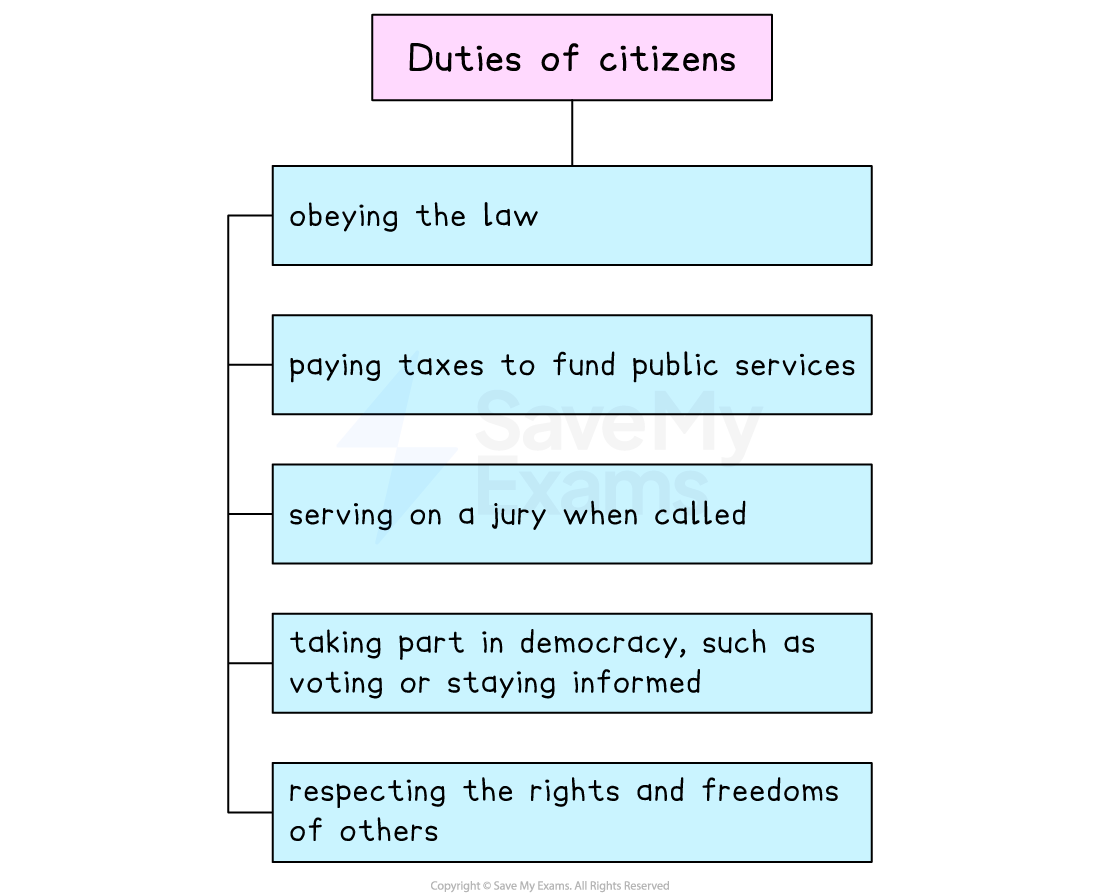
These duties help ensure that the justice system, public services and democracy function properly
Equalities
Equality is about ensuring that everyone is treated fairly and has the same opportunities, regardless of gender, race, religion, disability or sexuality
When discrimination occurs, the state can intervene through policies or laws
Historical examples include:
Women’s rights: from women gaining the right to vote in 1928 to modern equality legislation
Race Relations Acts (from 1965): introduced to challenge and reduce racial discrimination
The Equality Act (2010) later brought many equality laws together under one framework
The aim of equality laws is to protect individuals, reduce discrimination and promote fairness in society.
Freedoms of citizens
Citizens have a range of freedoms, but every freedom is limited by the need to protect others and maintain public order
People are free to act as they choose as long as it is within the law
Key freedoms of citizens

However, freedoms have clear limits, for example:
You may protest peacefully, but violence would break the law
You may express your opinions, but not in a way that threatens or harms others
These limits help balance individual liberty with the safety and rights of the wider community
Examiner Tips and Tricks
Examiners want to see that you understand limits and balance
Always show how freedoms are restricted to protect others or how duties support fairness and public order

Unlock more, it's free!
Join the 100,000+ Students that ❤️ Save My Exams
the (exam) results speak for themselves:

Was this revision note helpful?
