Human, Moral, Legal & Political Rights (AQA GCSE Citizenship Studies): Revision Note
Exam code: 8100

Types of rights
Citizens in the UK have a range of rights that shape how they live, participate in society and engage with the law
These rights come from different sources and serve different purposes
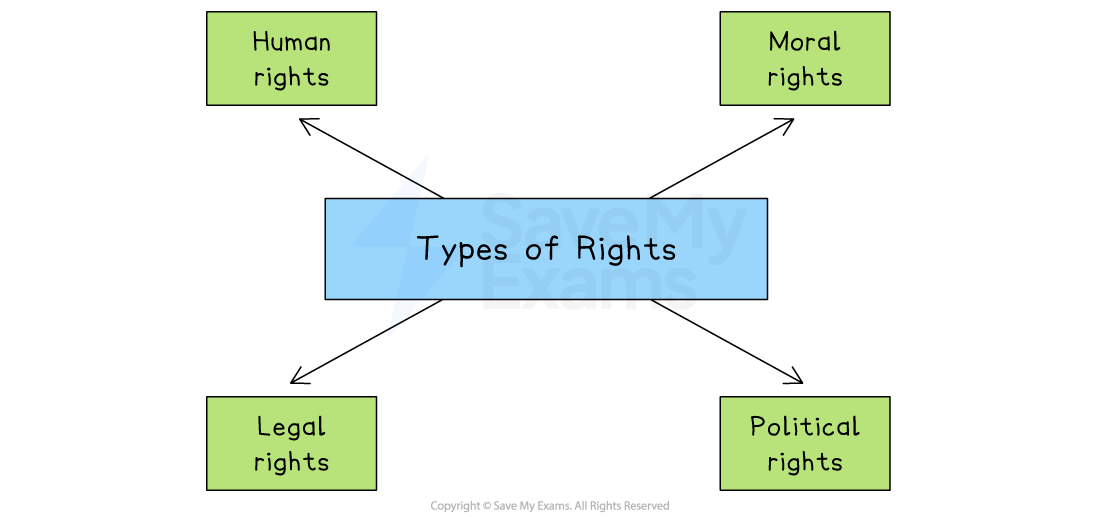
Human rights
Human rights are basic rights that belong to every person
They are usually written into a country’s constitution or laws
In the UK, human rights are protected through documents such as the Human Rights Act (1998)
These rights include:
democratic rights, such as freedom of expression
legal rights, such as the right to a fair trial
social and economic rights such as access to education
moral and religious freedoms
Human rights can be challenged or changed through courts or Parliament, but they must also be safeguarded by government and public authorities
Moral rights
Moral rights come from personal beliefs about what is right or wrong. They are shaped by factors such as:
family upbringing
culture
religion
community expectations
In some societies, such as a theocracy, where religious leaders hold political power, moral rules are set by religious teachings
This often leaves less space for individuals to form their own moral beliefs
Moral rights are not always written into law, but they strongly influence how people behave
Legal rights
Legal rights are protected by the law
They apply to everyone and have developed over time through new laws and court decisions
Key legal rights in the UK include:
the presumption of innocence
the right to a fair trial
the right to own property
protection from imprisonment without charge
the right to legal representation
the right to appeal against a conviction or sentence
Legal rights come with legal responsibilities, such as obeying the law and respecting the rights of others
Political rights
Political rights allow citizens to take part in the democratic process.
These include the right to:
vote in local, devolved and national elections
stand for public office
join or create a political party
protest or demonstrate peacefully
campaign with others to promote a cause
These rights help people influence decisions and hold those in power to account
Examiner Tips and Tricks
Examiners often see human, legal, moral and political rights confused
Remember:
human rights are protected by law
legal rights come from courts and legislation
moral rights come from beliefs, and political rights let you take part in democracy.

Unlock more, it's free!
Join the 100,000+ Students that ❤️ Save My Exams
the (exam) results speak for themselves:

Was this revision note helpful?
