Principles & Values in British Society (AQA GCSE Citizenship Studies): Revision Note
Exam code: 8100

Principles in British society
British society is shaped by a set of core principles and shared values
These guide how people live together, how laws are created and how rights are protected
Introduction to British principles
A society’s principles develop over time
In the UK, they are influenced by:
historic events (e.g. Magna Carta, post-war reforms)
long-standing cultural traditions
religious and philosophical ideas
the diversity of today’s population
After the Second World War, the United Nations created the Universal Declaration of Human Rights (UDHR) (1948)
This sets out basic rights that apply to everyone, everywhere
The UK helped create it and continues to support its principles
Values in British society
British values is often used to describe both cultural attitudes and legal rights
These values connect to international agreements that the UK follows, such as:
the UDHR
the European Convention on Human Rights (through the Council of Europe)
the Human Rights Act 1998
Public discussion about British values has increased in recent years because of
concerns about terrorism
debates about migration
discussions about multiculturalism
economic changes linked to globalisation
questions about national identity, highlighted during the 2016 EU Referendum (Brexit)
British values today
Since 2014, the UK Government has required all schools to actively promote British values
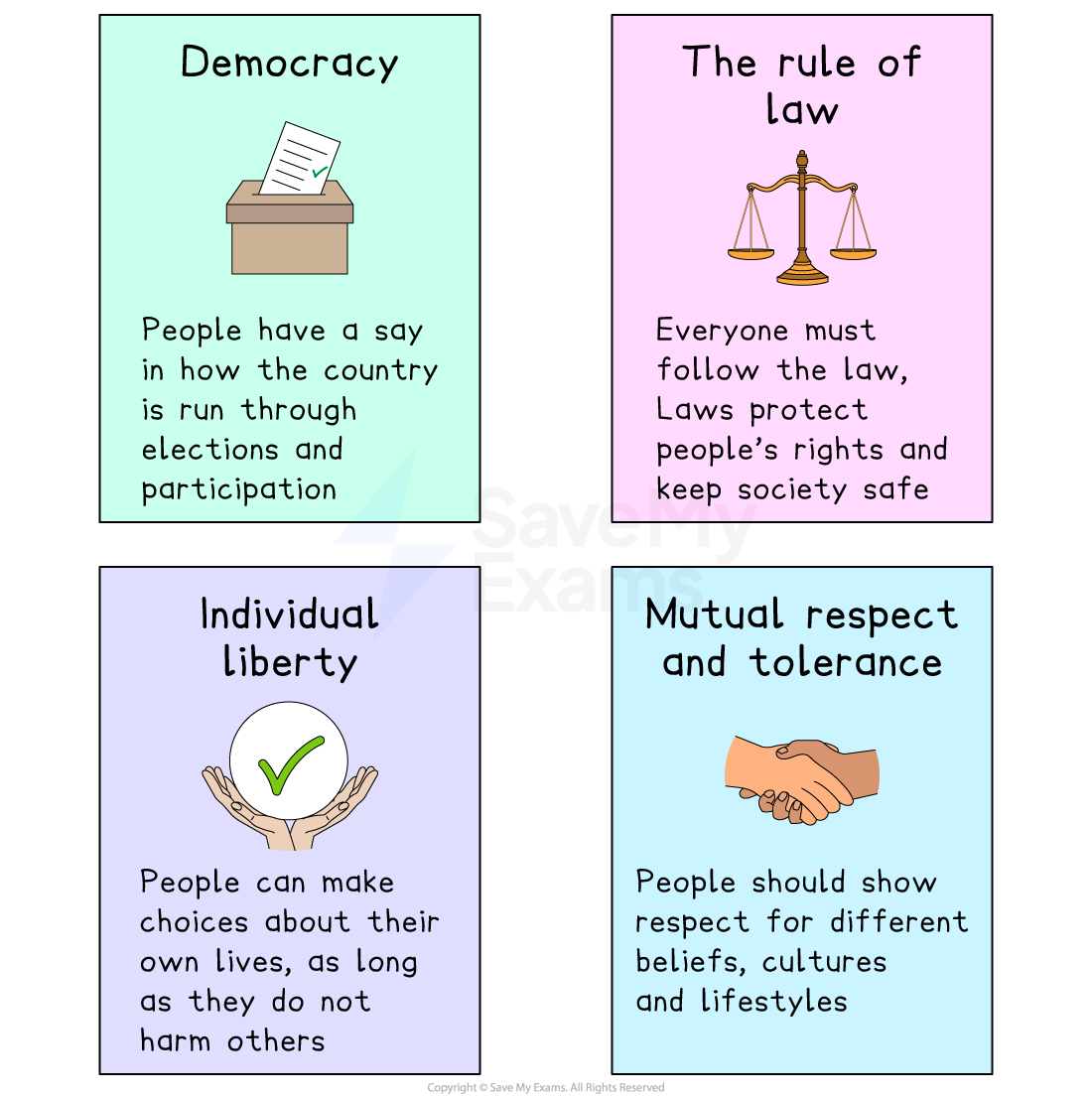
1. Democracy
Democracy means people have a say in how the country is run
Citizens choose representatives through free and fair elections
In general elections, every eligible voter can choose their Member of Parliament (MP)
In local elections, residents elect councillors who make decisions about services such as parks, housing, and waste collection
They can also get involved through petitions, contacting MPs, demonstrations, or joining political parties
Online petitions on the UK Parliament website can trigger debates if they reach 100,000 signatures.
2. The rule of law
The law applies equally to everyone, including those in power
Laws protect people’s rights, keep society safe and help prevent discrimination and injustice
In independent courts, judges make decisions based on evidence, not government pressure
Police can stop and search people, but only under lawful conditions
Actions such as theft, assault, and fraud are crimes no matter who commits them
Politicians or celebrities charged with offences are tried like anyone else, showing that no one is above the law
3. Individual liberty
People are free to make choices about their own lives
They can express their opinions, choose their religion, lifestyle, education and career, provided their choices do not harm others or break the law
For example, people can share opinions online or in public, within laws on hate speech
Students can select GCSE options, apprenticeships or A-levels based on their interests
People can follow any faith or none
Individuals also have a right to privacy - their personal information is protected under data protection laws
4. Mutual respect and tolerance
People should show respect and understanding towards others, even when their beliefs, backgrounds or lifestyles differ
This helps communities live together peacefully
Examples include
Schools of different religions often share events or facilities
Schools and workplaces must protect people from discrimination or harassment
Events like Pride, Black History Month, Diwali or Eid celebrations are widely recognised in the UK
Local councils may support projects that bring different groups together, such as youth clubs or neighbourhood festivals
Examiner Tips and Tricks
You won’t get full marks for just naming a British value.
Always explain it and give a UK example
For example, don’t just write “rule of law” – explain that judges are independent or that politicians are tried like everyone else.

Unlock more, it's free!
Join the 100,000+ Students that ❤️ Save My Exams
the (exam) results speak for themselves:

Was this revision note helpful?