The UK Population, Immigration & Migration (AQA GCSE Citizenship Studies): Revision Note
Exam code: 8100

Historic changes to the UK population
Migration has shaped the UK for over a thousand years
The idea that population diversity is new is incorrect – people have been moving into, out of and across Britain throughout history
Early migration and invasion
By the year 1000, England was ruled by Saxons and Danes, groups who had arrived through invasion and settlement
In 1066 the Normans took control and introduced new communities, including European Jewish families who were initially protected but later faced persecution and expulsion
During the Middle Ages, people from across Europe settled in England, bringing specialist skills and contributing to local economies
16th–17th century arrivals
In the Tudor and Stuart periods, migrants came from North Africa, Gypsy/Traveller communities, and Protestant refugees from France and the Low Countries
As Britain expanded trade links and empire connections in India, the Caribbean and West Africa, more people from these regions also arrived
Industrial Revolution and 19th-century migration
Industrialisation created huge demand for labour
People moved to Britain from a variety of places
Ireland, especially during the famine
Scotland and Italy, seeking work
Port areas along global shipping routes - sailors from Asia, Africa, the Caribbean, the Mediterranean and Scandinavia often settled in British cities
Germany, where many set up small businesses
Large numbers of Eastern European Jews also arrived to escape violent persecution and discrimination
Early 20th-century change
Immigration controls became stricter in the early 1900s
During both world wars, people from countries Britain was fighting (such as Germans, Austrians and Italians) were interned
The UK accepted refugees, such as Belgians in World War I and some Jewish people fleeing Nazi persecution in the 1930s
Post-war migration
After 1945, the government encouraged migration from former colonies in the Caribbean, Africa and Asia
Case Study
The arrival of the Empire Windrush
Britain after World War 2
After World War 2, the UK faced shortages of workers in key sectors such as transport, health care and manufacturing
To rebuild the country, the government encouraged migration from Commonwealth nations, especially in the Caribbean
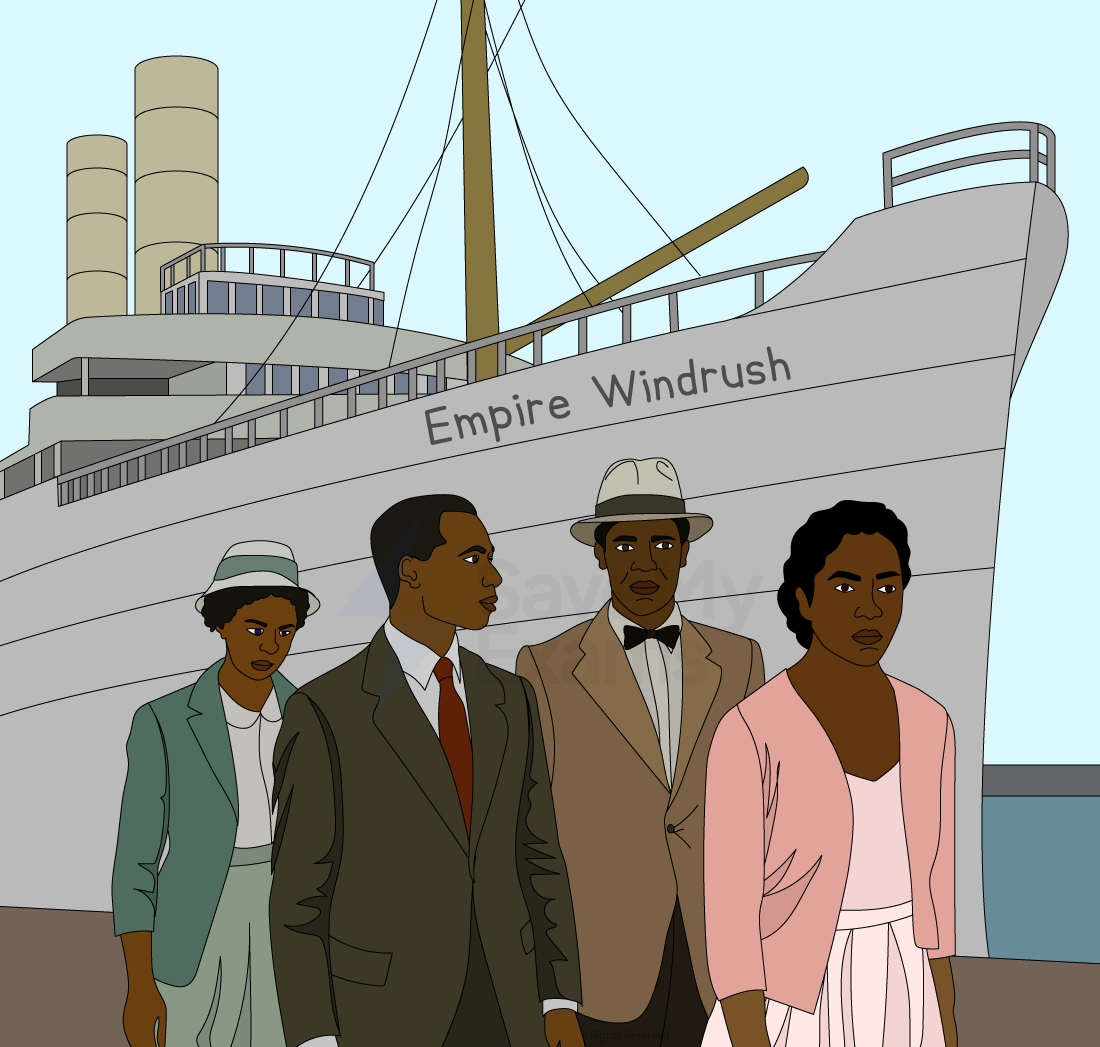
The most symbolic moment was the arrival of the ship Empire Windrush at Tilbury Docks on 22 June 1948, carrying passengers from the Caribbean who had responded to advertisements offering work in the UK
Caribbean migrants were motivated by a combination of economic, social, and historical factors
Reasons for leaving the Caribbean | Reasons for choosing the UK |
|---|---|
|
|
Contributions and difficulties
The Windrush Generation contributed significantly to British society but often faced many challenges
Employment
Many found work quickly in the NHS, public transport, factories and construction
They filled labour shortages and became essential to rebuilding post-war Britain
Housing and discrimination
Many were denied housing due to racist policies and signs saying "No Blacks, No Irish, No Dogs"
Families were often forced into overcrowded or poor-quality accommodation
Racism and social barriers
Despite being British subjects, many faced prejudice in work and daily life
Racist attacks and discrimination were common in the 1950s and 1960s
Community and cultural impact
Caribbean communities built social and cultural networks, establishing churches, clubs and events
They contributed to British culture in music (e.g. reggae, ska), literature, food and sport
The Notting Hill Carnival, one of Europe’s biggest street festivals, grew from Caribbean traditions
Late 20th century–21st century migration
Towards the end of the century, migration increased from European Union countries due to freedom of movement rules
At the same time, more people arrived seeking safety from wars and conflict around the world
By the time the London 2012 Olympics took place, the city proudly stated that it was home to communities from every competing nation
Migration from around the world continues to be a major feature of the UK’s population today
Examiner Tips and Tricks
A common misconception is that UK diversity is a recent development
Migration has shaped Britain for centuries, not just since World War 2
Use examples from different time periods, such as the Normans, industrial migration or the Windrush Generation, to show historical understanding
Recent changes to the UK population
Immigration to the UK is now significantly higher than it was in the 20th century
The makeup of people arriving has shifted, with fewer migrants coming from EU countries since Brexit, and more arriving from non-EU countries, particularly for work and study
Government policies strongly influence how many people migrate to the UK and the reasons they come
Immigration is a complex issue shaped by economic needs, humanitarian crises and political decisions
Growing diversity in the UK
Census data for England and Wales shows how ethnic diversity has increased in the UK
Ethnicity | 2021 | 2011 | 2001 |
|---|---|---|---|
Asian | 9.3% | 7.5% | 4.4% |
Black | 4.0% | 3.3% | 2.2% |
Mixed | 2.9% | 2.2% | 1.3% |
Other | 2.1% | 1.0% | 0.9% |
White | 81.7% | 86.0% | 91.3% |
The data shows a steady rise in Asian, Black, mixed and other ethnic groups, and a decrease in the percentage of White British residents
Mutual respect and diversity in a multicultural society
Successive UK governments have promoted multiculturalism, which is a society where people from different backgrounds live together while sharing common values
This approach aims to encourage harmony while allowing space for cultural and religious differences
Debates about multiculturalism
In recent years, multiculturalism has been questioned or challenged
Former Prime Minister David Cameron argued that to strengthen shared national identity, the UK should
encourage all immigrants to learn English
increase teaching of British history and Britishness
introduce a National Citizenship Programme for all 16-year-olds
promote volunteering to build shared values
The UK relies on migrant workers in essential sectors such as healthcare, education and construction
Government decisions about immigration must balance public concerns with the need to fill skill shortages and keep services running
International students make up a significant part of UK university populations
These students bring economic benefits and help maintain the strength of UK higher education, so the government must consider this when setting immigration rules
Conflicts and crises, such as the conflict in Ukraine, create a need for asylum and refugee routes
The UK must weigh public concern about immigration against international obligations to protect people fleeing danger
Immigration is a major political issue, influencing debates on population growth, public services and national identity
Governments must balance public opinion with economic, social and humanitarian priorities when shaping policy

Unlock more, it's free!
Join the 100,000+ Students that ❤️ Save My Exams
the (exam) results speak for themselves:

Was this revision note helpful?
