The UK Sense of Identity (AQA GCSE Citizenship Studies): Revision Note
Exam code: 8100

The composition of the UK
The UK is made up of four nations - England, Scotland, Wales and Northern Ireland
Its island geography and long history as an independent state have contributed to a shared sense of British identity, though each nation also has its own identity, culture and political institutions
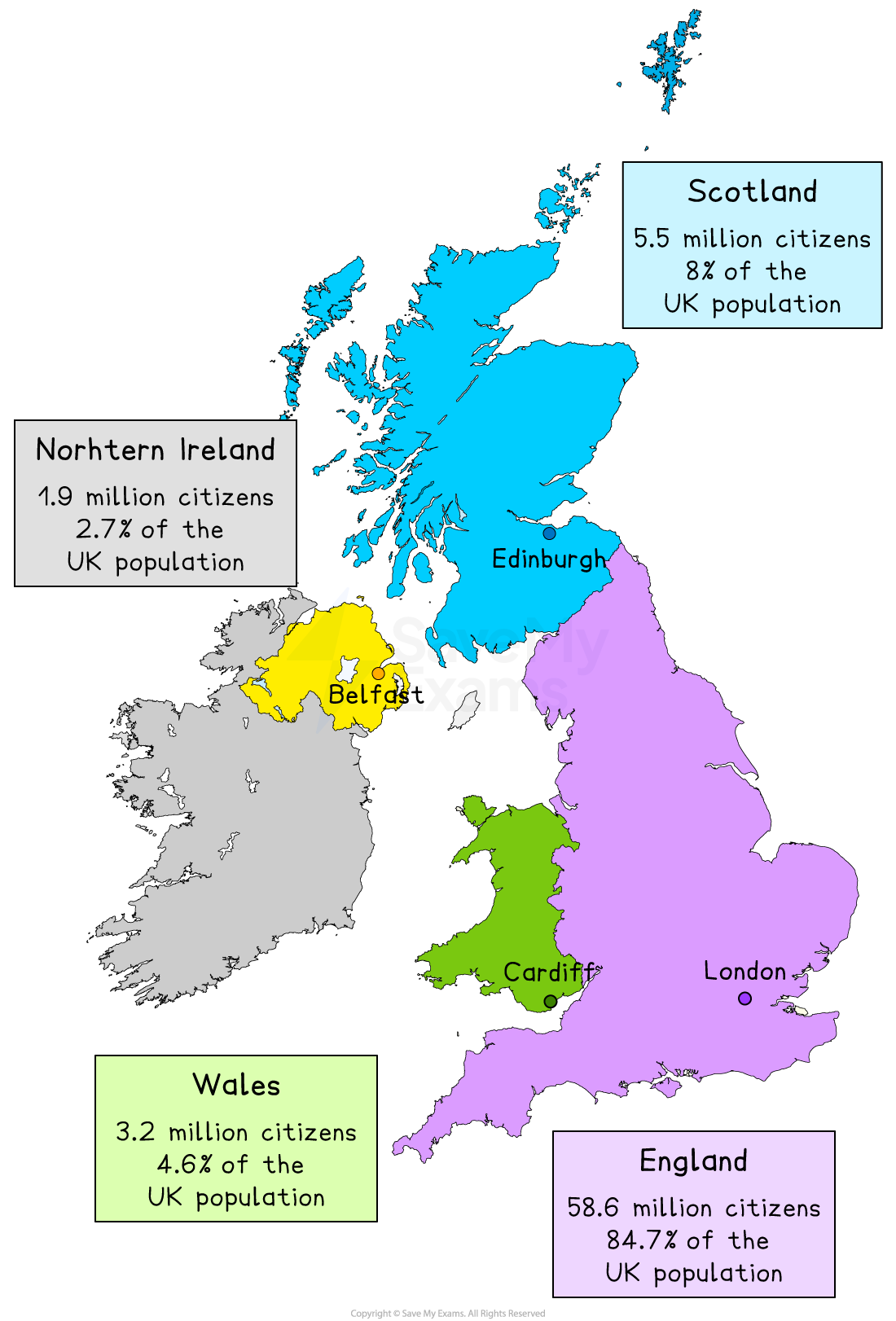
England
England's capital city is London
England is the largest nation in the UK, with around 85% of the UK population
It is home to the UK Parliament and most central government institutions, making it the political centre of the UK
Scotland
Scotland's capital city is Edinburgh
Scotland has its own legal and education systems and a devolved parliament with significant powers over areas such as health, education and transport
Wales
Wales' capital city is Cardiff
Wales has a distinct cultural and linguistic identity, including the Welsh language
It has a devolved legislature which makes laws on areas like education, health and the environment
Northern Ireland
The capital of Northern Ireland is Belfast
Northern Ireland has a unique political history
It shares a land border with the Republic of Ireland and has a power-sharing Northern Ireland Assembly, designed to represent both unionist and nationalist communities
UK identity
What is ‘Britishness’?
UK identity is often described through the idea of Britishness
This refers to a shared sense of belonging to the United Kingdom
Many people connect British identity with national symbols and long-standing institutions, such as the Monarchy, which represents all four nations of the UK
How the UK has changed over time
The UK’s identity has evolved because the four nations have different histories
Scotland was once an independent country with its own monarchy and still has its own legal system today
Wales was historically separate from England before becoming part of the UK
Ireland was part of the UK until 1921, when it was divided. Northern Ireland remained in the UK, and this division still influences politics today
These historical differences help explain why people often feel both British and national identities, such as Scottish, Welsh or Northern Irish
Devolution and multiple identities
Since the late 1990s, each nation has been given devolved powers, meaning their own parliament or assembly can make decisions on issues like health, education and transport
As a result, many people now have a dual identity, such as
British and Scottish
British and Welsh
British and Northern Irish
Even within England, some people have strong regional identities, such as being from Cornwall, Yorkshire or the North-East
Shared and separate identities in daily life
Despite differences between nations, people across the UK share many common values such as democracy, respect, equality and the rule of law
However, separate national identities often appear
In sport, Scotland, Wales, England and Northern Ireland compete separately in football or rugby
However, in the Olympics, teams join together as Team GB (Great Britain and Northern Ireland)

These examples show how people can feel part of the UK while also belonging strongly to their own nation or region
What shapes someone’s sense of being British?
People living in the UK often link their British identity to factors such as
shared history and traditions
national institutions (e.g. Parliament, Monarchy, the NHS)
common values
cultural influences (music, food, media)
pride in sporting achievements
the UK’s role in world events
Identity varies from person to person, but these themes often appear when people explain why they feel British
Examiner Tips and Tricks
You should clearly explain devolution and show that people can have dual identities, such as British and Scottish
Using examples like devolved parliaments or sport helps show accurate understanding.

Unlock more, it's free!
Join the 100,000+ Students that ❤️ Save My Exams
the (exam) results speak for themselves:

Was this revision note helpful?