Rights, Responsibilities & Role of the Media (AQA GCSE Citizenship Studies): Revision Note
Exam code: 8100

Introduction to the media in the UK
The media means the different ways information and news are shared with the public, such as TV, newspapers, radio and online platforms
Examples of newspapers in the UK
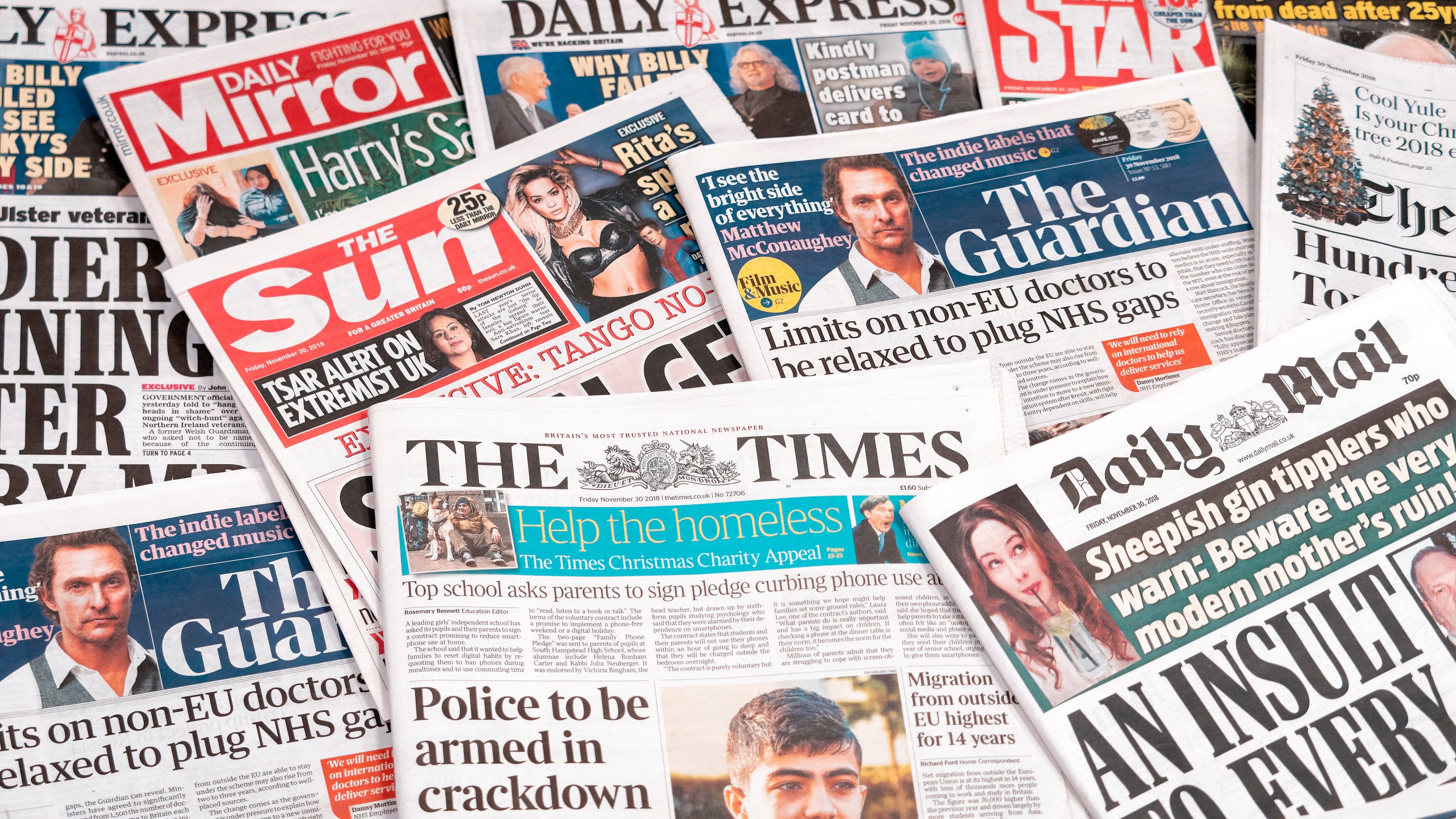
The UK recognises freedom of the press, meaning traditional media should be free from political or judicial interference
E.g. In recent years, UK newspapers freely criticised government decisions on issues such as immigration policy and NHS waiting times
Newspapers can openly support political parties, especially during elections, and can encourage readers to vote a certain way
During the 2024 General Election, newspapers such as The Sun and The Daily Telegraph openly endorsed the Conservative Party, while The Guardian supported Labour
Broadcast media (e.g. TV and radio) must follow rules on impartiality, but newspapers do not have the same requirement
In 2023, Ofcom investigated GB News for breaches of impartiality rules after programmes featured politicians acting as news presenters
The state may still regulate areas such as media ownership and industry standards to ensure fairness and prevent abuse
In 2023, Ofcom looked at possible changes to Channel 4’s ownership, showing how the government helps regulate the media to keep it fair and responsible
Responsibilities of the media
The media play a powerful role in shaping what the public knows and understands
Because of this influence, journalists and broadcasters must follow clear responsibilities
Key media responsibilities
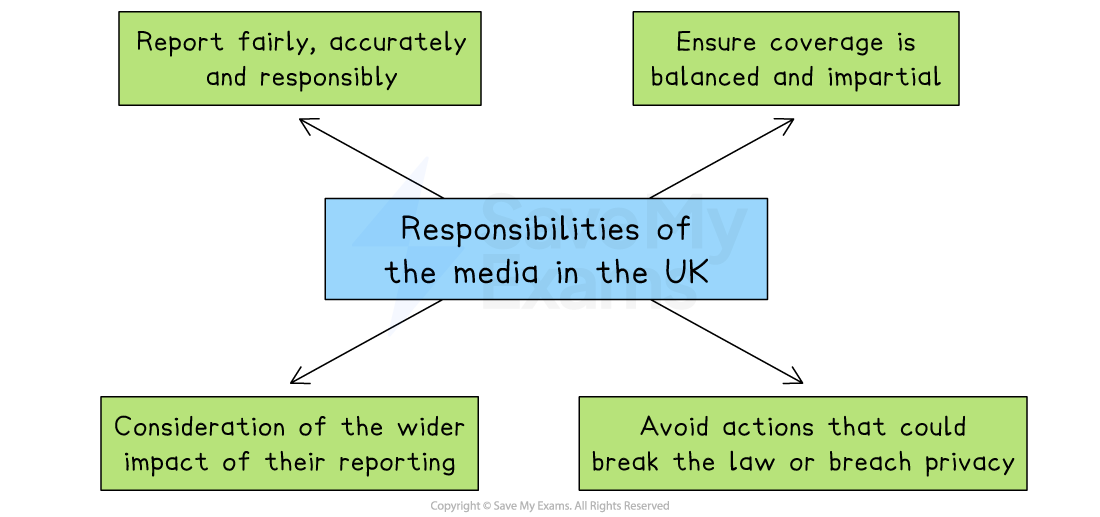
Media organisations must report fairly, accurately and responsibly, as inaccurate reporting can harm individuals and mislead the public
E.g. In 2024, several newspapers issued corrections after misreporting details about the Post Office Horizon scandal
Broadcasters have a legal duty to ensure their coverage is balanced and impartial, especially on political issues
The media should consider the impact of their reporting on individuals, communities and wider society
Coverage of the recent cost-of-living crisis included guidance on support services and avoided panic-inducing language
They must avoid actions that could break the law, breach privacy, or create misinformation
After the rise of misinformation online during the recent Israel–Gaza conflict, UK broadcasters and newspapers emphasised fact-checking and avoided publishing unverified claims
Role of the media
The media inform the public by reporting news and explaining national and global events
They hold those in power to account, scrutinising decisions made by government, public services and large organisations
E.g. In 2024, ITV’s reporting on the Post Office Horizon scandal helped expose failures in government oversight and contributed to new legislation to overturn victims’ convictions
The media help shape public opinion by providing commentary, analysis and debate on contemporary issues
E.g. Media coverage of the NHS pressures during winter 2023–24 influenced public debate on funding, staffing and government responsibility
They have an educational role, helping audiences understand complex topics, and an entertainment role through programmes, features and cultural content
E.g. Programmes such as Panorama and Dispatches have examined complicated topics like climate change, artificial intelligence and social inequality
Broadcasters must also ensure their output is fair, balanced and accurate
E.g. During the 2024 General Election campaign, TV shows hosted live leaders’ debates and were required to offer equal airtime and balanced coverage across all major political parties
Rights of the media
The UK media have strong rights that allow them to investigate and report stories that are in the public interest
Journalists can look into issues involving government, public authorities, businesses and individuals, as long as they follow the law
Key rights include
The right to investigate and publish public-interest stories
UK law protects the media’s ability to report on matters that affect the public, such as wrongdoing, government failures or threats to safety.
The right to access information
The Freedom of Information Act (2000) gives citizens and journalists the right to request information from government departments and public bodies
It supports investigative reporting by increasing transparency
Recent investigations that have led to change
ITV’s 2024 investigation into the Post Office Horizon scandal exposed how more than 900 sub-postmasters had been wrongly accused or convicted of theft
Public pressure after the broadcast pushed the government to overturn their convictions
News of the World’s campaign for “Sarah’s Law” (2000) helped create the Child Sex Offender Disclosure Scheme
This allows parents and carers to request information from police about known offenders in their area
Examiner Tips and Tricks
Students often confuse freedom of the press with impartiality
Remember: newspapers can take sides, but TV and radio must stay balanced

Unlock more, it's free!
Join the 100,000+ Students that ❤️ Save My Exams
the (exam) results speak for themselves:

Was this revision note helpful?
