The UK & International Disputes (AQA GCSE Citizenship Studies): Revision Note
Exam code: 8100

The UK and its role in international disputes
The UK plays an important part in helping to prevent, manage and resolve international disputes
1. Diplomacy
The UK uses diplomatic channels to calm tensions and encourage peaceful solutions
As a permanent member of the UN Security Council, the UK helps write and vote on resolutions about conflicts, sanctions and peacekeeping
UK embassies across the world allow British diplomats to negotiate directly with other governments during crises
2. Humanitarian aid
The UK gives emergency assistance when disputes create suffering, such as food shortages, refugee crises and lack of medical care
It is part of groups like the Group of Friends for Action on Conflict and Hunger, which focus on helping civilians affected by conflict
3. Military support
The UK sometimes provides military aid when disputes escalate and security is threatened
A current example is the UK’s major role in supplying military equipment and training to Ukraine to help it defend itself
4. International co-operation
The UK works with global organisations to address disputes and prevent them spreading
Bodies such as the G7 and the World Bank allow the UK to work with other leading nations to support countries in crisis, rebuild economies and reduce the risk of further conflict
5. Legal routes
London is one of the world’s most respected centres for commercial and maritime law
International companies and governments often choose UK courts to settle disputes because they are viewed as fair, neutral and highly skilled
This provides a peaceful alternative to conflict and encourages countries to resolve disagreements through legal processes instead of violence
Methods to resolve international disputes
The UK plays a major role in dealing with international disputes because it is a leading member of organisations such as the UN, NATO, the G7 and the Commonwealth
It uses a mixture of soft power and hard power to influence events and help resolve conflicts
Soft power versus hard power
Soft power | Hard Power |
|---|---|
|
|
Methods the UK uses to resolve international disputes
1. Mediation (soft power)
Mediation brings different sides of a dispute together so they can try to agree a peaceful solution
Sometimes the parties do not meet directly, and mediators communicate separately with each group
E.g. The Good Friday Agreement (1998) involved the UK working with American mediators to help resolve conflict in Northern Ireland
Examiner Tips and Tricks
A frequent mistake is confusing mediation with the media
Mediation means helping sides in a dispute talk and reach agreement, not reporting on the conflict
2. Sanctions (soft and hard power)
Sanctions are penalties placed on a country to encourage it to change its behaviour.
Soft power sanctions include sporting or cultural boycotts
These signal disapproval without causing major economic harm
E.g. For many years, the UK refused to play South Africa in international sports such as cricket and rugby to pressure the government to end its racist apartheid system
Hard power sanctions include refusing to buy goods from or sell goods to a country
These put direct economic pressure on governments
E.g. The UK and its allies banned the export of military equipment to Russia after the 2022 invasion of Ukraine
Individuals may also take part through boycotts by refusing to buy imported goods from a country involved in wrongdoing
3. Use of force (hard power)
This is the most extreme method and involves military action
The UK usually acts with other countries through NATO or UN-led operations
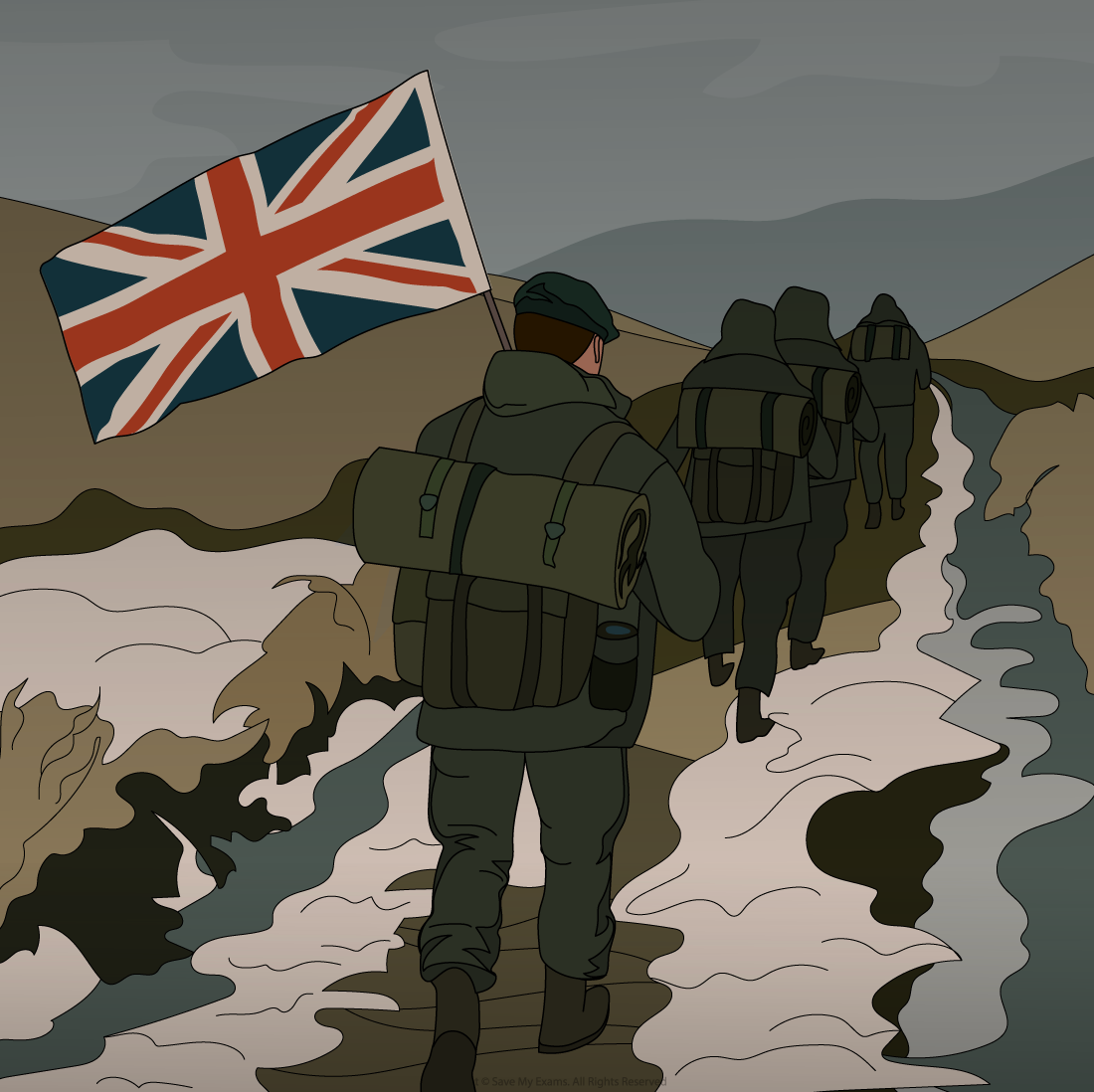
E.g. The Falklands War (1982) was a unilateral UK military operation to remove Argentinian forces from the islands

Unlock more, it's free!
Join the 100,000+ Students that ❤️ Save My Exams
the (exam) results speak for themselves:

Was this revision note helpful?