The UK & the EU After Brexit (AQA GCSE Citizenship Studies): Revision Note
Exam code: 8100

The UK and the EU post Brexit
In 2016, the UK held a referendum on membership
The Leave campaign argued the UK should take back control of its laws, borders and trade
The Remain campaign focused on the economic risks of leaving, the benefits of free trade, and the stability that came from staying in the EU
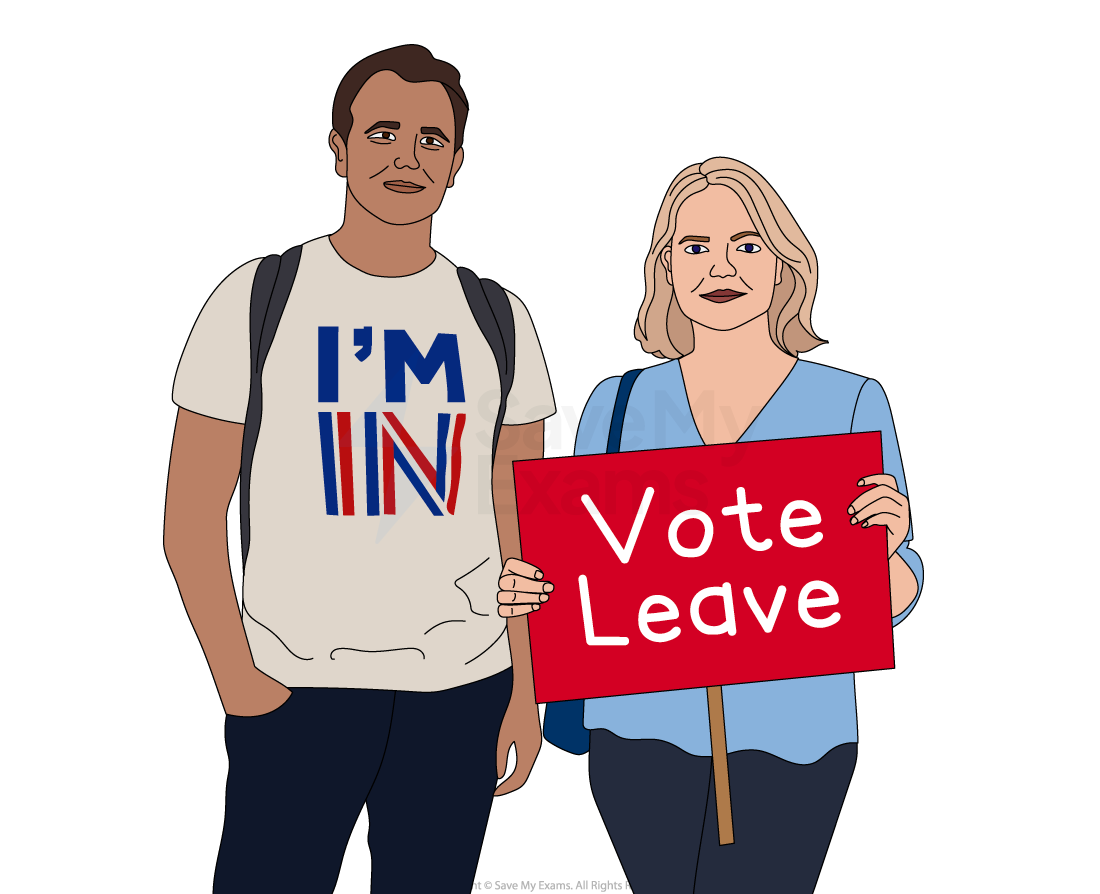
The result was extremely close: 51.9% voted Leave and 48.1% voted Remain
After several years of negotiations, the UK officially left the EU in 2020
How Brexit changed UK trade
The UK is no longer in the single market or customs union, so trading with the EU now involves more checks, forms and border delays
The UK can now make its own trade deals with countries around the world, such as Australia and New Zealand
Some industries (like farming, fishing and car manufacturing) have struggled with new rules and extra costs
Northern Ireland has a special trading arrangement to avoid a hard border with the Republic of Ireland, which continues to be a sensitive political issue
How Brexit changed politics in the UK
Brexit became one of the most divisive political issues in recent UK history, shaping elections and leadership changes
The UK government has had to create new laws to replace those that came from the EU, including new rules on immigration and agriculture
The UK no longer takes part in EU decision-making, so it has less influence over European policies that may still affect it
How Brexit affected democracy in the UK
The referendum showed the impact of direct democracy, where the public votes on a single issue
Parliament then had the difficult job of turning the result into law, even when many MPs disagreed with the outcome
Devolved nations reacted differently
Scotland voted strongly to Remain, raising questions about its future in the UK
Northern Ireland faced new discussions about borders and identity
Brexit changed debates about sovereignty, with many people focusing on who should make laws for the UK
How Brexit has changed the EU
The EU lost one of its largest economies and a major diplomatic and military power when the UK left
Remaining EU countries have since become more united on some issues, especially trade and security
The EU has strengthened its focus on common policies, such as climate change and economic cooperation, partly to show the value of staying together
Brexit also encouraged the EU to review how it works, leading to discussions about future reforms and how to prevent similar exits
Examiner Tips and Tricks
When answering questions on Brexit, avoid one-sided answers. Examiners reward balance
Show that Brexit had political, economic and democratic impacts, and that different groups and nations were affected in different ways
Briefly recognising both advantages and disadvantages helps you reach higher levels.

Unlock more, it's free!
Join the 100,000+ Students that ❤️ Save My Exams
the (exam) results speak for themselves:

Was this revision note helpful?