Rights & Responsibilities (AQA GCSE Citizenship Studies): Revision Note
Exam code: 8100

Balance between rights and responsibilities
In UK society there is a balance between a citizen's rights and the responsibilities placed upon the citizen by the state
In a democracy that balance can be changed and challenged through both democratic and legal processes
Different societies each may have their own views on legal issues and processes
For example the death penalty is still used in parts of the USA but was abolished in the UK in 1965
As the world has become more interconnected, a framework of international law, rights and legal systems has emerged.
These developments have enabled people to take forward their concerns from their local community to international bodies and get a judgement in their favour
Case Study
In the early 1980s many UK state schools still used corporal punishment, such as smacking or caning, as a form of discipline
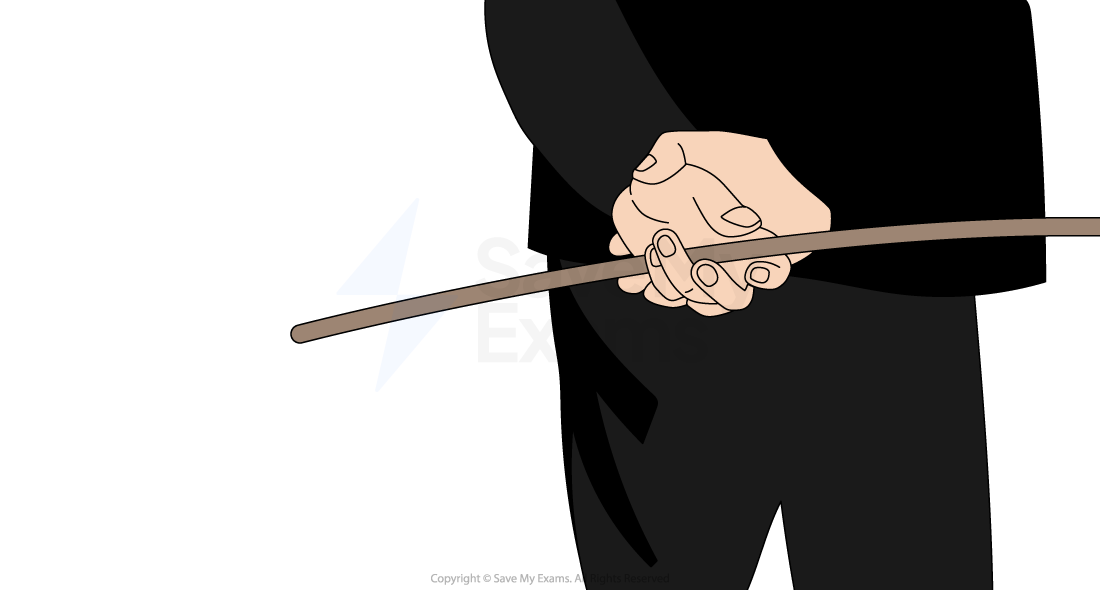
The issue
A parent believed this violated her child’s rights and attempted to challenge the practice in the English courts
She argued that parents should be able to refuse physical punishment on behalf of their children
Court decisions
The UK courts rejected her claim, ruling that schools were allowed to use reasonable physical discipline under existing law
The parent was granted permission to take her case to the European Court of Human Rights (ECHR)
The ECHR ruled in her favour, stating that the UK had failed to respect the rights of parents who opposed corporal punishment
As a result of this ruling, the UK government was required to change the law. In 1987, corporal punishment was banned in all state schools across the UK
After the Second World War, the newly created United Nations agreed to the Universal Declaration of Human Rights (UDHR)
It was amended in 1976 and became international law
In 1950 the Council of Europe drafted the European Convention on Human Rights (ECHR) which built on the UDHR
The UK was one of the original countries to sign the Convention
In 1998 the UK parliament approved the group of European countries that works to protect human rights, democracy and the rule of law across Europe
This brought together existing legislation into one document setting out citizens' rights.
The Equality Act 2010 brought together over 100 separate pieces of legislation
This protects the rights of individuals and advances equality of opportunity
Responsibilities of citizens
As a citizen of a county, one accepts certain responsibilities to the state
The state assumes its citizens will obey the law, but if they break the law, there are actions the state can take
There is an assumption the citizen pays the taxes imposed by the state to enable it to function
The state also has responsibilities to its citizens
For example, it has a responsibility to keep them safe
The Covid crisis is an example of where the state imposed restrictions on personal freedoms like freedom of movement
Rights of citizens
Rights are often defined in law, such as
The freedom to protest, but if violence results, that right is superseded by a responsibility to obey the law
The right to free speech, but when that speech is harmful to others the law can be broken
The right to vote in local and national elections is a right that a citizen can choose to use or can refuse to take part
There are no consequences for not voting in the UK
Some countries, including Australia, have compulsory voting; citizens can be fined for not voting
Examiner Tips and Tricks
A common error is treating rights as unlimited
Examiners want to see balance
Show that rights can be restricted when necessary, for example during Covid or when protest becomes violent
Explaining why the state limits rights to protect others or society helps you access higher marks

Unlock more, it's free!
Join the 100,000+ Students that ❤️ Save My Exams
the (exam) results speak for themselves:

Was this revision note helpful?