The Justice System (AQA GCSE Citizenship Studies): Revision Note
Exam code: 8100

Role and powers of the police
The role of the police in the UK
The police in the UK have a vital role in maintaining safety and upholding the law.
Their responsibilities focus on protecting the public, reducing crime and ensuring that anyone who breaks the law is dealt with fairly
Core functions of the police
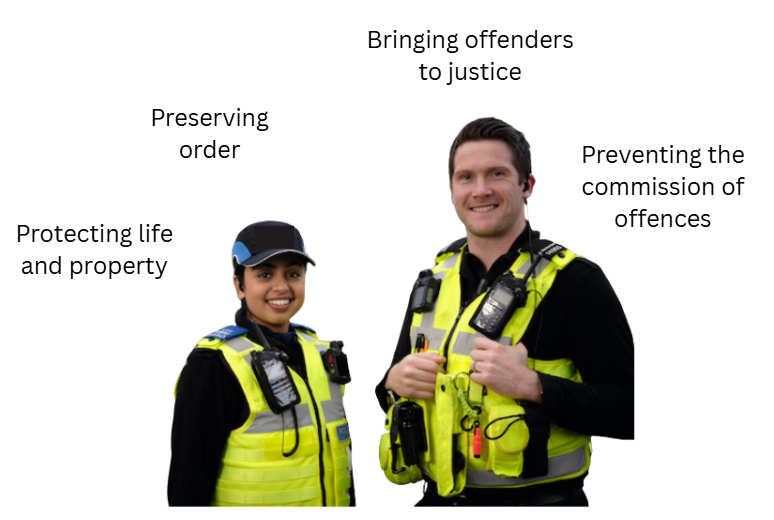
In 2025 the National Police Chiefs Council stated that the mission of policing was@
To make communities safer by upholding the law fairly and firmly
Preventing crime and antisocial behaviour
Keeping the peace
Protecting and reassuring communities
Investigating crime and bringing offenders to justice
Policing in the UK
In the UK there is no national Police Force.
Police are organised on a national basis in Scotland and Northern Ireland
In England and Wales they are organised into 43 regional forces, largely based on local authority boundaries
The largest of these is the Metropolitan Police, which provides policing in London and employs around 35,000 officers
There are also three specialist forces
British Transport Police | Civil Nuclear Constabulary | Ministry of Defence Police |
|---|---|---|
|
|
|
Powers of the police
Stop and search
Using powers granted under the Police and Criminal Evidence Act 1984 (PACE) police have the authority to detain and search individuals or vehicles to prevent or detect crime
In order to do so the police officer must ‘ have reasonable grounds for suspicion’
The intention of stop and search is about a police officer confirming their suspicions about a person without having to use their power of arrest
Power of Arrest
The police have the power to arrest a person anywhere and at any time - on the street at home or at your workplace
If you try to avoid arrest, the police can use reasonable force
You can be restrained by being handcuffed
The police also have powers to search you when you are arrested
There are safeguards to protect citizens during arrest
The police must identify themselves as police officers
You must be told that you are being arrested
You must be told why you are being arrested
If the arrested person is under 18, a parent, guardian or carer must be informed as soon as possible
Entry, search and seizure
The police normally have to obtain a warrant to be able to enter and search premises
The search must treat occupants with respect
The police need to ensure that they are not engaged in unlawful discrimination
The use of reasonable forces must be proportionate to the circumstances
Safeguards are in place to ensure the police act fairly and reasonably
Role and powers of the judiciary
The judiciary describes those involved formally in the courts and tribunal system
They are responsible for upholding the rule of law.
Elements of the judiciary
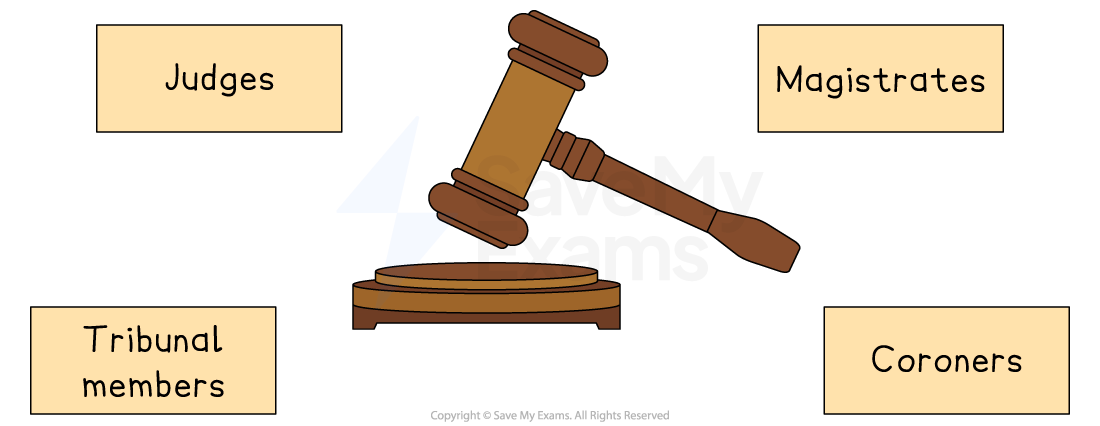
Judges use their legal expertise to oversee cases in both criminal and civil court cases
Differing courts deal with a particular aspect of the judicial process
Examples are the Crown Court, High Court of Justice with differing divisions, the Court of Appeal and the Supreme Court
There are also Civil Courts like the County Court, the Family Court and the Court of Protection
Magistrates are citizens from the community who agree to decide cases in local Magistrates Courts
They are also known as Justices of the Peace (JP’s)
They receive some legal training but are supported in court by legal advisors
By tradition they are called ‘the bench’ as they sit as a panel of 3 to decide cases
Tribunal Members are specialists in a specific topic that relates to their Tribunal
Examples include Employment Tribunals and the Land Tribunal
Tribunal members form a panel, chaired by a legally-qualified Tribunal judge, when deciding a case
Coroners investigate certain kinds of deaths
They typically have experience as lawyers or doctors with legal experience and are appointed by local authorities
The role of a judge
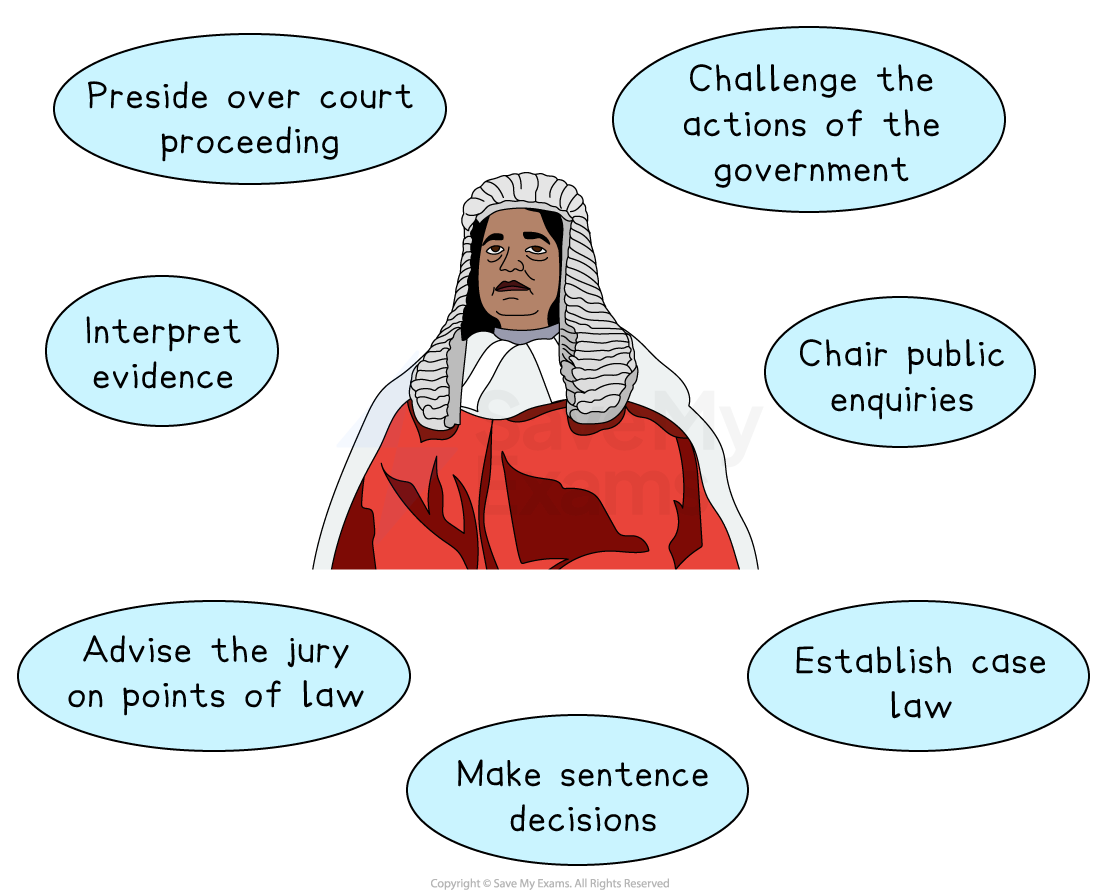
Preside over court proceedings
Judges manage court cases, trials or tribunals to ensure they are fair, follow legal procedures, and allow both sides to present their cases properly
Interpret evidence and advise the jury on points of law
While the jury decides the facts, judges explain how the law applies, clarify legal terms, and help the jury understand the rules they must follow when reaching a verdict
Decide the sentence following the jury's decision but based on sentencing guidelines
Once a defendant is found guilty, the judge chooses an appropriate sentence by considering the seriousness of the offence, the impact on victims, and the official sentencing guidelines
Where the law is unclear they establish ‘case law’ by their decisions, which is then used or altered by future judges
If a case raises a new legal issue, a judge’s ruling can set a precedent that helps guide how similar cases should be decided in the future
Judges are often called to chair public enquiries, for example, about the Covid pandemic
Their independence and expertise mean judges are trusted to lead major investigations into national issues, gather evidence and make recommendations
Judges sitting on the Supreme Court have the ability to challenge the actions of the government
Supreme Court justices can rule that government actions or laws are unlawful if they break the constitution, exceed legal powers, or violate rights
Examiner Tips and Tricks
Don’t confuse the roles of the police and the judiciary
The police investigate and enforce the law, while judges and magistrates decide cases and sentences
Clearly separating who does what in your answer shows secure understanding and helps you avoid losing easy marks
Role of legal representatives
Most of us have minimal contact with the legal system
We write a will, purchase a house or have a dispute with a neighbour, and we contact a local solicitor
However, a range of legal representation is available for different situations
Solicitors | Legal executives | Barristers |
|---|---|---|
|
|
|

Unlock more, it's free!
Join the 100,000+ Students that ❤️ Save My Exams
the (exam) results speak for themselves:

Was this revision note helpful?
