Criminality in the UK (AQA GCSE Citizenship Studies): Revision Note
Exam code: 8100

Types of crime
A crime is an action that breaks the law and is punished by the state through the courts
Government statistics about crime come from two main sources:
Those recorded by the Police
This data varies from force to force as to which types of crime are formally recorded
Those recorded by the Crime Survey for England and Wales (CSEW)
It focuses on people's perception of crime
Types of crime recorded in the CSEW Survey
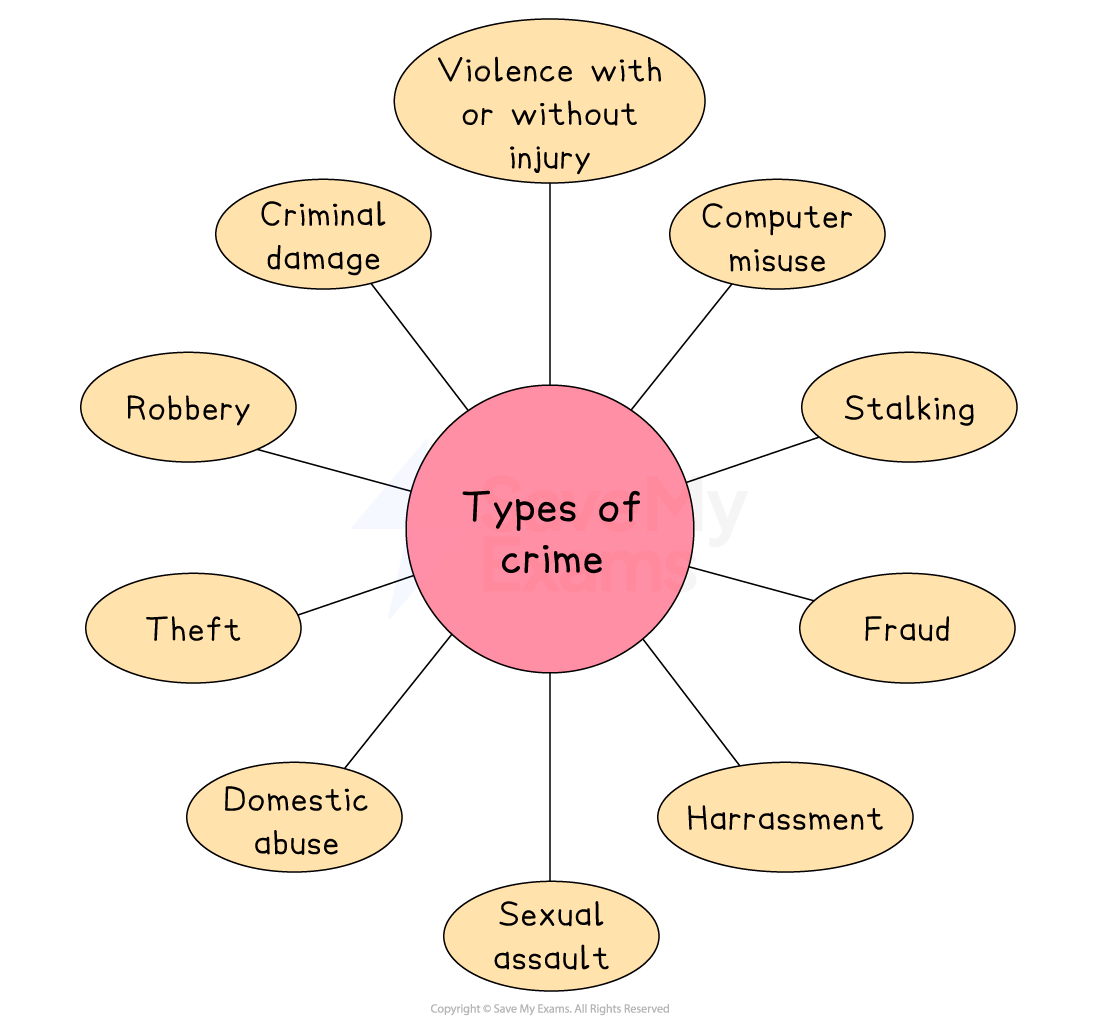
The CSEW Survey does not include the following categories:
Crime against commercial or public property
Crimes against non-household populations, such as those in care homes and students
Victimless crimes like drug possession
Homicide, including both murder and manslaughter
Types of crime recorded in the year ending March 2025
Crime | Reports | % change since 2024 |
|---|---|---|
Fraud | 4,159,000 | +31% |
Theft | 2,801,000 | +4% |
Violence | 1,103,000 | -2% |
Computer misuse | 692,000 | -32% |
Criminal damage | 608,000 | -8% |
Robbery | 78,804 | -3% |
Possession of a knife or sharp instrument | 53,047 | -1% |
Homicide | 535 | -6% |
The profile of criminality in the UK
Gender and criminality
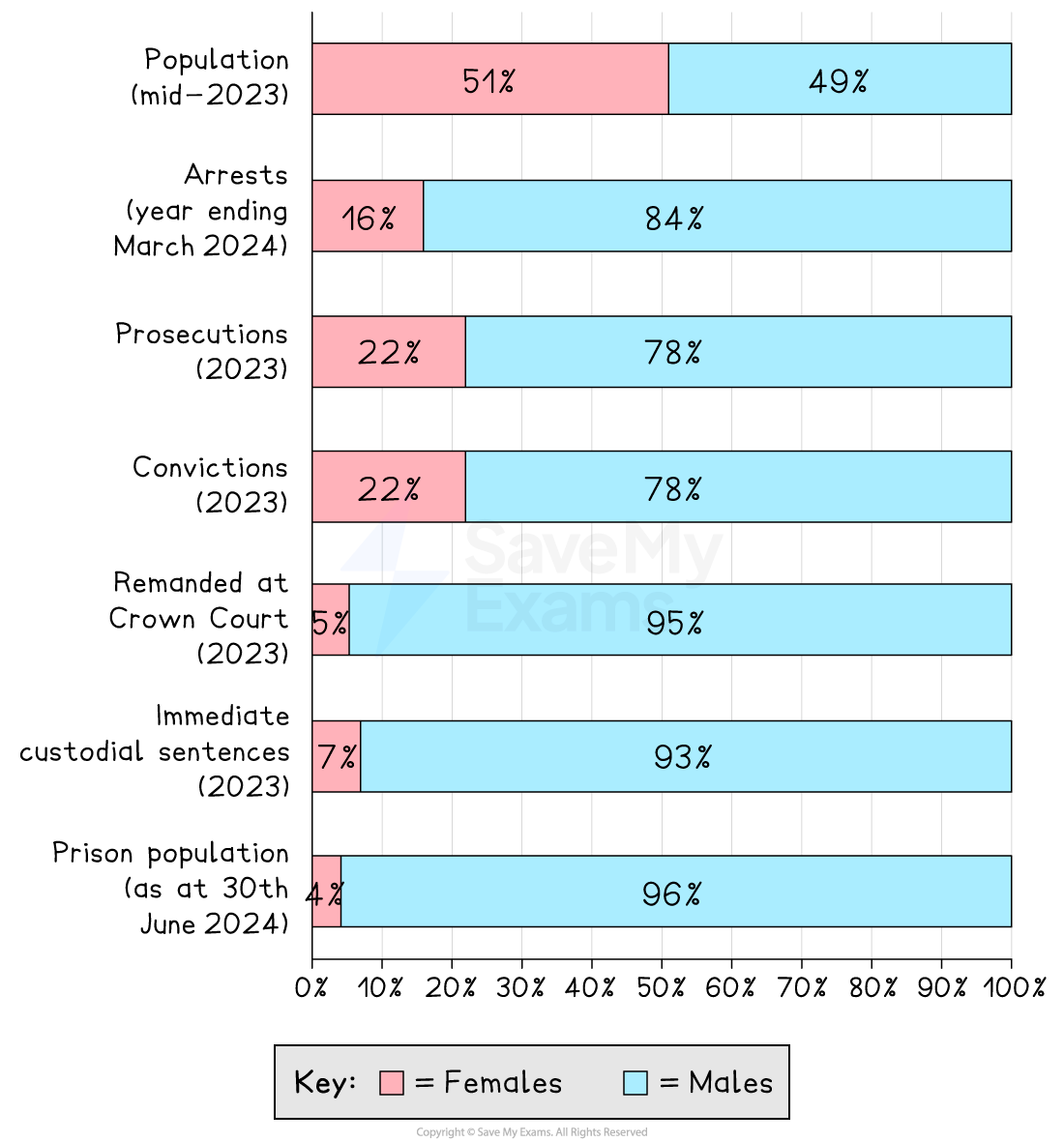
Crime is mainly committed by males, especially younger males
Only around 16% of arrests involve females
This difference is often explained by factors such as risk-taking behaviour, peer pressure and social expectations around masculinity
Comparison of males and females in the criminal justice system
Age and criminality
The peak age for male offending is around 23
For females, the peak age of offending is later, at around 30 years old
Violent crime, street crime and public order offences are most common among 18–24-year-olds, linking violence strongly to youth and early adulthood
Older offenders are more often linked to non-violent offences, such as fraud or financial crime
Socio-economic factors and criminality
There is a strong link between crime and socio-economic disadvantage
Factors such as poverty, unemployment, poor education, unstable housing and family breakdown increase the likelihood of offending
Factors such as poverty, unemployment, poor education, unstable housing and family breakdown increase the likelihood of offending
Location and crime
Most crime takes place in cities and urban areas, where population density and deprivation is higher
Urban areas often experience higher levels of violent crime, theft and anti-social behaviour compared with rural areas
This is linked to factors such as crowded living conditions, inequality and greater opportunities for crime
Factors affecting crime rates
Crime is rarely caused by one factor alone
It is usually the result of a combination of personal, group and societal influences
Factor | Example | Explanation |
|---|---|---|
Personal factors | Personal circumstances |
|
Alcohol and drug misuse |
| |
Unemployment and financial problems |
| |
Poor family relationships and low school achievement |
| |
Group pressure | Peer groups |
|
Gang membership |
| |
Societal factors | Policing and law enforcement policies |
|
Changes in the law |
| |
General economic situation |
| |
Lack of local and national government support |
|
Strategies to reduce crime
Crime reduction works best when local communities, national governments and international organisations work together to prevent crime and protect the public
Local strategies to reduce crime
Local councils supporting communities
Local councils work with community groups to improve safety and reduce crime
Changes such as better street lighting, open layouts and safer city centres can reduce opportunities for crime
Use of CCTV
CCTV cameras are used in public areas to deter criminal behaviour
They also help the police identify suspects and gather evidence
Police-led local initiatives
Police develop targeted schemes to deal with specific crimes or problem areas
Examples include hotspot policing, school liaison officers and anti-social behaviour patrols
Citizen involvement
Citizens are encouraged to join schemes such as Neighbourhood Watch or Speed Watch
These groups help report suspicious behaviour and increase community awareness and responsibility
Case Study
Crime reduction in Glasgow

Background
In the early 2000s, Glasgow had very high levels of violent crime, particularly knife crime among young people
Many offences were linked to poverty, gangs, and lack of support for vulnerable youths
Action taken by the local authority
Glasgow City Council worked with Police Scotland to set up the Violence Reduction Unit (VRU)
The VRU treated violence as a public health issue, not just a criminal one
It funded youth mentoring, education programmes, and support for people leaving gangs
Schools, social services, health workers, and charities were involved to tackle the causes of crime, such as unemployment and drug misuse
Outcome
Violent crime in Glasgow fell significantly, including a major reduction in knife crime
The approach showed that local authorities can reduce crime effectively by combining enforcement with prevention and support, rather than relying on punishment alone
National strategies to reduce crime
New laws and punishments
The government introduces new legislation to respond to emerging crimes, such as cybercrime
Tougher penalties, such as longer prison sentences, may be used to deter offenders
Role of national organisations
National bodies such as banks and insurance companies promote anti-crime measures
They encourage the use of security devices, fraud prevention, and identity protection
International and online cooperation
International organisations and technology companies work to promote online safety
Social media and mobile phone providers help educate users about digital security and cybercrime risks
Examiner Tips and Tricks
To remember factors affecting crime, think P-G-S: Personal, Group, Societal
Personal includes things like poverty or substance misuse
Group includes peer pressure or gangs
Societal includes policing and the economy
Using this structure helps you organise answers clearly and cover a range of factors in exams

Unlock more, it's free!
Join the 100,000+ Students that ❤️ Save My Exams
the (exam) results speak for themselves:

Was this revision note helpful?