Dealing With Criminals (AQA GCSE Citizenship Studies): Revision Note
Exam code: 8100

The purpose of sentencing
The Criminal Justice Act 2003 set out five purposes of sentencing
Purpose | Explanation |
|---|---|
To punish the offender |
|
To deter others |
|
To help rehabilitate the offender |
|
Protect the community |
|
Reparations by the offender |
|
Forms of punishment in the UK
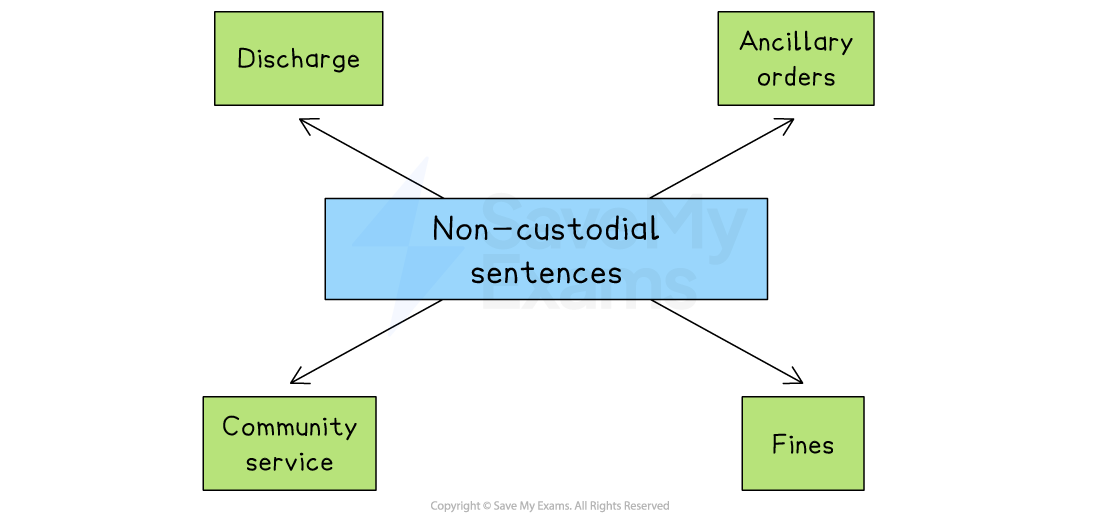
Punishments in the justice system fall into one of two categories
Non - custodial sentences
A non-custodial sentence is a punishment that does not involve a term of imprisonment
Discharge
A discharge is used for very minor offences where the court decides that the experience of being taken to court is punishment enough
The offender is found guilty, but receives no immediate punishment
Discharges make up a small proportion of sentences in England and Wales
They are usually reserved for first-time or very minor offences
There are two types: absolute and conditional discharges
A conditional discharge means no further punishment is given unless another offence is committed within a set time period
Ancillary orders
Ancillary orders are additional restrictions attached to a main sentence to protect victims or the public
They are often used alongside fines, community sentences or custody
Ancillary orders are very common, especially compensation orders and driving bans
They are regularly used to reduce reoffending and protect the public
Examples include:
Compensation orders, requiring offenders to pay for damage or injury caused
Restraining orders, preventing contact with a person or entering certain places
Football banning orders, stopping individuals from attending matches
Drink-driving bans, including disqualification from driving
Activity bans, such as being banned from gambling venues
Loss of licences, including firearms licences
Penalty points or driving bans imposed by the court
Fines
A fine is a financial penalty paid to the court.
It is mainly used for less serious offences, such as minor theft, public order offences or traffic violations
They are the most common sentence in England and Wales, accounting for around two-thirds of all criminal sentences
The amount depends on:
The seriousness of the offence
The offender’s ability to pay
If a fine is not paid, the offender can be returned to court and may face further penalties
Community service (community sentences)
Community service requires offenders to carry out unpaid work in the community
This can include removing graffiti, cleaning public spaces or environmental work
They make up a significant minority of sentences, especially for repeat offenders where prison is not seen as necessary
It is often combined with supervision, training, or rehabilitation programmes
The aim is to punish the offender while helping them change behaviour
Custodial sentences
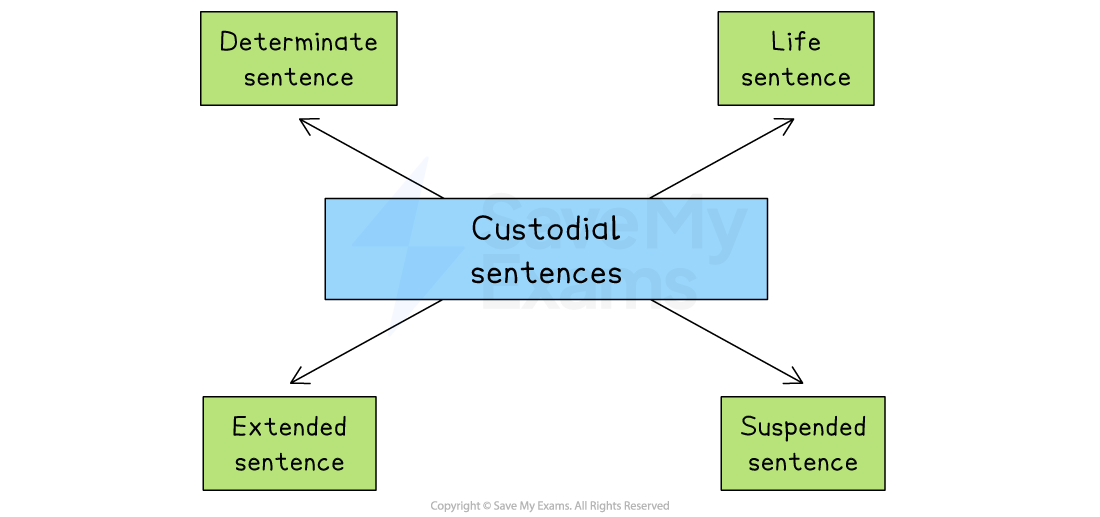
A custodial sentence is a punishment where someone is sent to prison or another secure institution and has their freedom taken away for a period of time
Determinate sentences
A determinate sentence is a prison sentence for a fixed length of time.
The offender knows the maximum length of the sentence at the point of sentencing
They are the most common type of custodial sentence in England and Wales.
Release on licence depends on the length and type of sentence.
Offenders sentenced to two years or less are usually released at the halfway point and serve the rest on licence in the community.
Those sentenced to between two and four years may apply for release after serving around 40% of their sentence.
Those sentenced to four years or more may be released after serving 40–50%, depending on the offence.
Serious violent or sexual offenders are usually released at the two-thirds point.
If licence conditions are broken, the offender can be recalled to prison.
Life sentences
A life sentence must be given for the crime of murder.
It can also be given for other very serious offences, such as terrorism
They are rare and make up a small proportion of all sentences, reserved for the most serious crimes
The judge sets a minimum term (also known as a tariff).
This is the minimum time the offender must serve before they can apply to the Parole Board.
Release is not guaranteed, and even if released, the offender remains on licence for life.
Extended sentences
An extended sentence is given when an offender is considered dangerous.
It combines a custodial sentence with a longer period of supervision in the community
They are uncommon but are increasingly used for serious violent and sexual offences
In 2024, around 1,600 offenders received extended sentences.
Offenders can apply for parole after serving two-thirds of the custodial part.
If released, they remain on an extended licence, meaning strict conditions apply for longer
Suspended sentences
A suspended sentence means a prison sentence of up to two years is imposed but not immediately served
The offender avoids prison if they comply with court conditions
They are widely used as an alternative to short prison sentences, especially where rehabilitation is seen as more effective
Conditions may include
Unpaid work
Drug or alcohol treatment programmes
Rehabilitation or supervision
If the offender breaks the conditions, they can be sent to prison to serve the sentence
The effectiveness of sentencing
While sentencing punishes offenders and protects the public, reoffending data shows it is not fully effective at preventing future crime, especially for young and male offenders
Reoffending as a measure of effectiveness
One key way to judge how effective sentencing is involves looking at reoffending rates
Reoffending shows whether punishments prevent future crime or whether offenders return to criminal behaviour after their sentence
Overall reoffending rate
In 2023, the overall proven reoffending rate in England and Wales was 28.3%
This means that over one in four offenders committed another crime within a year of being sentenced or released
This suggests that sentencing is only partly effective at reducing crime
Reoffending by age
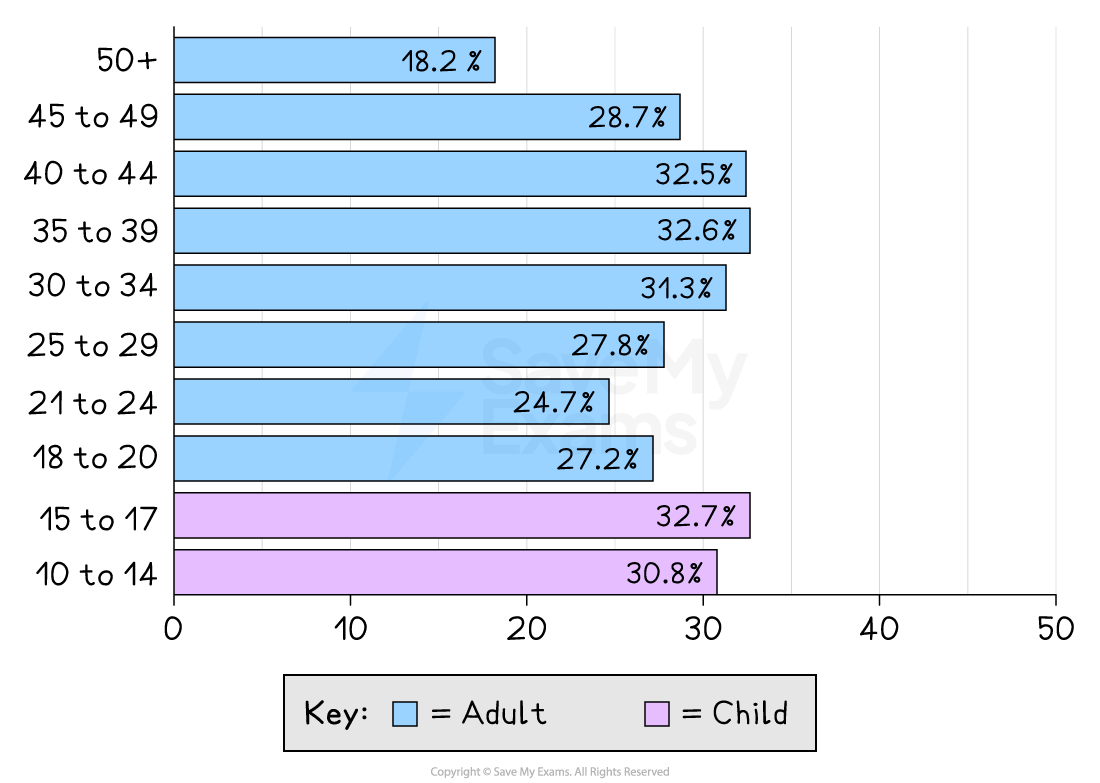
Young offenders are more likely to reoffend than adults
The highest reoffending rate was among 15–17-year-olds, at 32.7%
This indicates that traditional punishments may be less effective for younger offenders, highlighting the need for rehabilitation and support
Reoffending by gender
Males are more likely to reoffend than females
The male reoffending rate was 29.2%, compared with 23.9% for females
This suggests sentencing may need to better address male offending behaviour, particularly among young men
Changes over time
Reoffending rates have remained fairly stable in recent years, rather than falling significantly
This suggests that sentencing alone is not enough to reduce crime without education, treatment, and rehabilitation
Examiner Tips and Tricks
To gain marks on sentencing questions, link the type of sentence to its purpose
For example, explain how community sentences aim to rehabilitate, while custody protects the public
Answers that make this connection are stronger than those that just list punishments

Unlock more, it's free!
Join the 100,000+ Students that ❤️ Save My Exams
the (exam) results speak for themselves:

Was this revision note helpful?