International law in Conflict Situations (AQA GCSE Citizenship Studies): Revision Note
Exam code: 8100

Protecting victims of conflict
International Humanitarian Law (IHL) applies to all those involved in a conflict and aims to
Protect people not directly involved in the conflict, such as the sick and wounded and prisoners of war
Sets out limits to warfare activity, such as attacks on civilians and certain types of weapons
It also requires humanitarian aid to be made available to those who need it
International humanitarian law and the rules of war
The two key documents relating to the conduct of war are the Geneva Convention, and the Hague Convention, which in 1907 codified the rules of land warfare
The Geneva Convention
The Geneva Conventions were first created in 1864 following the Battle of Solferino, where the suffering of wounded soldiers identified the need for international rules to protect those injured in war
Their original aim was to ensure that wounded and sick soldiers received medical care, regardless of which side they were fighting for
Over time, the Conventions were extended and amended between 1906 and 1929 to respond to changes in warfare, including the use of poison gas and the need for clearer rules on the treatment of prisoners of war
A major revision took place in 1949, creating four modern Geneva Conventions that expanded protection to civilians, prisoners of war and wounded members of armed forces at sea and on land
Further changes were made in 1977 and 2005 to address newer forms of conflict, including biological warfare, the impact of landmines and the special protection of children in armed conflicts
Today, the Geneva Conventions form the foundation of International Humanitarian Law
They set out rules designed to limit suffering during war and protect those who are not fighting
The International Committee of the Red Cross (ICRC) acts as the custodian of the Conventions, helping to monitor compliance, support victims of conflict and promote respect for humanitarian law worldwide
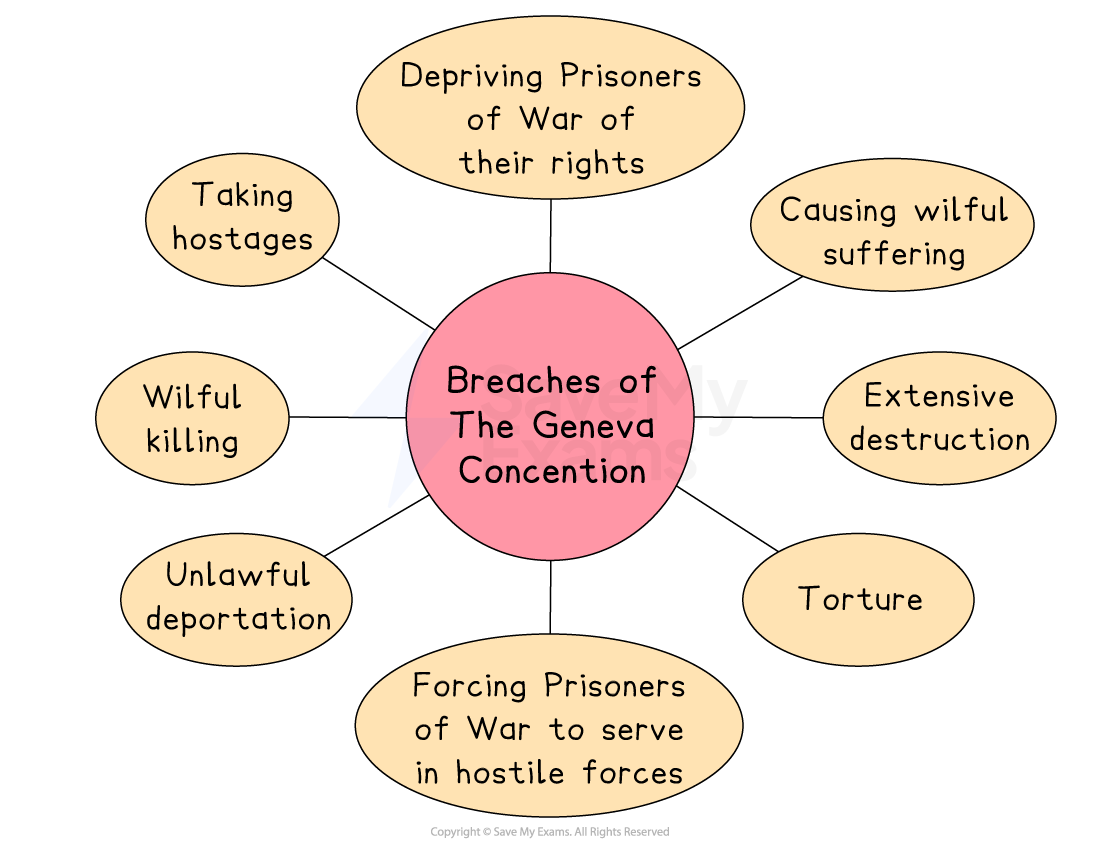
Breaches of the Geneva Convention
The International Criminal Court
At the end of the Second World War, the victorious allies set up international tribunals to try the leaders of the defeated countries for war crimes and crimes against humanity
They established a new international set of rules about holding those who start wars to account for their actions
Case Study
The Nuremberg Trials
Purpose of the Trials
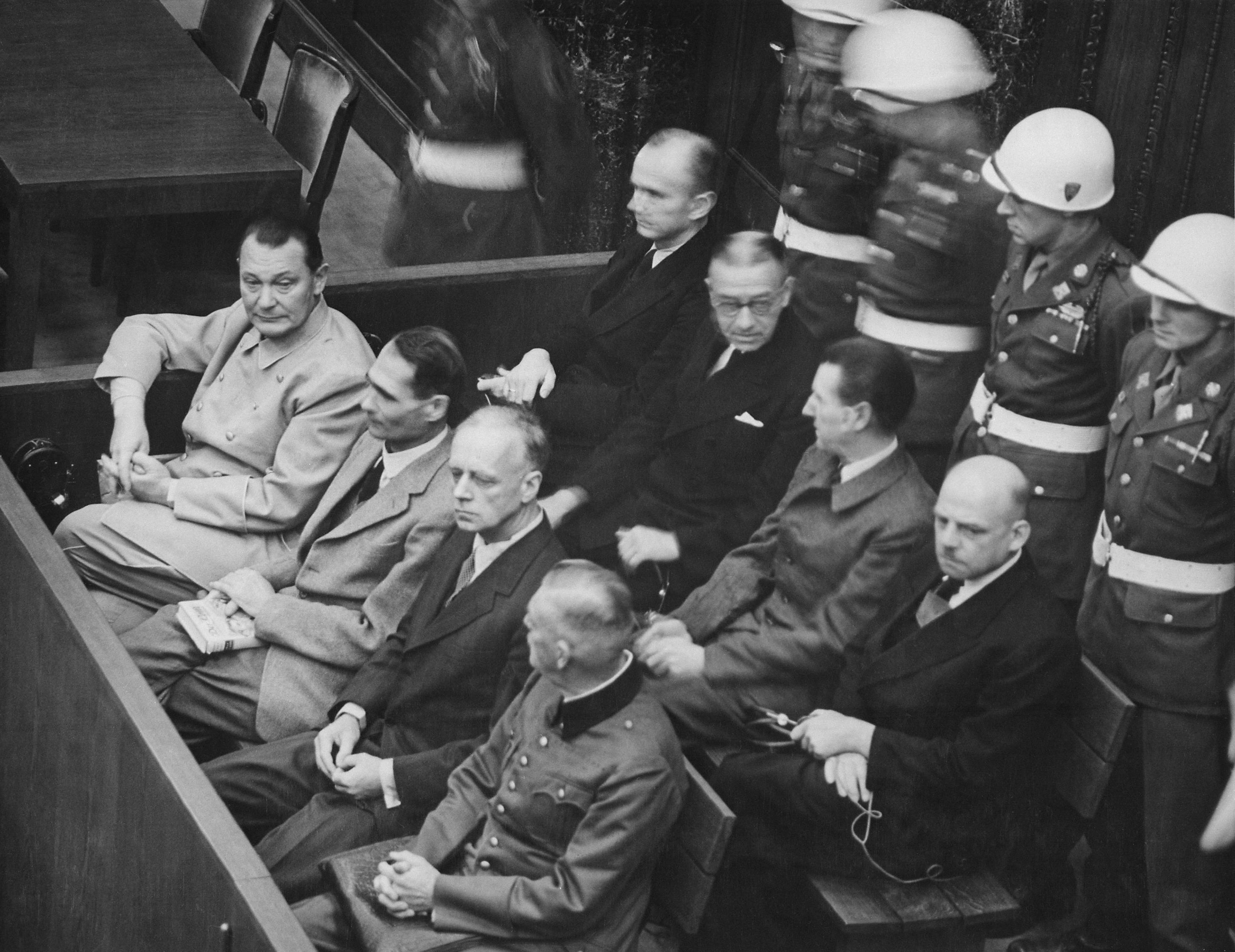
The Nuremberg Trials were a series of international military trials held after the Second World War to prosecute leading Nazi officials for their actions
They were set up by the Allied powers to ensure accountability for serious crimes committed during the war
Senior Nazi leaders were charged with war crimes, crimes against humanity and crimes against peace, including genocide and mass murder
The trials were significant because they established that individuals, including political and military leaders, could be held personally responsible for international crimes
The outcome
Many of those convicted received death sentences and long prison terms, though some were acquitted
The Nuremberg Trials helped shape modern international law
They influenced later courts such as the International Criminal Court, and reinforced the principle that following orders is not a defence for war crimes
In the 1990’s, an international tribunal was established following the wars in the former Yugoslavia and the civil war in Rwanda
In 1998, 120 countries signed the Rome Statute
This set up the International Criminal Court (ICC) which meets in The Hague
It also established what was meant by a war crime
Examiner Tips and Tricks
To remember this topic, focus on roles
Geneva Conventions protect people in war
The Red Cross monitors and helps victims
The ICC prosecutes war crimes
If you can match each organisation to what it does, you can answer most exam questions confidently

Unlock more, it's free!
Join the 100,000+ Students that ❤️ Save My Exams
the (exam) results speak for themselves:

Was this revision note helpful?