Institutions of the British Constitution: government and legislature (AQA GCSE Citizenship Studies): Revision Note
Exam code: 8100
The power of government
The UK government has significant power to make decisions and introduce laws
However, this power is not unlimited and is checked by other institutions
Parliament may need to agree to government proposals
MPs can debate, amend, or reject laws
The courts can intervene if the government acts unlawfully
The UK Supreme Court can rule that government actions or laws are unlawful
The public and the media can challenge the government
Protests, petitions, and media scrutiny can pressure the government to change course
Case Study
The prorogation of Parliament in 2019
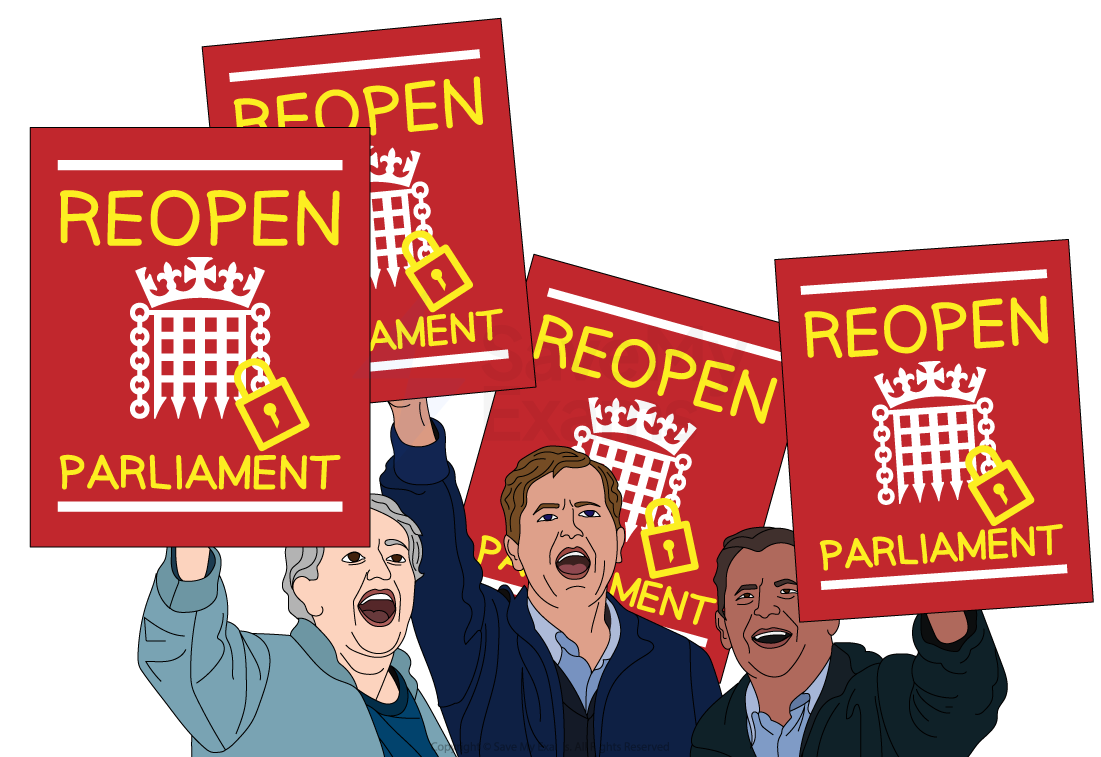
In 2019, Prime Minister Boris Johnson advised the Queen to prorogue Parliament for five weeks
The Supreme Court ruled that the prorogation was unlawful, and Parliament was reopened
This showed that government power is limited by the rule of law
Examiner Tips and Tricks
To score well on questions about government power, use a clear structure: power, check, example
Explain what the government tried to do, who limited it, and how
Using a named case like the 2019 prorogation shows you understand how power is checked in practice, not just in theory.
The Prime Minister and Cabinet
The Prime Minister is the head of the government, but the monarch is the Head of State
The Prime Minister is appointed by the Monarch
This usually happens after a general election or if a Prime Minister resigns
The Cabinet is made up of the most senior government ministers
Cabinet members are appointed, promoted or dismissed by the Prime Minister
The Prime Minister is often described as first amongst equals
This means they lead the Cabinet but are still part of a team
Key Cabinet roles
Position | Role |
|---|---|
Chancellor of the Exchequer |
|
Home Secretary |
|
Foreign Secretary |
|
Defence Secretary |
|
Health Secretary |
|
Collective responsibility means all Cabinet members must publicly support government decisions
If a minister disagrees, they are expected to resign
This principle helps ensure unity and stability in government
The Prime Minister is accountable to Parliament
They must answer questions and justify government actions
The Prime Minister is also accountable to their political party
Party members can remove a leader through a leadership challenge
Examples include Margaret Thatcher (1990) and Boris Johnson (2023)
Parliamentary sovereignty
Parliamentary sovereignty means that Parliament is the highest legal authority in the UK
Parliament can make or change any law
The government proposes laws, but Parliament decides whether they become law
Even governments with large majorities can face resistance
In 2025, Labour plans to cut welfare spending were withdrawn after 108 Labour MPs opposed them
This shows that Parliament can limit government power, even when the government is strong
Role of the legislature
The legislature refers to the bodies that make laws
In the UK, this is Parliament, made up of the House of Commons and House of Lords
Key roles
Lawmaking | Holding government to account | Platform for debate |
|---|---|---|
|
|
|
The House of Commons
This is the elected chamber of Parliament where MPs debate laws, represent their constituents, and hold the government to account
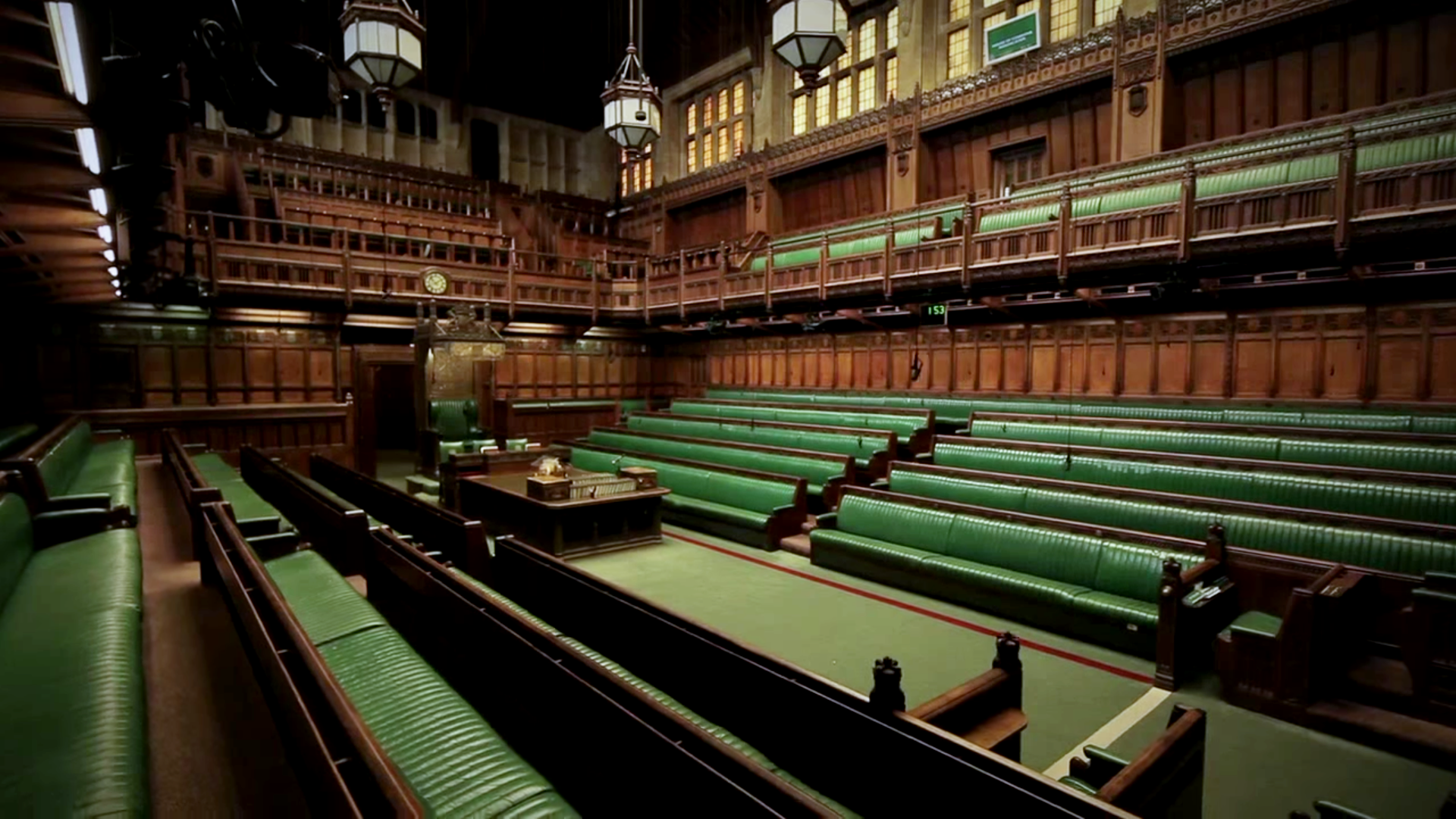
MPs are elected by the public in general elections to represent local constituencies
There are 650 Members of Parliament (MPs), each representing a constituency
The House of Lords
This is the second chamber of Parliament that scrutinises, revises, and suggests amendments to laws proposed by the House of Commons
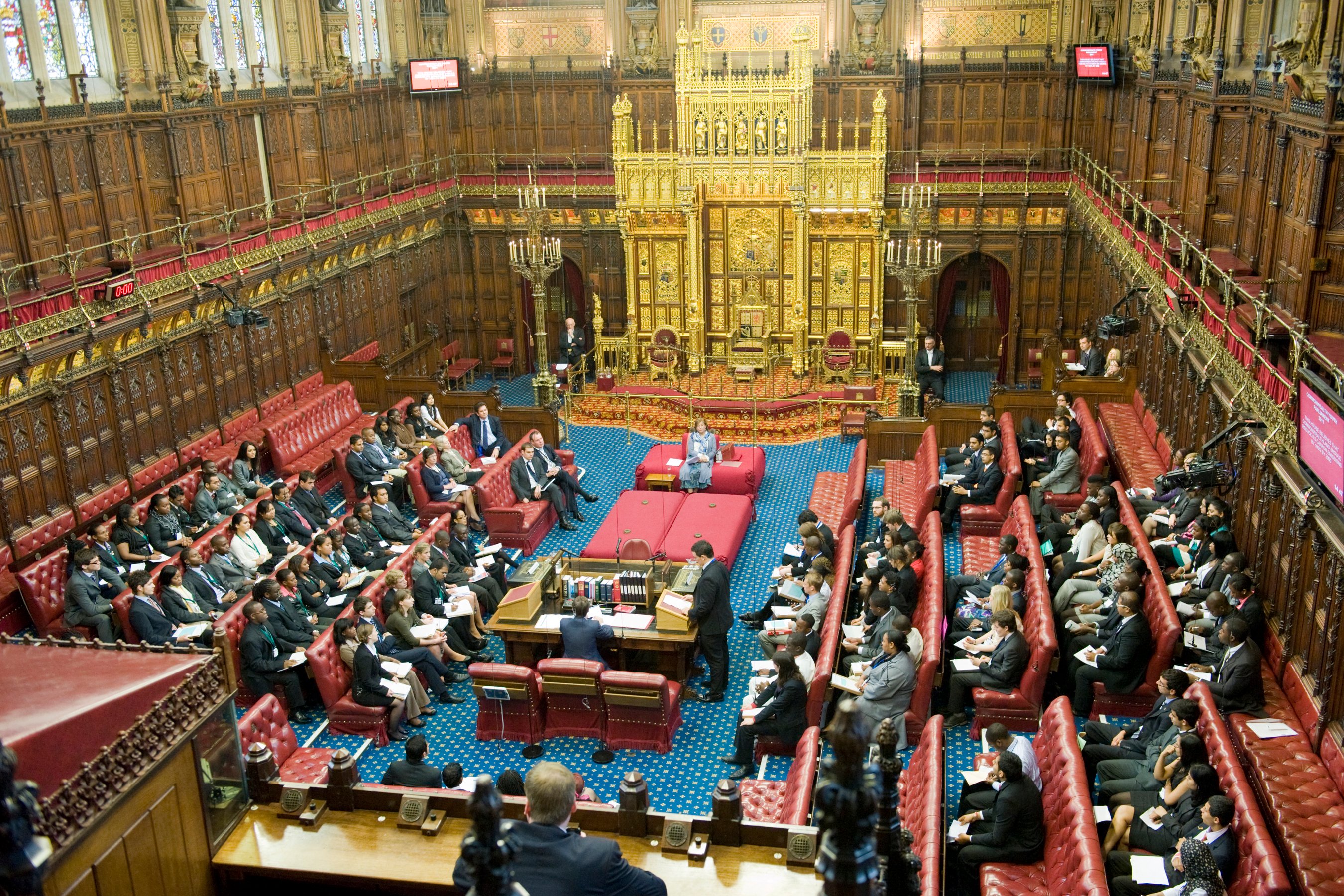
Members are unelected and include life peers, bishops, and a small number of hereditary peers
here are around 780 members, and unlike the House of Commons, there is no fixed limit on its size
The House of Lords can delay and amend legislation but cannot ultimately block laws passed by the Commons
Opposition
The opposition includes all political parties not in government
The official opposition is the largest opposition party
Currently, this is the Conservative Party
The Leader of the Opposition receives a salary and special status, such as raising issues each week at Prime Ministers' Questions
The main role of the opposition is to hold the government to account
This is done through questioning, debates, and proposing alternatives
Opposition parties are given Opposition Days
On these occasions they can choose the topics for debate in Parliament
Opposition influence is stronger when the government has a small majority
With a large majority, governments usually pass their legislation unless their own MPs rebel
Political parties
A political party is an organisation of people who share similar ideas and policies
These ideas are known as an ideology
Parties stand candidates in elections to win power and form a government.
Party policies are set out in a manifesto, which is a list of promises made to voters
In a democracy, there is a choice of political parties
In a one-party state, only one political party is allowed
E.g. in China, the Communist Party is the single political party
Political parties in the UK
UK-wide political parties | Nationalist and regional parties |
|---|---|
|
|
Sinn Féin MPs are elected but do not take their seats in the House of Commons

Unlock more, it's free!
Join the 100,000+ Students that ❤️ Save My Exams
the (exam) results speak for themselves:

Was this revision note helpful?
