Types of Democracy (AQA GCSE Citizenship Studies): Revision Note

Exam code: 8100
Michael Mitchell

Written by: Michael Mitchell

Reviewed by: Lisa Eades

Updated on

The concept of democracy

  • The word ‘democracy’ comes from the Greek - demos meaning people and -kratos meaning power

  • It was encapsulated by President Abraham Lincoln in 1863
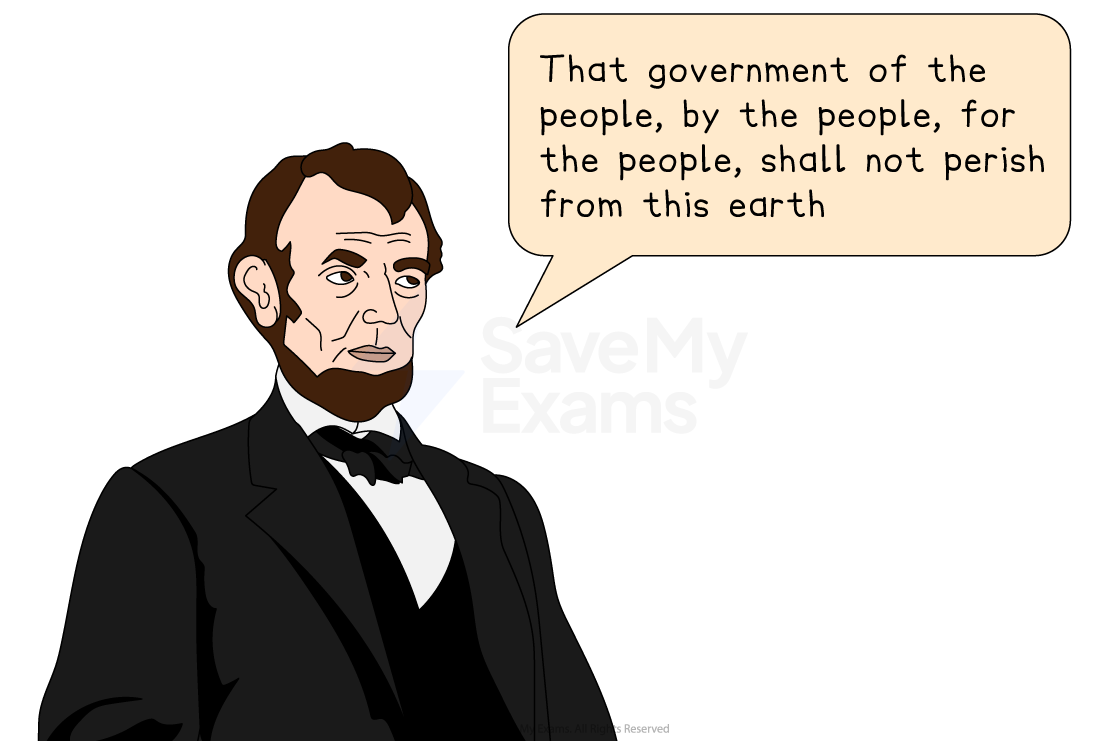
Illustration of a historical figure in a suit delivering a famous quote about democracy, with a speech bubble containing the words.
  • Democracy is a concept of government that has evolved over time

Key elements of democracy

  • If any of these elements are removed, democracy is undermined

    • Regular, fair and open public elections

    • A judiciary that is separate from government and that citizens can use to hold the government to account

    • Ability for citizens to stand for election

    • Ability to campaign for elected office on a fair and equal basis

    • A government that is elected and accountable

    • A media that is free to report on the actions of government

    • Secret voting, with the outcome reflecting the true views of voters

    • An electoral system that allows all voters to participate.

Forms of democracy

  • The following are terms associated with democracy and are used to describe different democratic systems

Form of democracy

Explanation

Example

Direct democracy

  • Direct democracy is a system where citizens vote directly on decisions and laws, rather than choosing representatives to decide for them

  • Every eligible voter has a direct say in the outcome

  • In Ancient Athens, male citizens met to vote on laws and decisions themselves

  • A modern example is a referendum, such as the 2016 UK referendum on EU membership, where voters decided directly whether the UK should leave the European Union

Representative democracy

  • Representative democracy is a system where citizens elect representatives to make decisions on their behalf

  • These representatives are accountable to voters and can be replaced at elections

  • In the UK, citizens elect Members of Parliament (MPs) to Parliament and councillors to local councils

  • These representatives serve for a fixed term and can stand again at the next election

Liberal democracy

  • Liberal democracy is a form of representative democracy that also protects individual rights and freedoms

  • It limits government power through laws, courts, and checks and balances

  • The UK is a liberal democracy because the government is elected, citizens’ rights are protected by law

  • The government is held to account by bodies such as the courts, Parliament, and the media

Unlock more, it's free!

Join the 100,000+ Students that ❤️ Save My Exams

the (exam) results speak for themselves:

Michael Mitchell

Author: Michael Mitchell

Expertise: Content Writer

Michael Mitchell is a pioneer of Citizenship education and a former Chief Examiner and Chief Moderator across all qualification levels. Michael's aim is to enable students to participate and become active citizens and not just passive members of society. He designed national specifications and, later, trained the next generation of teachers as the PGCE Subject Leader at the University of Plymouth, where he also ran a national Master's-level CPD program.

Lisa Eades

Reviewer: Lisa Eades

Expertise: Business Content Creator

Lisa has taught A Level, GCSE, BTEC and IBDP Business for over 20 years and is a senior Examiner for Edexcel. Lisa has been a successful Head of Department in Kent and has offered private Business tuition to students across the UK. Lisa loves to create imaginative and accessible resources which engage learners and build their passion for the subject.