Budgeting, risk & Provision of key Services (AQA GCSE Citizenship Studies): Revision Note
Exam code: 8100

How taxes are raised
Each year the government presents its Budget to Parliament, showing what it wants to spend for the following year and how the monies will be raised
In the 2025 Budget, the government announced that it expected to raise £1,304 billion, mainly through taxation, in 2026-27
Expected sources of taxation 2026-2027
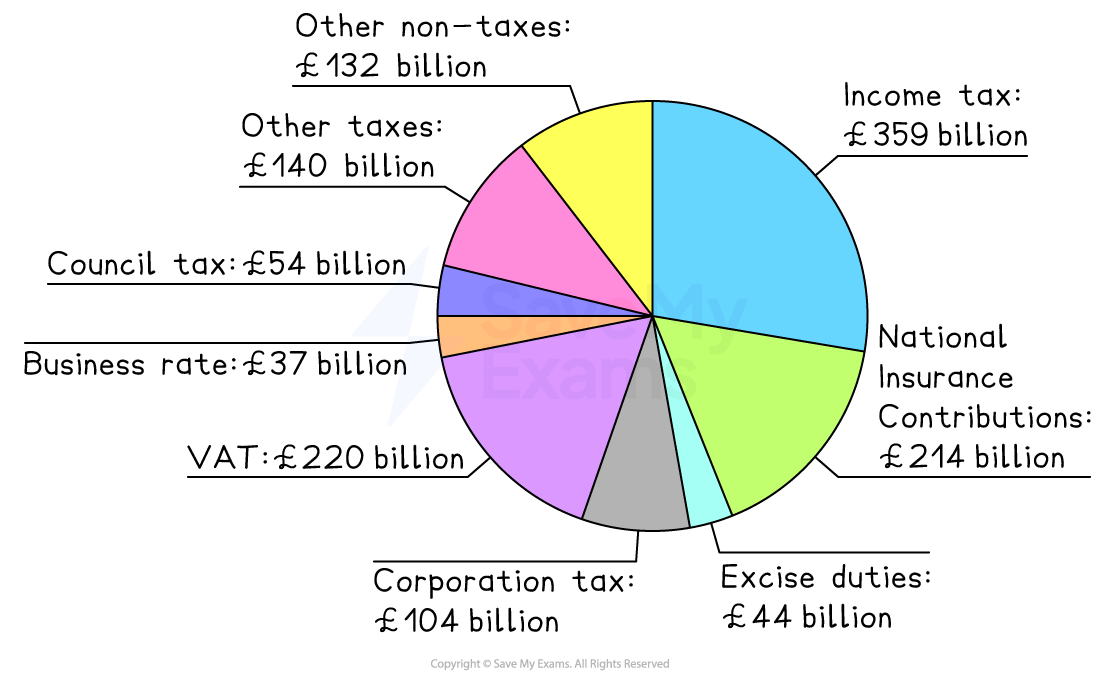
The three largest sources of income are taxes paid by most people in the country
Income Tax
Income Tax is paid on earnings above the personal tax-free allowance (currently £12,570)
It is taken directly from wages, pensions and some other forms of income
National Insurance
National Insurance is paid by employees and employers on wages
It is used mainly to fund benefits such as the state pension, unemployment support and the NHS
Value Added Tax (VAT)
VAT is a consumption tax added to the price of most goods and services that people buy
The more someone spends, the more VAT they pay
How taxes are spent
In the 2025 Budget, the government announced that its spending priorities for 2026–27 would focus on the NHS, education, defence, welfare support and improvements to infrastructure
Expected expenditure 2026-2027
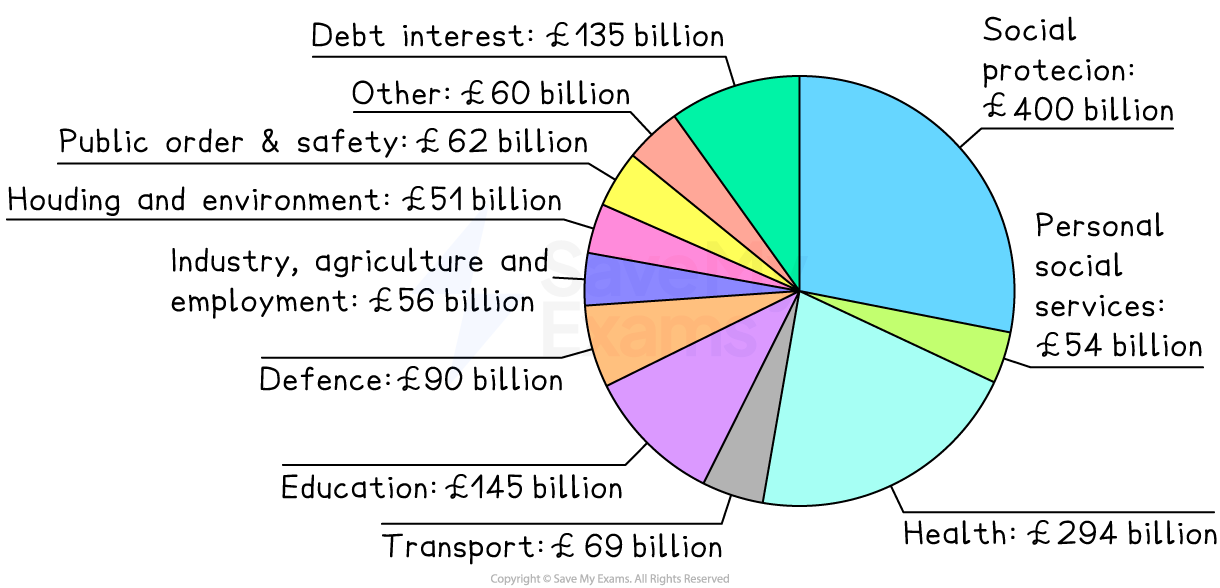
The largest areas of spending are
Social protection
Social protection spending pays for welfare benefits and support, such as pensions, disability benefits and unemployment support
Health
Health spending mainly funds the National Health Service (NHS), including hospitals, doctors, nurses and public health services
Education
Education spending covers schools, colleges and universities, as well as funding for teachers, buildings and support services for children and young people
Debt interest
Debt interest is the money the government must pay on loans it has borrowed in the past, reducing the amount available to spend on public services
Examiner Tips and Tricks
To gain marks on tax questions, link taxation to spending
Don’t just explain how money is raised – show why it matters, for example funding the NHS, education or welfare
Answers that connect income and expenditure are stronger than those that describe taxes in isolation
How the government budgets and manages risk
Government budgeting involves balancing economic conditions, public needs, political pressures and unexpected risks
Factors affecting government budgeting
Factor | Explanation |
|---|---|
Economic factors |
|
Identifying needs and managing risk |
|
Political considerations |
|
Responding to public reaction |
|
Unexpected events and emergencies |
|
Public spending priorities
Governments have to make tough choices between what the country can afford, what is fair and what the public wants
Areas like welfare, health, care for older people and education are the hardest and most expensive to manage in the long term
Welfare spending
Welfare spending has increased significantly since the COVID-19 pandemic
More people rely on benefits due to job insecurity, low wages and rising living costs
A large number of people claiming Universal Credit are in work
Having a job does not always guarantee a sufficient income.
The government wants to reduce welfare spending, but this is difficult
Spending cuts often affect the poorest in society, which is politically and morally controversial
Raising the National Minimum Wage could reduce reliance on benefits
However, some employers may be unable to afford higher wages and could reduce staff
Governments generally agree the best long-term solution is more people in secure, well-paid work
The challenge is creating jobs that generate income tax and National Insurance without increasing unemployment
Health spending
The NHS is one of the most popular public institutions in the UK
Any major reform risks public opposition due to strong support for the NHS
Health spending continues to rise, but productivity has not increased at the same rate
New treatments and medicines are often very expensive
Changes in primary care have led more patients to seek help via A&E, increasing pressure
The UK has an ageing population
People live longer but often need more medical treatment later in life
Governments face difficult reform choices, including:
Whether to introduce charges for GP visits or missed appointments
Whether to encourage private medical insurance
Whether to devolve health responsibilities to directly elected mayors
Spending on the elderly
An ageing population means higher spending on pensions and social care
The state pension is paid to almost all elderly people
The pension age has increased over time to reduce costs
The triple lock guarantee ensures pensions rise by the highest of inflation, wages or 2.5%, whichever is the highest
This has helped reduce pensioner poverty
Politicians are reluctant to change it because older people vote in high numbers
Social care costs are mainly paid by individuals until their savings fall below a low threshold
Many elderly people worry about having to sell their homes to pay care costs
Governments face pressure to reform social care but struggle to find a fair and affordable system
Education spending
School funding is decided using a national funding formula
Many schools, especially in rural areas, argue they receive less funding per pupil
Spending on SEND (Special Educational Needs and Disabilities) has increased sharply
This has forced the government to lend money to some councils to cover costs
University tuition fees have risen in recent years
Despite this, many universities report financial difficulties
The government has recently placed VAT on private school fees
This was intended to raise money to improve education for the 90% of students who receive a state education
Ongoing debates include:
Whether schools need more central control or greater freedom
Whether university fees should be reviewed regularly or spending monitored more closely
Why SEND spending is rising and how the system can be made sustainable

Unlock more, it's free!
Join the 100,000+ Students that ❤️ Save My Exams
the (exam) results speak for themselves:

Was this revision note helpful?