Why People do and do not vote (AQA GCSE Citizenship Studies): Revision Note
Exam code: 8100

What is apathy?
When people who are eligible do not take part in the political process, they are not interested and do not bother to vote even at general elections
They are not active citizens and are often totally disinterested in anything to do with political activity
This can happen because people feel their vote does not matter, they do not trust politicians or they do not understand the issues
Who is more likely to be apathetic?
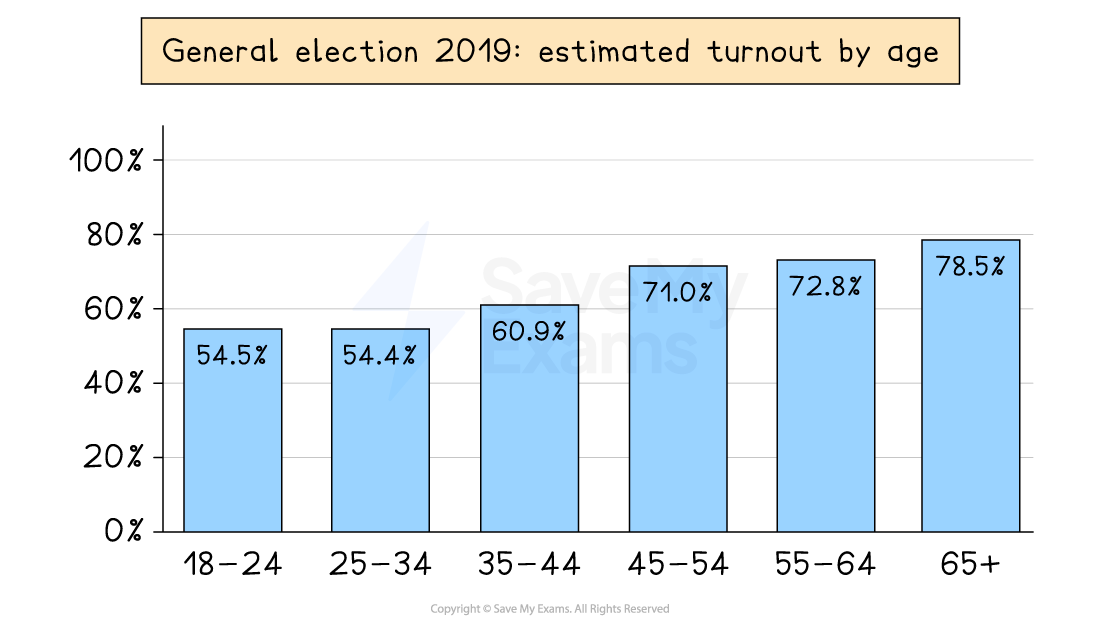
Young people are less likely to vote than older people
Turnout is lowest among 18–24 year olds
People from poorer areas are less likely to vote
Those who feel ignored by politicians are more likely to disengage
Why voter apathy is a problem
Low turnout means governments may not represent everyone’s views
Decisions may favour groups who vote more often, such as older or wealthier voters
It can weaken democracy if large numbers of people do not take part
Examiner Tips and Tricks
To gain marks on apathy questions, don’t just define it
Examiners reward answers that explain why apathy is a problem for democracy and use turnout evidence, such as lower participation in local or PCC elections
Linking cause, impact and an example helps you move beyond description
Voter turnout
Turnout is a measure of those who do vote against the total who could have voted
Politicians are concerned about declining voter numbers at elections
More people vote in general elections than local elections
Voter turnout in different UK elections
Type of election |
|
|---|---|
UK general elections |
|
Local elections |
|
Police and Crime Commissioner (PCC) elections |
|
Devolved elections |
|
Referendums |
|
Why turnout varies
Election spending
The amount of money spent by political parties varies between local and general elections
In the 2019 UK general election:
Political parties spent over £40 million in total across the UK
The Conservative Party spent around £16–17 million
The Labour Party spent around £9–10 million
Spending is higher because
Campaigns are nationwide
Parties use television, social media, national advertising and large campaign teams
There are strict legal spending limits
For example, parties are limited to around £30,000 per constituency, plus national campaign limits
Media coverage
Media coverage is intense during a general election but there is little coverage of local elections
UK general elections receive very high levels of media coverage
National TV channels, newspapers, radio, and online platforms cover elections daily for several weeks
Broadcasters are required to provide balanced and extensive coverage
The BBC, ITV, and Sky News run special election programmes, leaders’ debates and live results
During the 2019 general election:
There were multiple televised leaders’ debates
National newspapers ran daily front-page election stories
Other reasons for turnout variations
People believe their vote matters more in a general election than in a local election
Voters may feel that their constituency is a safe seat for a particular party
The feeling that their 'vote won’t make a difference’ deters people from voting
In referendums, where everyone's vote counts, turnout tends to be high
The highest turnout recently was in the 2016 referendum on the UK remaining in the EU, when 72% of the electorate voted
The referendum on Scottish Independence in 2014 achieved a turnout of 84.6%
Ways to increase voter turnout
Campaigners have suggested a range of ideas to make voting easier, more accessible and more meaningful for citizens
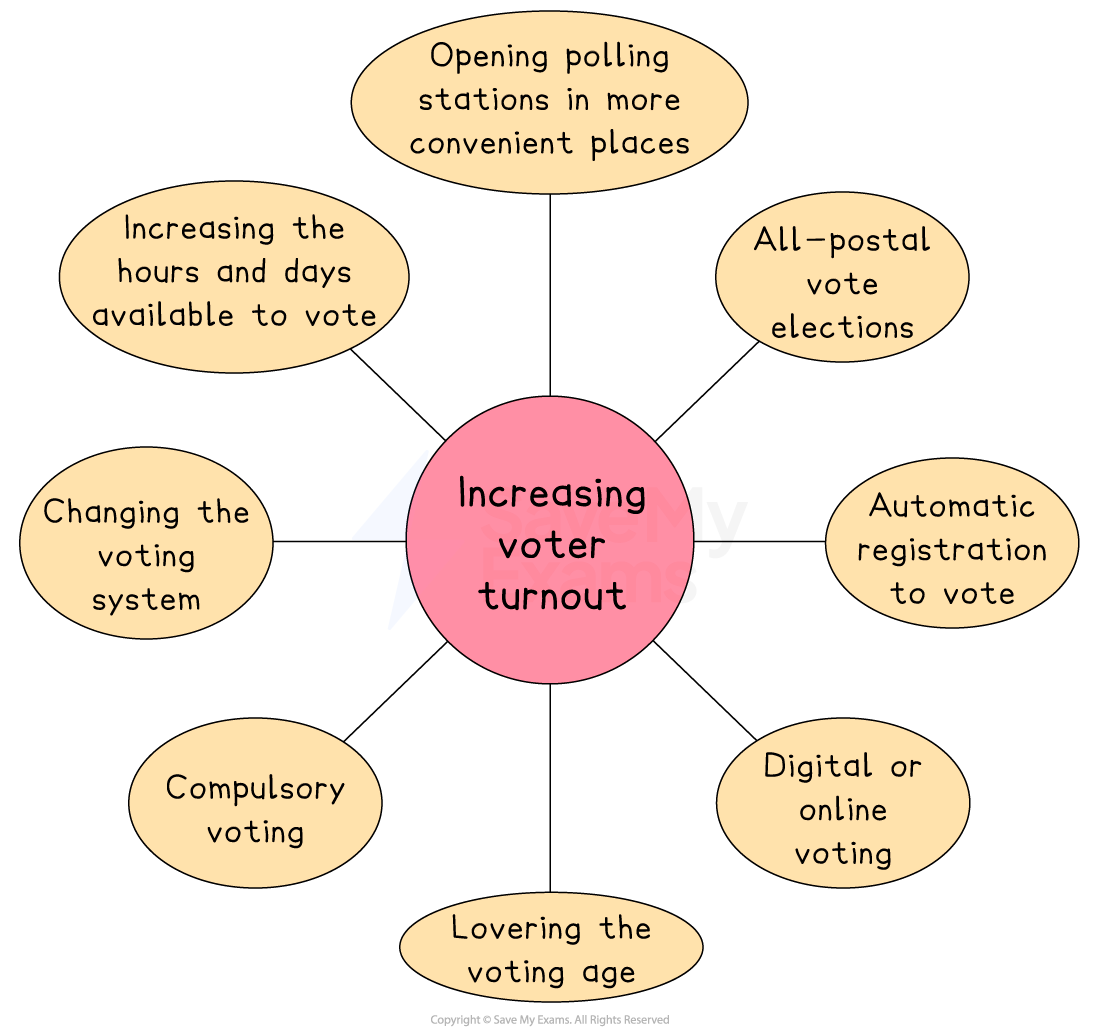
Increasing the hours and days available to vote
Allowing people to vote over more days or for longer hours would help those who work long or irregular shifts
Some countries allow early voting over several days, which has increased turnout
Opening polling stations in more convenient places
Placing polling stations in supermarkets, shopping centres or transport hubs could make voting easier
This would reduce the excuse that voting is inconvenient or hard to access
All-postal vote elections
Making elections postal only would allow everyone to vote from home
Postal voting has been shown to increase turnout, especially among elderly and disabled voters
However, there are concerns about security and secrecy
Automatic registration to vote
Automatically registering eligible citizens would reduce the number of people missing elections because they are not on the electoral register
This would particularly help young people and renters, who move address more often
Digital or online voting
Online voting could appeal to younger voters who are used to digital services
However, concerns remain about cybersecurity, fraud and trust in results
Lowering the voting age
Lowering the voting age to 16 is suggested as a way to build voting habits early
While it is not currently in place for UK general elections, it is used in Scotland and Wales, where youth engagement has increased
Compulsory voting
Compulsory voting, as used in Australia, requires citizens to vote or face a fine
This leads to very high turnout, often above 90%, but critics argue it removes freedom of choice
Changing the voting system
Changing from First Past the Post to a more proportional system could make voters feel their vote matters
Supporters argue this would reduce wasted votes and increase engagement

Unlock more, it's free!
Join the 100,000+ Students that ❤️ Save My Exams
the (exam) results speak for themselves:

Was this revision note helpful?
